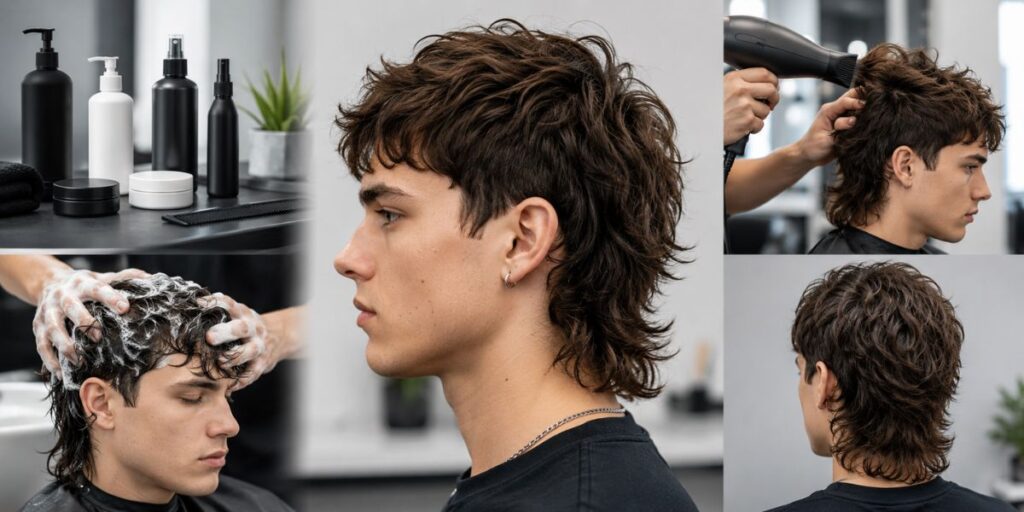
A mullet only looks good if you keep it up. Short on top and sides, long in the back — that contrast is exactly what falls apart first without the right routine. This guide covers daily styling, the best 2026 products, blow-drying for volume, washing without stripping your hair, and the trim schedule that keeps the shape sharp instead of shaggy.
How to Style a Mullet: Beginner’s Starting Point
If you’re new to the cut, start simple. A mullet doesn’t need heavy product or a 20-minute routine to look intentional.
- Towel-dry hair until it’s damp, not dripping
- Apply a lightweight cream or sea salt spray to the crown and back
- Use your fingers (not a comb) to push volume into the top
- Let the back air-dry or fall naturally for a lived-in finish
Once you’re comfortable with this base routine, you can layer in tools like round brushes and diffusers for more shape.
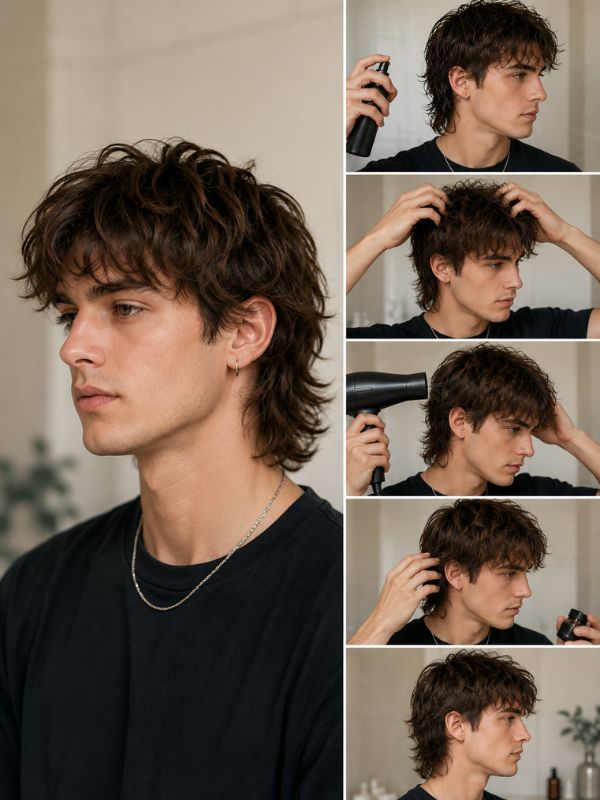
Beginner-Friendly Steps: How to Style a Mullet Daily (5-Minute Routine)
What You’ll Need
- A lightweight styling cream, matte clay, or sea salt spray
- A wide-tooth comb or detangling brush
- A blow dryer (diffuser attachment optional)
- A small amount of hair oil or serum for the ends
The 5-Minute Breakdown
| Time | Step |
| 0–1 min | Dampen hair slightly with water or apply on dry hair if you washed the night before |
| 1–2 min | Work product through crown and top section with fingers |
| 2–4 min | Blow-dry crown upward for lift; let back fall or scrunch lightly |
| 4–5 min | Smooth a pea-sized drop of oil through the ends to control frizz |
This routine works for straight, wavy, and curly mullets alike — only the product changes.
Core Mullet Styling Tips That Actually Work
Core Principles
- Treat the mullet as three zones: crown, sides, and back each need different attention
- Build volume at the root, not the ends — that’s what separates a styled mullet from a flat one
- Don’t overload product on the back; it weighs down length and looks greasy fast
- Work with your natural texture instead of fighting it with heat
- Refresh, don’t restyle — a quick finger-comb and a spritz of dry shampoo can revive day-two hair
Best Mullet Styling Products 2026 (Matte, Shine, Sea Salt & More)
How to Choose
Pick products based on hair type and finish, not hype.
| Product Type | Best For | Finish |
| Matte clay or pomade | Straight, fine hair | No shine, strong hold |
| Sea salt spray | Wavy or curly hair | Textured, beachy |
| Curl cream | Curly/coily hair | Defined, soft hold |
| Light-hold mousse | Fine, flat hair | Volume without weight |
| Shine serum or oil | All types (ends only) | Glossy, smooth finish |
| Texturizing powder | Top/crown volume | Lift, grip |
Avoid heavy waxes or thick butters on the back section — they flatten the length and hide the haircut’s shape instead of defining it.
Must-Have Tools for Mullet Grooming
Must-Have Tools
- Round brush (for root lift while blow-drying)
- Wide-tooth comb (for detangling the back without breakage)
- Heat protectant spray
- Microfiber towel
Nice to Have
- Diffuser attachment for wavy/curly textures
- Texturizing scissors for at-home maintenance between barber visits
- Silk or satin pillowcase to reduce overnight friction
Mullet Care: How to Blow-Dry for Lasting Volume
Step-by-Step Blow-Drying
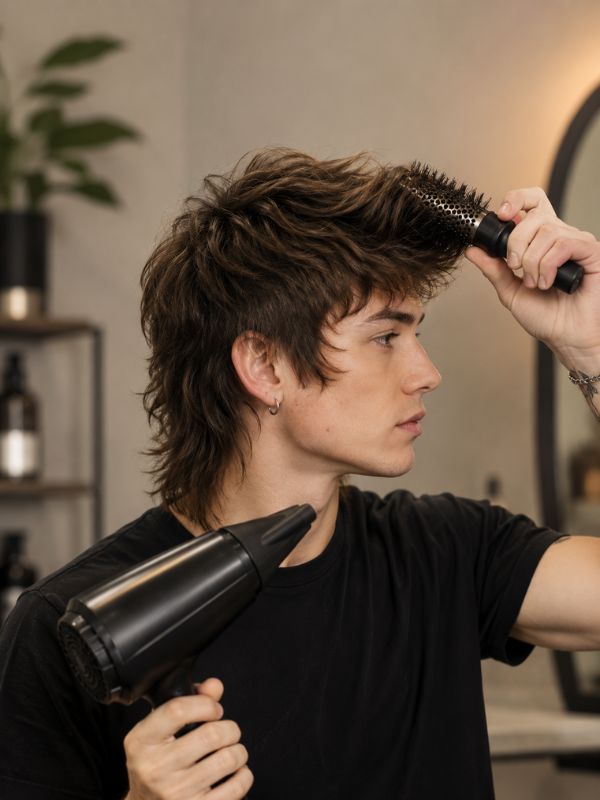
- Start with towel-dried, not soaking-wet hair
- Apply a heat protectant and a small amount of mousse or cream
- Blow-dry the crown upward and back using a round brush for lift
- Point the airflow downward along the hair shaft to reduce frizz
- Let the back air-dry or use a diffuser on low heat for natural movement
- Finish with cool air to lock the shape in place
Drying the crown first and the back last keeps volume up top while preserving texture in the longer length.
Also Read This: How to Choose Curly Haircut for Men: Complete Guide (2026)
How to Add Texture and Movement to a Mullet
Easy Texture Methods
- Scrunch sea salt spray into damp hair for natural-looking waves
- Twist small sections and let them air-dry for soft separation
- Use a flat iron with a texturizing technique for subtle waves on straight hair
- Rake a matte product through with fingers instead of a comb for undone movement
Texture is what makes a mullet look modern rather than dated — skipping this step is the most common reason mullets look flat.
Natural vs. Fully Styled Mullet: Which Is Right for You?
| Factor | Natural/Air-Dried | Fully Styled |
| Time needed | 1–2 minutes | 5–10 minutes |
| Product use | Minimal | Moderate to heavy |
| Best for | Wavy/curly hair, casual days | Straight hair, events, work |
| Look | Lived-in, undone | Polished, defined |
| Maintenance | Low daily effort | Higher daily effort |
Most people switch between both depending on the day — natural for errands, styled for going out.
Styling a Mullet with Hats, Headbands, and Accessories
Hats and headbands don’t ruin a mullet, but they do flatten it temporarily.
- After removing a hat, flip your head down and finger-comb the crown to restore lift
- Use a thin headband to keep shorter pieces back without creasing the top
- A light texturizing spray after accessory use brings volume back in seconds
- Avoid tight hats for long periods — they can crease the front section
How to Wash, Condition, and Dry Your Mullet Properly
Smart Washing Steps
- Shampoo 2–3 times per week, focusing on the scalp only
- Apply conditioner to mid-lengths and ends, never the roots
- Leave conditioner on for 1–2 minutes before rinsing
- Rinse with cool water to seal the hair cuticle and add shine
- Blot dry with a microfiber towel — never rub vigorously
- Apply heat protectant before any blow-drying
Washing too often strips the natural oils that give a mullet its hold and shine, so don’t overdo it.
Mullet Upkeep: Strengthening and Nourishing Your Hair
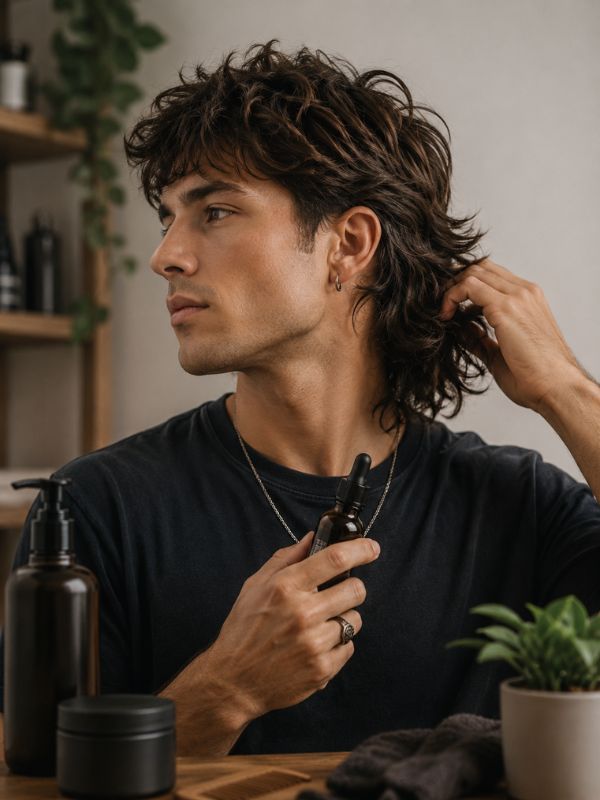
Essential Care Routine
- Daily: Leave-in conditioner on the ends, gentle detangling with a wide-tooth comb
- Weekly: Deep conditioning mask on the back section for 10–15 minutes
- Monthly: Protein treatment to rebuild strength and a clarifying wash to remove buildup
- Ongoing: Scalp massages during washing to support healthy growth
The back of a mullet is older hair, so it needs more nourishment than the shorter, newer growth up top.
Complete Mullet Haircut Maintenance & Care Schedule
| Frequency | Task |
| Daily | Style with lightweight product, apply leave-in to ends |
| 2–3x/week | Shampoo scalp, condition ends |
| Weekly | Deep conditioning mask |
| Monthly | Clarifying shampoo, protein treatment |
| Every 4–6 weeks | Barber trim — reshape crown and sides, light dust on the back |
| Every 6–8 weeks | Full shape refresh if growing the back out |
Sticking to this schedule keeps the haircut intentional instead of letting it grow out unevenly.
Mullet Hair Care: Preventing Damage, Frizz, and Buildup
- Use a sulfate-free shampoo to avoid stripping natural oils
- Apply heat protectant before every blow-dry or flat-iron session
- Switch to a silk or satin pillowcase to cut down on friction and frizz
- Clarify monthly to remove product buildup that flattens layers
- Trim regularly — split ends travel up the hair shaft and worsen frizz over time
- Add UV protection spray if you’re outdoors often, since sun exposure dries out the longer back section
9 Common Mullet Maintenance Mistakes to Avoid
- Skipping trims and letting the back grow out unevenly
- Using heavy wax or butter on the longer length
- Over-washing and stripping natural oils
- Applying conditioner to the scalp instead of just the ends
- Skipping heat protectant before styling
- Ignoring the sides until the fade or taper grows out completely
- Brushing wet hair roughly instead of using a wide-tooth comb
- Only styling the crown and neglecting texture in the back
- Trying to cut the tail or back length yourself at home
Conclusion
A mullet rewards consistency more than effort. Five focused minutes a day, the right lightweight products, a smart wash routine, and a trim every 4–6 weeks are all it takes to keep the shape sharp and the hair healthy. Skip the mistakes above, stick to the schedule, and your mullet will look as intentional on day five as it did fresh from the barber chair.