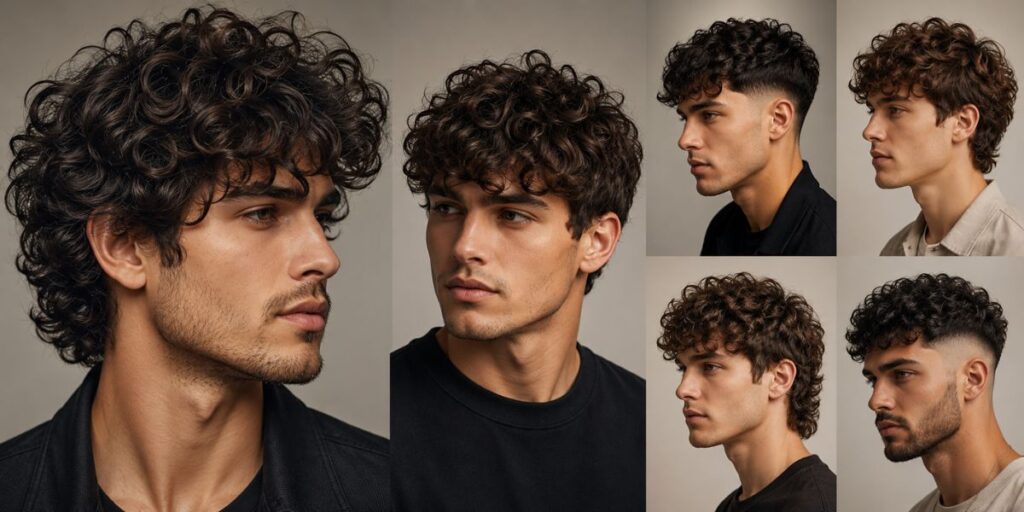
Most men with curly hair have a barbershop horror story. You ask for a clean trim and walk out with a triangle of frizz instead of a haircut. The truth is curly hair does not fail you. The wrong cutting method does.
Learning how to choose curly haircut for men starts with understanding your curl pattern, your hair density, and how curls shrink and reshape after a trim. Once you know these basics, you can walk into any barbershop and ask for exactly what your hair needs. This guide breaks down everything step by step, from curl types to barber terminology, so you never leave a chair disappointed again.
Understanding How to Choose Curly Haircut for Men
Choosing the right curly haircut is not about picking a style from a photo. It is about matching that style to your specific curl pattern, hair thickness, and face shape. Two men with curly hair can ask for the same haircut and get completely different results because their curls behave differently.
The right approach combines three things: knowing your curl type, communicating clearly with your barber, and following a cutting technique built for curls rather than straight hair.
Why Men’s Curly Hair Behaves Differently
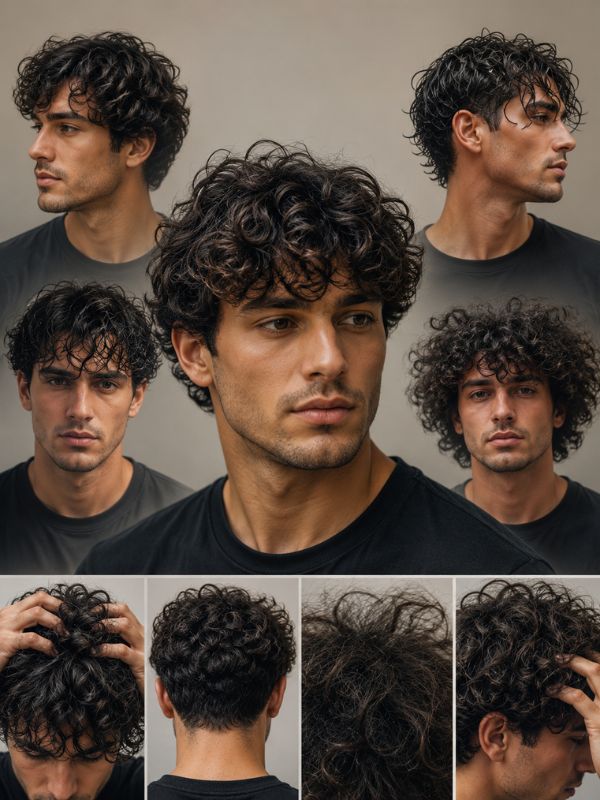
Curly hair grows from an oval-shaped follicle instead of a round one. This uneven shape forces the strand to bend as it grows, creating the curl pattern. Because of this structure, curly hair is naturally drier, more fragile, and more prone to frizz than straight hair.
Curls also react to humidity, length, and even how they are cut. A small change in length can shift a curl pattern from tight ringlets to loose waves, which is why curly hair needs a more customized approach than straight hair.
Why Regular Cuts Ruin Men’s Curly Haircut
Standard barbering methods are built for straight hair that falls flat. When the same technique is used on curls, it often creates a bulky, triangular shape instead of a balanced one. Here is why regular cuts go wrong:
- Cutting hair wet stretches the curl, so it lands shorter than expected once it dries and shrinks back.
- Even, blunt cutting ignores how curls clump together, leading to a puffy outline.
- Heavy thinning shears strip weight unevenly, causing frizz instead of smooth definition.
- Skipping a dry check means the barber cannot see your true curl shape before finishing the cut.
A barber trained in curly cutting techniques works with the curl pattern instead of against it.
History of Men’s Curly Hairstyles
Curly hair has cycled in and out of mainstream fashion for decades. In the 1970s, natural afros and loose curls symbolized freedom and individuality. The 1990s brought tighter, gelled curls paired with fades. By the 2010s, the curly undercut and curly quiff became popular as men began embracing natural texture instead of straightening it.
Today, curly haircuts for men are more diverse than ever, with barbers specializing in techniques that highlight texture rather than fight it.
Why Curly Haircut for Men Always Looks Shorter
Curls shrink. This is the single biggest reason men feel disappointed after a curly haircut. A curl pattern can shrink your visible length by 20 to 75 percent compared to its stretched length, depending on how tight the curl is.
This means a barber who cuts your hair while it is wet and stretched may leave it far shorter than you wanted once it dries and springs back. Always ask your barber to check the length on dry, unstretched curls before finishing the cut.
Curl Types: How to Choose Curly Haircut for Men
Knowing your curl type is the foundation of choosing the right haircut. Most stylists use a system ranging from Type 2 (wavy) to Type 4 (tightly coiled).
| Curl Type | Pattern | Best Suited Styles |
| 2A to 2C (Wavy) | Loose S-shaped waves | Textured crop, taper with longer top |
| 3A to 3B (Curly) | Springy, well-defined curls | Curly fringe, layered curls, curly quiff |
| 3C (Tight Curly) | Tight corkscrew curls | Curly undercut, tapered curls |
| 4A to 4C (Coily) | Tight coils or zigzag pattern | Curly fade, textured crop, coily afro |
Your curl type determines how much length to keep, how much layering you need, and how your barber should approach thinning.
Curly Hair vs Wavy Hair: Key Differences for Men
Many men confuse wavy hair with curly hair, but they need different cutting approaches.
| Feature | Wavy Hair | Curly Hair |
| Pattern | Loose S-shape | Tighter spirals or coils |
| Shrinkage | Minimal | Moderate to high |
| Frizz Tendency | Low to moderate | Moderate to high |
| Best Cutting Method | Standard or light layering | Dry cutting with curl-specific layering |
| Styling Need | Light product | Curl cream plus moisture-locking products |
If your hair only curls when damp and falls flat once dry, you likely have wavy hair. If it holds a spring shape regardless of moisture, you are working with true curls.
Hair Porosity Test: Essential for Curly Haircut for Men
Porosity describes how well your hair absorbs and holds moisture. It directly affects how your curls respond to a haircut and which products you should use afterward.
Quick float test:
- Take one clean, dry strand of hair from your brush or comb.
- Drop it into a glass of room-temperature water.
- Wait 2 to 4 minutes and observe.
| Result | Porosity Type | What It Means |
| Strand floats | Low porosity | Resists moisture, needs lightweight products |
| Strand sinks slowly | Medium porosity | Balanced, holds styles well |
| Strand sinks fast | High porosity | Absorbs moisture quickly but loses it fast, needs richer products |
High porosity curls often need more precise, dry cutting to control frizz. Low porosity curls benefit from lighter layering since they hold shape longer.
Also Read This: Blowout Fade: The Complete Guide to the Cut, Style, and Maintenance
How to Choose Curly Haircut for Men: Step by Step
Follow this process before your next barber visit:
- Identify your curl type using the chart above.
- Test your hair porosity with the float test.
- Decide on length based on shrinkage, not stretched length.
- Choose a style that matches your face shape and lifestyle.
- Find a barber who specifically advertises curly hair cutting.
- Ask for a dry cut or a dry check before the final trim.
- Request soft layering instead of heavy thinning shears.
This sequence removes the guesswork and gives your barber the exact information needed to cut your curls correctly.
How to Choose Curly Haircut for Men: Defined vs Natural Curls
Some men prefer sharply defined, uniform curls, while others want a looser, more natural texture. Both are valid choices, but they require different cutting and styling approaches.
- Defined curls: Cut dry, styled with curl cream or gel, often diffused for a sculpted look.
- Natural curls: Cut with minimal layering, air-dried, styled with light leave-in product for movement.
Tell your barber which finish you prefer before they start cutting, since the technique changes based on the result you want.
Curly Hair Shrinkage: Why It Happens and How to Stop
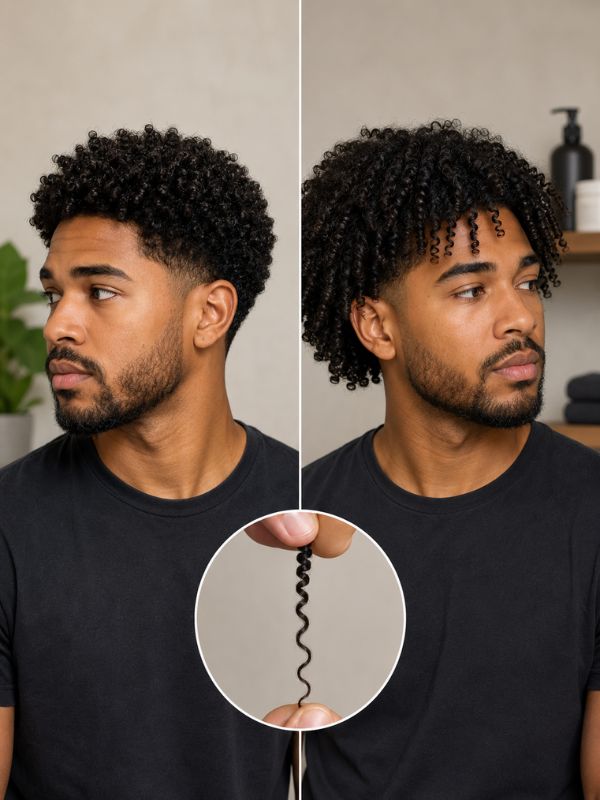
Shrinkage happens because curls coil tighter as they dry, pulling the strand upward. It is a natural part of curl structure and cannot be fully eliminated, but it can be managed.
To reduce shrinkage:
- Avoid rough towel drying, which tightens curls further.
- Use the LOC method: liquid, oil, then cream, to lock in moisture.
- Stretch curls gently with banding or twist-outs after washing.
- Ask your barber to cut hair dry so the final length matches your real-world shrinkage.
How Men’s Curly Haircut Can Boost Your Confidence
A well-cut curly hairstyle does more than look good. It changes how you carry yourself. Men who stop fighting their natural texture and start working with it often report feeling more authentic and put-together.
The right cut also saves time. Instead of fighting frizz every morning, a haircut designed for your curl pattern falls into place with minimal styling, which makes daily grooming faster and far less stressful.
How to Choose Curly Haircut for Men: Thinning Hair
Thinning hair changes how curls sit, since there is less density to support volume. For curly hair that is thinning:
- Avoid heavy layering, which can expose the scalp through gaps.
- Choose shorter to medium lengths that reduce visible weight loss.
- Ask for texturizing instead of aggressive thinning shears.
- Consider a low fade with curls on top to create the illusion of fuller density.
A barber experienced with curly hair can adjust the cut to make thinning areas far less noticeable.
Curly Hair Myths for Men Debunked
| Myth | Reality |
| Curly hair cannot be cut short | Short curly cuts work well when layered correctly |
| Curly hair always looks messy | Proper cutting and products create clean, defined shapes |
| You should always cut curls wet | Dry cutting shows the true curl shape and final length |
| Thinning shears fix bulky curls | Overused thinning shears cause frizz and damage |
| All curly hair needs the same products | Porosity and curl type determine the right products |
Curly Hair Terms to Know Before Your Barber Visit
Walking in with the right vocabulary helps your barber understand exactly what you want.
| Term | Meaning |
| Dry cutting | Cutting curls in their natural, unstretched state |
| Curl pattern | The shape your hair naturally forms, from waves to coils |
| Layering | Removing length at different points to reduce bulk |
| Texturizing | Thinning hair lightly without removing curl definition |
| Diffusing | Blow-drying with an attachment that reduces frizz and preserves curl shape |
| Curl shrinkage | The difference between stretched and natural curl length |
Conclusion
Choosing the right curly haircut comes down to three things: knowing your curl type, understanding your porosity and shrinkage, and finding a barber who treats curls as their own category rather than a variation of straight hair. Once these pieces are in place, your curls stop fighting your haircut and start working with it.
Walk into your next appointment with this knowledge, ask the right questions, and your curly hair will finally get the cut it deserves.