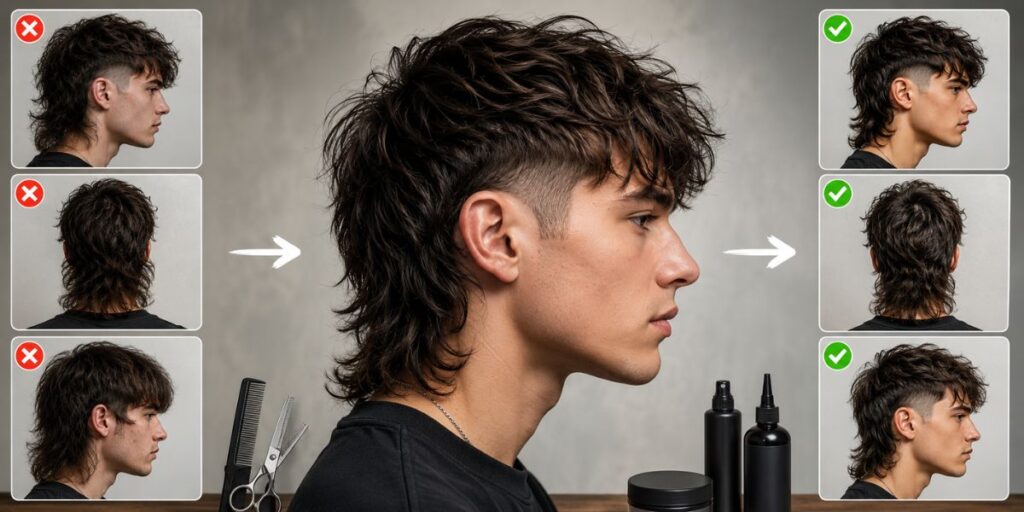
You just got a mullet and something looks off. The shape feels wrong, one side looks longer than the other, or the grow-out phase has turned into a styling nightmare. You are not alone. Mullet haircut problems are more common than most barbers admit, and most of them are completely fixable.
This guide covers every major mullet problem — from a bad cut at home to chemical damage, awkward transitions, and 2026 trend shifts. Whether you are rocking a burst fade mullet, a curly textured mullet, or a classic shaggy mullet, you will find a real, actionable fix here.
Why Your Mullet Looks Wrong: Mullet Haircut Problems Solved
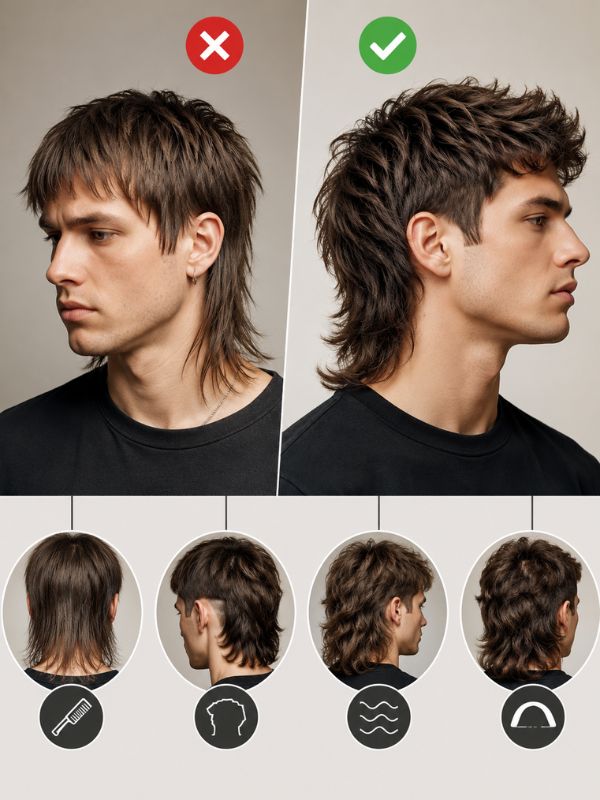
Most mullet problems trace back to one of three causes: bad communication with the barber, wrong product use, or hair type mismatch. Here are the most common issues and what is actually causing them.
| Problem | Most Likely Cause | Quick Fix |
| Uneven length at the back | Poor sectioning or rushed cut | Visit barber for a corrective trim |
| Crown goes flat by noon | Too much heavy product or no blow-dry | Switch to lightweight matte clay |
| Neckline looks bulky | No internal layering or debulking | Ask barber for point-cutting at nape |
| Sides grow out too fast | Fade too high, wrong guard used | Drop to a low or mid fade next visit |
| Style looks dated, not modern | Blunt cut with no texture | Add razor texture or soft layers on top |
Wrong Fade Height
A high fade pushes your mullet into aggressive territory fast. For most face shapes, a low or mid fade keeps the look clean without overwhelming the back length. If your fade feels too harsh, ask your barber to bring it down by two guard sizes on your next visit.
No Internal Layering
Heavy, dense hair without internal layers creates bulk at the nape. The result looks like a stacked wall of hair, not a flowing mullet. Internal layering, also called debulking, removes weight from underneath without changing the visible length.
How to Fix Mullet Haircut Problems Fast at Home
Not every mullet problem needs a barber visit. Here are quick at-home fixes that actually work.
Fix an Uneven Mullet at Home
- Use a wide-tooth comb and section your hair cleanly down the center
- Compare both sides in a mirror using a handheld mirror behind you
- Trim only the longer side using sharp hair scissors — cut small amounts at a time
- Never use kitchen scissors; they create split ends and jagged lines
Fix a Flat Crown
- Apply a pea-sized amount of matte clay or texture paste on dry hair
- Rough-dry with a blow dryer on medium heat pointing upward at the roots
- Finish with a sea salt spray for natural texture without stiffness
- Avoid pomades or waxes on the crown; they add shine and weight, not volume
Fix a Stiff, Overdone Look
If your mullet looks crunchy or unnatural, you have used too much product. Wash the product out with warm water and start fresh with half the amount. For most hair types, a pea-sized amount of product is enough for a full mullet style.
Long Hair to Mullet: Avoid Common Haircut Problems First
Transitioning from long hair to a mullet is a commitment that requires upfront planning. Skipping the prep leads to the most common mullet haircut disasters.
- Always bring 1 to 3 reference photos to your barber — verbal descriptions alone cause 90% of bad cuts
- Tell your barber specifically: short faded sides, textured top, natural length at the back — no hard lines
- Ask for a soft taper or low fade first, not a high fade — you can always go higher but you cannot undo an aggressive fade
- If your hair is chemically colored or bleached, let your barber know before they begin cutting
- Request a dry cut preview of the shape before any clipper work on the sides
Face Shape Check Before Cutting
Not every face shape suits every mullet variation. Round faces need volume on top to elongate the silhouette. Square faces work better with soft, blended layers rather than hard disconnected shapes. Oval faces are the most versatile and can pull off almost any mullet variation.
Mullet Grow-Out Tips: Survive the Awkward Phase
The awkward grow-out phase hits around weeks four to eight after the initial cut. The sides start losing shape, the back length feels inconsistent, and the whole look loses its definition. Here is how to get through it.
| Phase | Timeline | What to Do |
| Fresh cut | Week 1–3 | Style daily, use lightweight product |
| Sides growing out | Week 4–6 | Book a side trim only, keep back length |
| Awkward middle stage | Week 7–10 | Use headbands, clips, or texture spray to manage volume |
| Establishing the shape | Month 3–4 | Full trim to balance top and back proportions |
| Mature mullet shape | Month 5+ | Regular 3-4 week maintenance trims |
Products That Help During Grow-Out
- Sea salt spray: adds texture and separation to limp in-between lengths
- Light hold pomade: tames flyaways on the sides without flattening the back
- Curl cream (for wavy or curly hair): defines natural texture during the messy middle phase
- Dry shampoo: refreshes roots and adds grip without washing out natural oils daily
How to Transition from Mullet to Modern Style
Ready to move on from your mullet? The transition is easier than most people think and does not require shaving everything off and starting over.
Mullet to Wolf Cut
Ask your barber to blend the disconnected back into layered shag-style sections. This keeps your length while removing the hard contrast between front and back. The wolf cut is the most natural transition for a modern mullet because the silhouette is similar.
Mullet to Textured Crop
Gradually shorten the back over two or three visits rather than cutting it all at once. This avoids the shock of a sudden length change and lets you test shorter options before committing.
Mullet to Classic Taper
If you want to return to a clean, conservative style, ask your barber to soften the neckline first. Blend the back length upward in stages, starting from the nape. A tapered neckline immediately makes a growing-out mullet look more intentional.
Also Read This: How to Ask for a Mullet: Complete Guide to Getting the Perfect Cut (2026)
Mullet Hair Problems: How to Repair Damage and Find Solutions
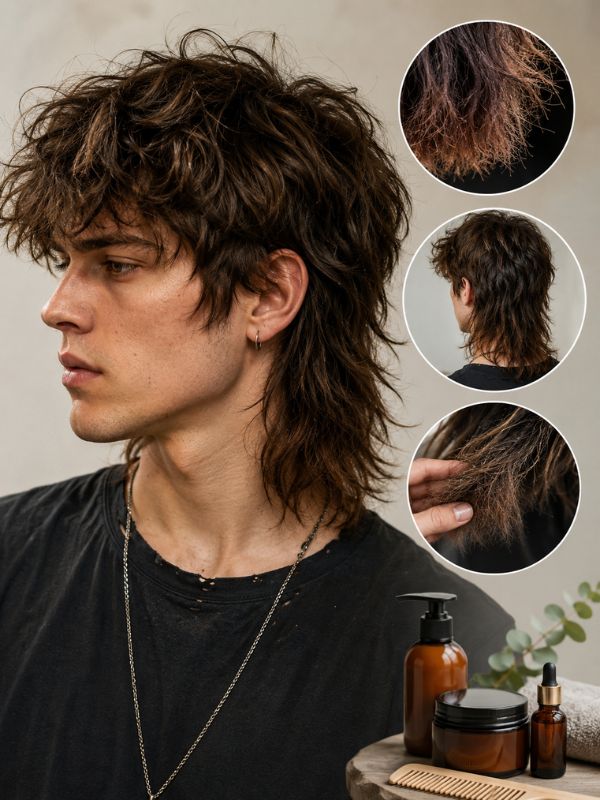
Heat damage, bleach damage, and over-processing are the most serious mullet haircut problems because no styling product can fully fix structural damage. Here is how to assess and address it.
Signs of Damaged Mullet Hair
- The back section feels dry and snaps easily when stretched
- Color-treated lengths show banding — dark roots with orange or yellow mids
- Hair refuses to hold any style even with strong-hold products
- Split ends travel up the shaft, not just at the tips
Repair Steps That Work
- Start with a clarifying shampoo once a week to remove product buildup
- Use a deep protein treatment every two weeks for at least six weeks
- Trim the most damaged sections in stages, not all at once
- Reduce heat tool use to twice a week maximum and always apply a heat protectant first
- Switch to silk or satin pillowcases to reduce friction damage overnight
Best Hair Products for Sensitive Scalps
Many people with mullets develop scalp sensitivity from frequent product use or chemical treatments. Choosing the wrong product makes this worse.
| Product Type | Best For | What to Avoid |
| Sulfate-free shampoo | Daily or frequent washing | Products with SLS or SLES |
| Lightweight matte clay | Dry styling and volume | Heavy pomades and waxes |
| Tea tree oil scalp serum | Flaking and scalp irritation | Alcohol-based tonics |
| Fragrance-free conditioner | Sensitive and reactive scalps | Thick, heavy conditioners at roots |
| Sea salt spray | Texture and separation | Aerosol sprays with harsh propellants |
Always patch test new products on your inner wrist before applying to your scalp. If redness or itching develops within 24 hours, discontinue use and consult a dermatologist.
Mullet Haircut Problems Gone Wrong: Real Stories and Lessons
Real mullet disasters share a pattern: rushed communication, no reference photos, and DIY cutting without proper tools. Here are the most common stories and what they teach.
The Accidental Hockey Mullet
Someone asks for a modern mullet and walks out with a blunt, stacked 1980s hockey cut. This happens when the barber has no reference photo and defaults to the most familiar mullet shape they know. The fix is always photos, always. Bring at least two images showing what you want and one showing what you do not want.
The Fried Bleach Mullet
Over-bleaching the back section to achieve a two-tone or money piece effect often destroys curl pattern and causes massive breakage. The lesson: never bleach more than two levels in one session on the mullet’s back section. Always do a strand test 48 hours before a full chemical service.
The DIY Disaster
Home cutting without proper sections leads to uneven lengths that no product can fix. If you are going to trim at home, use sectioning clips, a rat-tail comb, and cut only dry hair. Wet hair shrinks up to 30% when dry, which means you will always cut more than intended.
Signs Your Mullet Haircut Problems Need a Real Solution
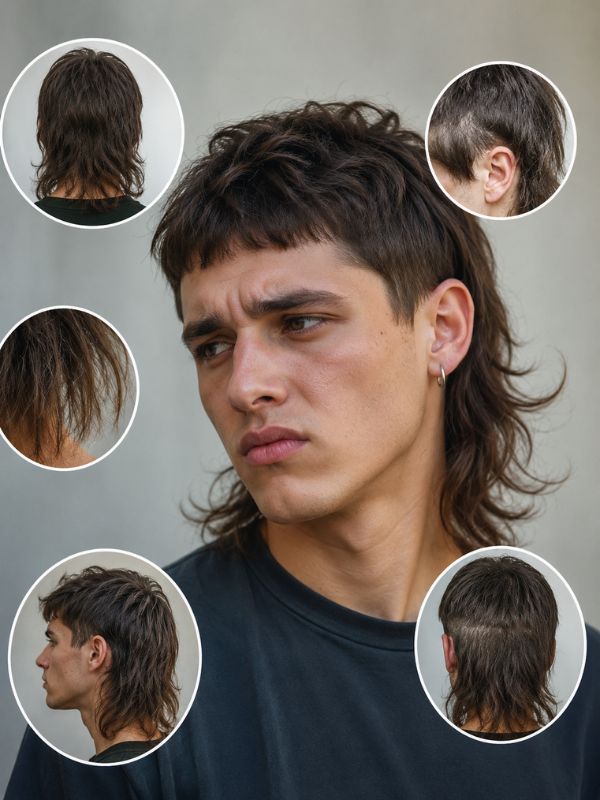
Some mullet problems are minor styling issues. Others are serious signs that something needs to change. Here is how to tell the difference.
- Your hair is too damaged to hold any shape even with strong-hold products
- You feel significantly less confident after getting the cut
- The cut looks wrong in every photo and you actively avoid cameras
- Scalp irritation, flaking, or pain has developed since your last barber visit
- The style does not match your professional environment and it is affecting your confidence at work
If any of these signs apply, it is not a styling product problem. Book a corrective consultation with a licensed stylist and bring photos of both what you have and what you want instead.
Mullet Trends 2026 to 2030: What Is Next
The mullet has moved well past trend status in 2026. It is now one of the most-requested styles in global barbershops and salons. Here is where the style is heading over the next four years.
| Trend | Description | Best For |
| Soft Shullet | Shag layers blended into mullet silhouette | Wavy and fine hair |
| Burst Fade Mullet | Burst fade around the ear with flowing nape | Thick and curly hair |
| Korean-Inspired Mullet | Soft, blended back with wispy textured top | Straight and medium hair |
| Curly Textured Mullet | Internal layering with defined curl structure | Natural curly hair |
| High Contrast Street Mullet | Disconnected undercut with bold back length | Straight and coarse hair |
By 2030, the mullet is expected to continue evolving toward softer, more blended interpretations. Razor texturing, internal layering, and gradient fades will replace the hard disconnected cuts of earlier revival years.
Conclusion
Most mullet haircut problems are completely fixable once you understand what is actually causing them. A flat crown needs lighter product and a blow dryer, not a new cut. An uneven back needs a corrective trim, not a full reshave. Damaged lengths need protein treatments and reduced heat, not expensive salon packages.
The biggest takeaway: communication is everything. A reference photo, a clear description, and an honest conversation with your barber solve 90% of mullet problems before they even start. For everything else, this guide has you covered.
Whether you are growing your mullet out, transitioning to a new style, or dealing with damage from over-processing, your hair grows back and your next cut is always a chance to get it right.