
A low taper fade fringe is one of the easiest ways to look sharp without trying too hard. The sides stay clean, the fade blends low near the ears and neckline, and the fringe up front does all the talking. It works for the office, a night out, or a lazy Sunday, and that range is why barbers keep recommending it this year.
This guide covers what the cut is, how it compares to a French crop, why barbers love it, and eighteen variations to bring to your next appointment, plus face shape, hair type, product, and maintenance advice.
What Are Low Taper Fade Fringe Haircuts?
A low taper fade fringe combines two decisions in one cut. The taper fade handles the sides and back, starting its shortest point low around the temples, sideburns, and nape, then blending upward without a hard shelf. The fringe is the longer top section styled forward so it falls naturally across the forehead.
Because the fade sits low, the contrast between top and sides stays soft instead of sharp, which is what separates it from a high or mid fade and makes it easy to wear in professional settings.
Key building blocks include:
- A gradual blend starting near the bottom of the temples and ears
- Longer hair on top, roughly two to four inches, left for the fringe
- A soft, rounded neckline instead of a boxy outline
- Texture through the fringe so it moves rather than sitting flat
Low Taper Fade Fringe vs French Crop
These two cuts overlap heavily since both use a low taper and a longer top styled into a fringe. The real difference is how blunt and structured the fringe is.
| Feature | Low Taper Fade Fringe | French Crop |
| Fringe shape | Soft, textured edge | Blunt, straight edge |
| Fringe length | Slightly longer coverage | Shorter, sits higher |
| Overall vibe | Relaxed, modern | Structured, classic |
| Styling effort | Light texturizing product | Blow dry forward, light hold |
| Best for | Casual to semi formal | Formal, polished looks |
Want more movement and a softer finish? Ask for the fringe version. Want a tighter, tailored front section? Go with the French crop.
Why Barbers Recommend a Low Taper Fade Fringe
- It grows out gracefully since the fade stays low
- It works across straight, wavy, curly, and coily hair
- It flatters most face shapes by softening angles or adding length
- It needs fewer barbershop visits than a skin fade or high fade
- It transitions well between school, work, and weekend settings
1. Textured Low Taper Fade Fringe
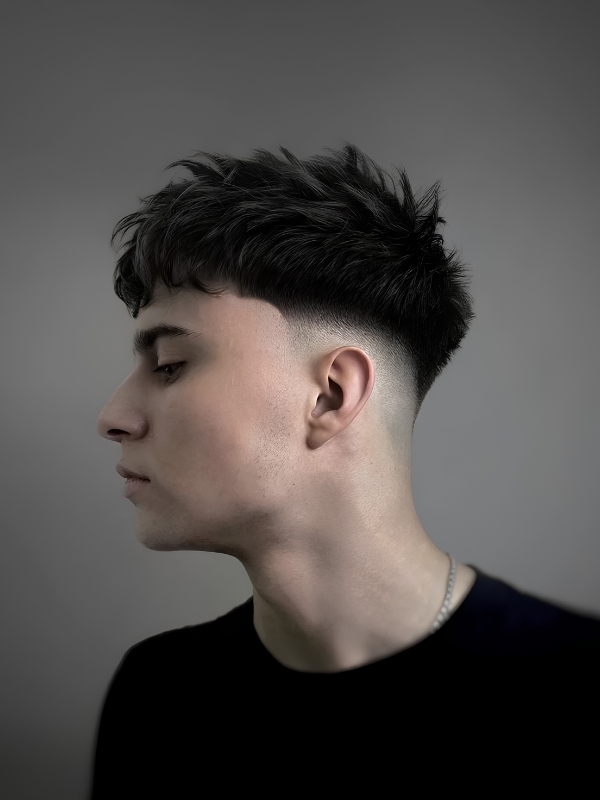
Choppy layers give the fringe natural separation instead of lying flat. Pair with matte clay for a piecey, intentional finish.
2. Messy Low Taper Fade Fringe
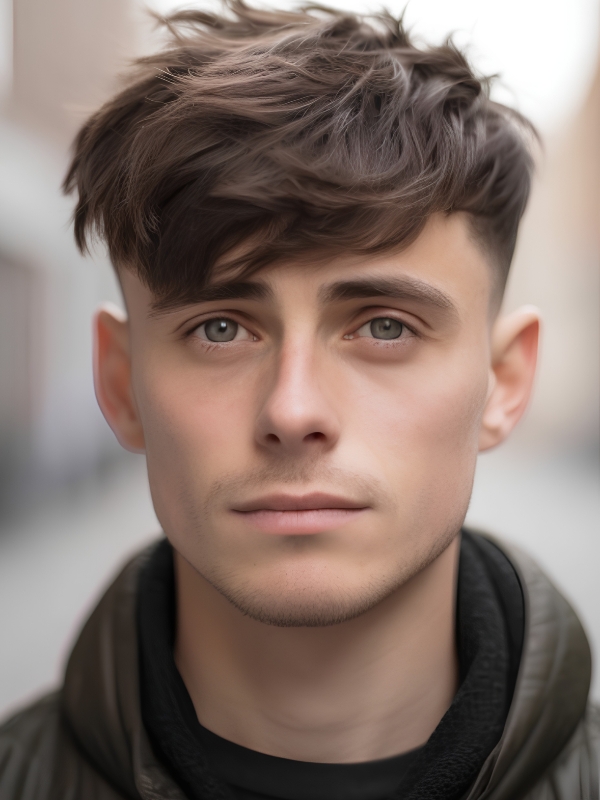
The fringe is left slightly longer and tousled by hand. It reads as effortless and hides thinning hair by pushing volume forward.
3. Curly Low Taper Fade Fringe

Extra length is left on top for shrinkage once curls dry, and the fringe follows the natural curl pattern. Curl cream keeps definition without weight.
4. Wavy Low Taper Fade Fringe

Natural waves do most of the work. A light sea salt spray adds beachy texture as the fringe falls across the forehead.
5. Korean Low Taper Fade Fringe
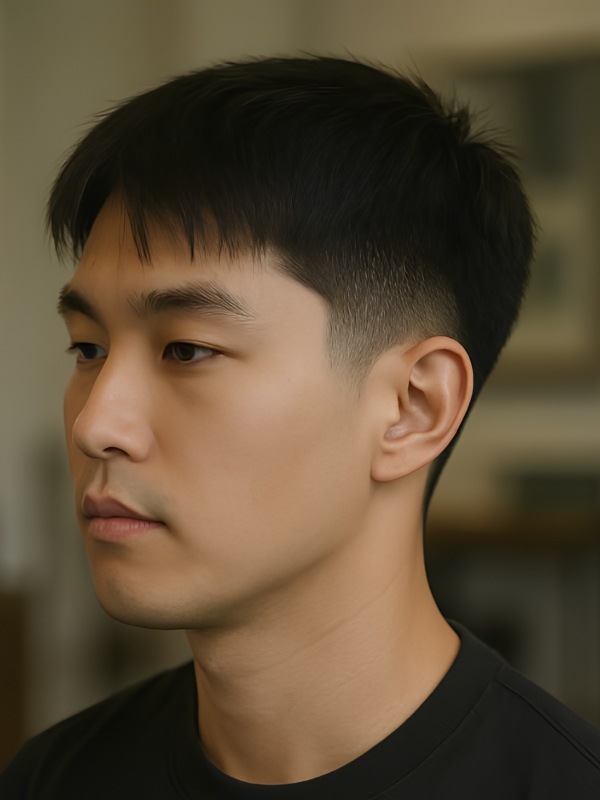
A blunt, heavy fringe sits straight across the brow, a style popularized by Korean street fashion, while the sides stay very low and soft.
6. Long Fringe Low Taper Fade
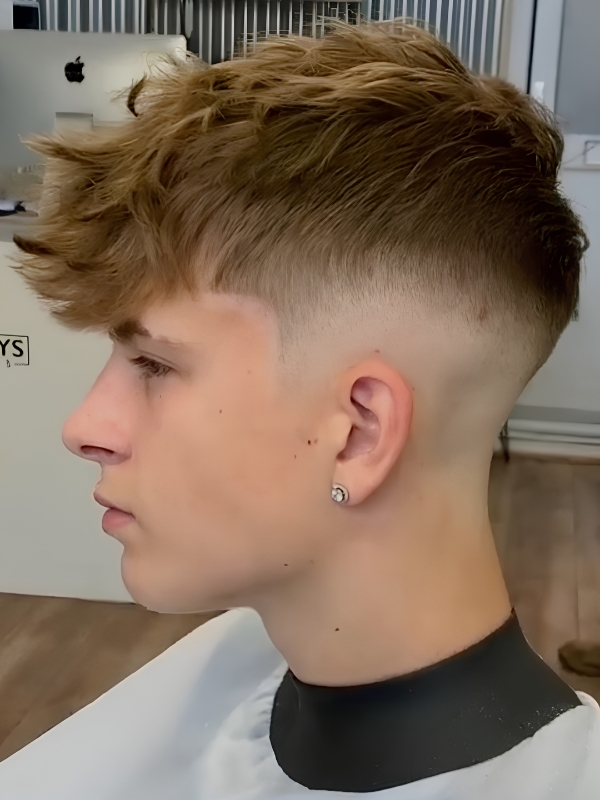
The top is grown out so the fringe covers more forehead and can be swept in different directions day to day.
7. Choppy Low Taper Fade Fringe
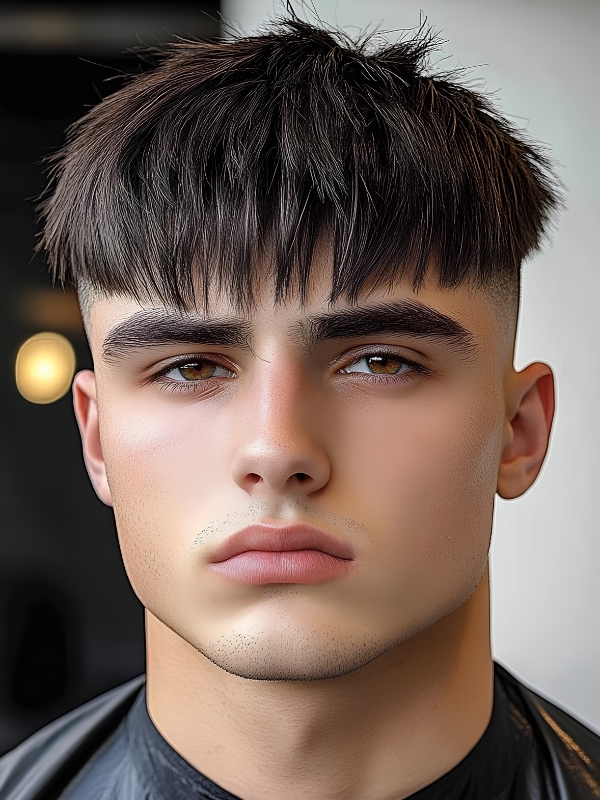
Point cutting removes weight from the fringe ends, creating jagged pieces that work especially well on thick hair.
8. Side-Swept Low Taper Fade Fringe

The fringe is directed to one side with a light hold cream for a slightly more polished, asymmetrical finish.
9. Thick Hair Low Taper Fringe

Layering and thinning shears reduce bulk so the fringe stays light and easy to style rather than sitting like a solid block.
10. Straight Hair Low Taper Fringe
Straight strands create a clean fringe line naturally. A small amount of pomade controls flyaways without flattening shine.
Choosing the Right Fringe Length
- Short fringe, above the brow, gives a cleaner, more conservative look
- Medium fringe, brushing the eyebrows, is the most versatile and easiest to style
- Long fringe, falling into the eyes, delivers a bolder statement
Face shape, hair density, and how much daily styling you want to do should all guide this choice.
Also Read This: Curtain Bangs: Best Styles for Every Face Shape & Hair Type (2026)
11. Feathered Low Taper Fade Fringe
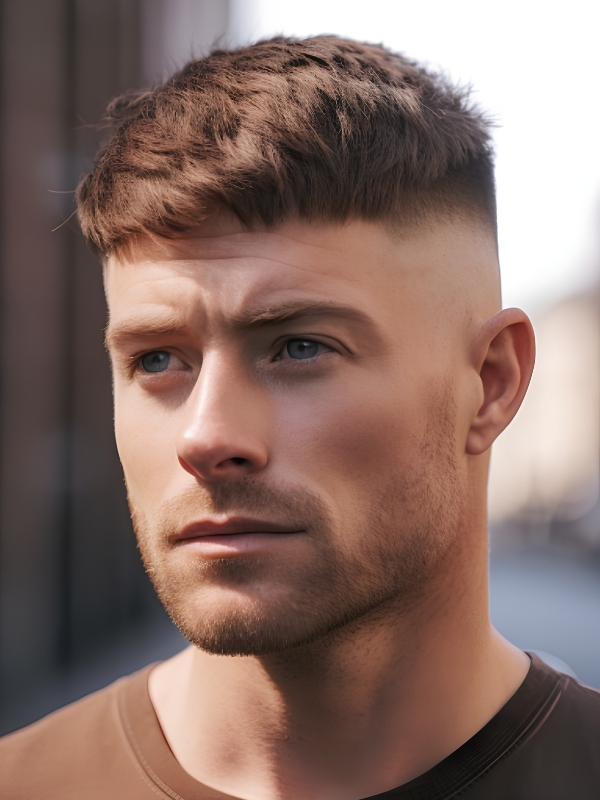
Fine layering along the ends creates a soft edge instead of a blunt line, adding movement to fine hair without heavy product.
12. Angular Fringe Low Taper Fade
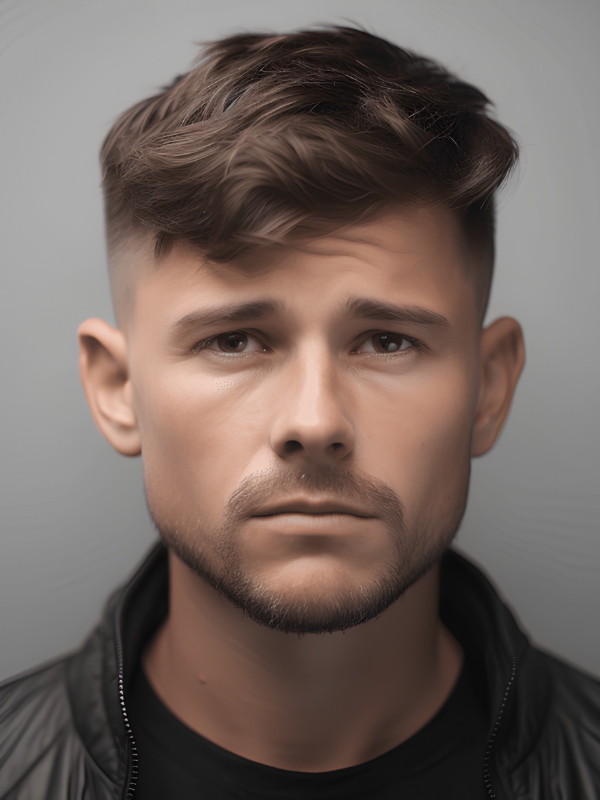
The fringe is cut on a diagonal rather than straight across, drawing the eye to one side and softening a strong jawline.
13. Ivy-Inspired Low Taper Fringe
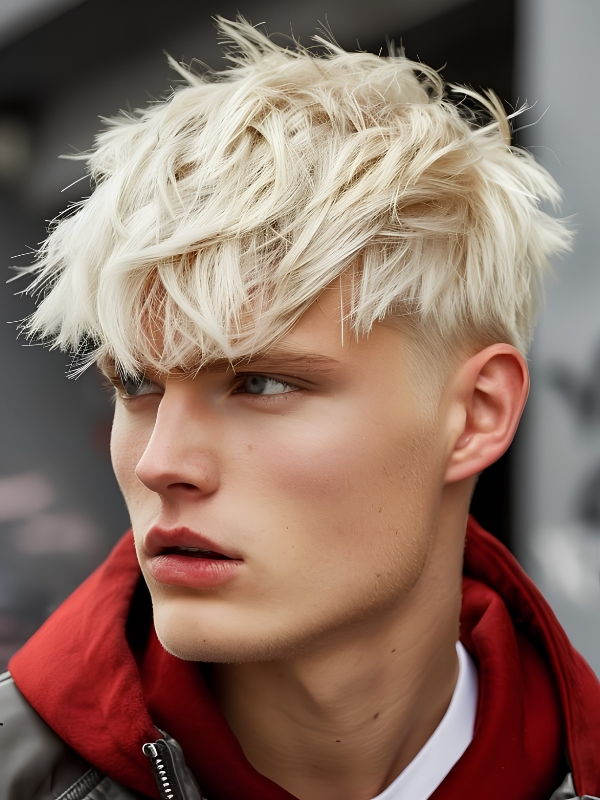
The top is combed forward and slightly to the side over a hidden part, pairing a vintage silhouette with a modern low fade.
14. Textured Crop Fringe with Low Taper
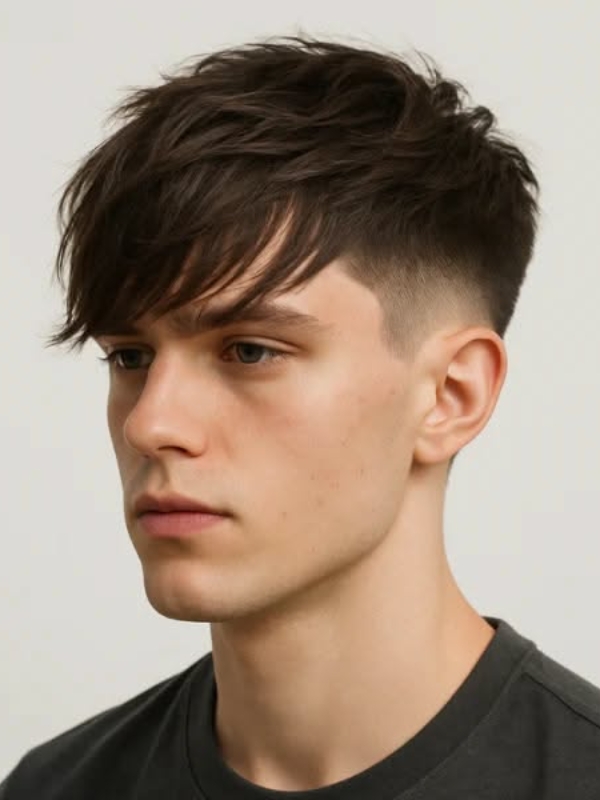
This blends choppy crop texture with fringe coverage for a fuller top that still tapers cleanly, a strong pick for thick or coarse hair.
15. Modern Curtain Fringe with Low Taper
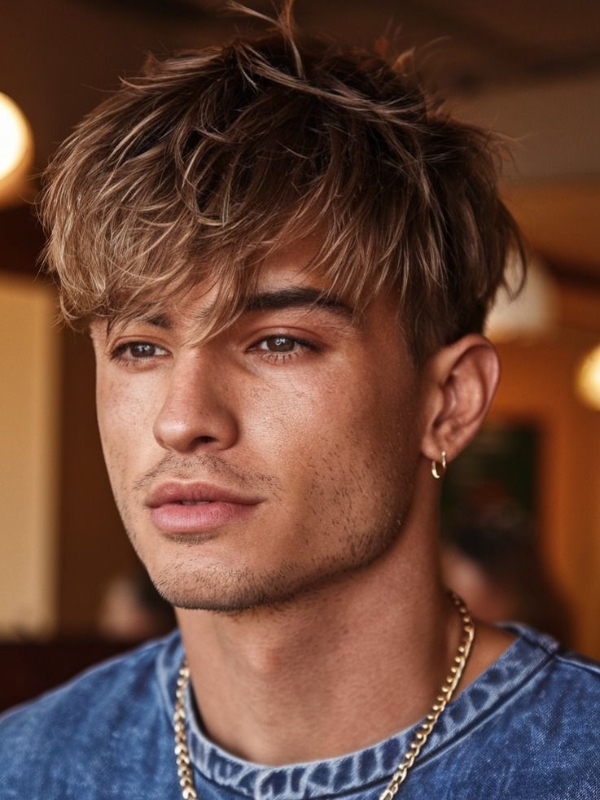
The fringe parts in the center and sweeps outward on both sides, echoing the curtain bangs trend, and suits naturally wavy hair.
16. Mid Taper Fade

A close relative rather than a true low taper, the mid taper begins higher between the temple and ear, showing more contrast while still supporting a fringe on top.
17. Messy Low Taper Fade Fringe Straight Hair
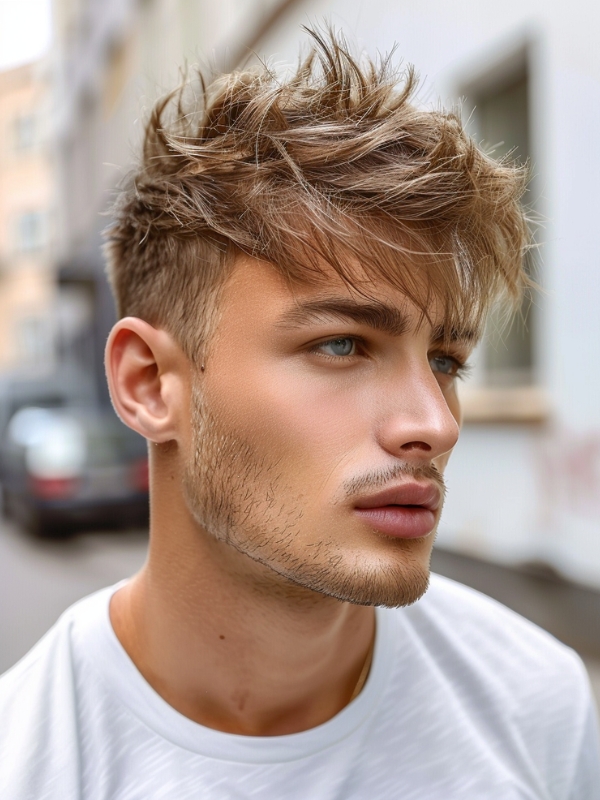
Straight strands are cut with texture and styled by hand for a controlled messiness above a clean, low taper.
18. Low Drop Mid Taper Fade Fringe

This variation drops the fade slightly lower behind the ear while keeping mid taper contrast up front, for a rounded, natural blend.
How to Ask Your Barber for a Low Taper Fade Fringe
- State the fade placement first, for example, “a low taper starting near my temples and nape”
- Describe the fringe length and shape, such as “medium length, textured, falling over my forehead”
- Mention your hair type so the barber can adjust technique for curls, waves, or thick hair
- Bring front, side, and back reference photos, since one angle rarely shows the full cut
- Ask about upkeep so you know when to book your next trim
Best Face Shapes for a Low Taper Fade Fringe
- Oval: suits almost any fringe length since proportions are already balanced
- Square: benefits from a softer, side swept fringe that eases sharp angles
- Round: looks longer with a fringe that has height rather than sitting flat
- Heart shaped: pairs well with a fuller fringe that balances a narrower jawline
Best Hair Types
| Hair Type | What Works Best |
| Straight | Blunt or textured fringe, defined lines, minimal product |
| Wavy | Natural movement, light salt spray, side swept styling |
| Curly | Extra length on top, curl cream, diffused drying |
| Thick | Heavy layering to remove bulk, texturizing scissors |
| Thin or fine | Feathered ends, lightweight styling cream for volume |
Best Styling Products
- Matte clay for hold without shine, ideal for textured fringes
- Texture powder to add volume and grip at the roots
- Light pomade for defined, sleek finishes on straight hair
- Curl cream to define natural curls without weighing them down
- Sea salt spray for effortless texture on wavy hair
Maintenance Tips
- Trim the fade every two to three weeks to keep the blend clean
- Trim the fringe every three to four weeks, or once it covers the eyes
- Use a small amount of product so the fringe stays light and movable
- Blow dry the fringe forward with a round brush to train the fall
- Ask your barber to show you how to maintain the blend between visits
Final Thoughts
The low taper fade fringe earns its popularity honestly. It suits almost any face shape and hair type, needs little daily maintenance, and looks equally at home in a meeting or on a night out.
Whether you lean toward messy and textured or clean and side swept, the eighteen variations above give you plenty of starting points for your next barber visit.