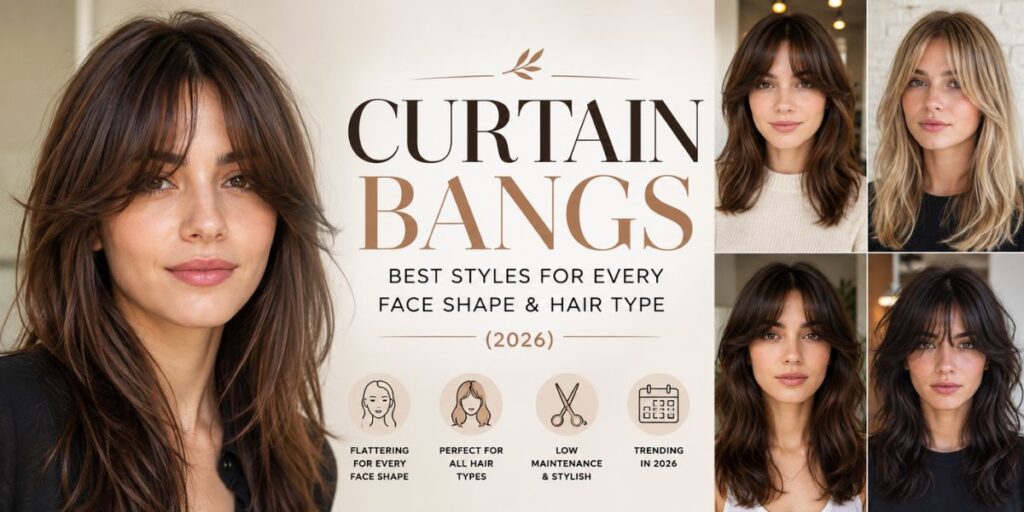
Curtain bangs remain one of the most requested haircuts of 2026, and it’s easy to see why. This soft, center-parted fringe frames the face instead of covering it, blends into almost any length, and skips the high-maintenance styling that blunt bangs demand. Whether you have straight, wavy, curly, thick, or fine hair, there’s a curtain bang variation built for you.
This guide breaks down why curtain bangs work so well, which version suits your face shape and hair texture, how they compare to other fringe styles, and what to do when you’re growing them out or fixing an uneven cut.
Why Curtain Bangs Flatter Almost Everyone
Curtain bangs part down the middle (or slightly off-center) and sweep outward toward the cheekbones, leaving the center of the forehead open. That open-middle effect is why stylists consider them one of the most universally flattering fringe styles:
- They add softness without hiding the eyes or eyebrows.
- They blend into layers instead of sitting as a harsh, separate section.
- They work at almost any length, from a chin-grazing lob to hair past the shoulders.
- They forgive natural texture, so curls and waves don’t fight the cut.
- They grow out gracefully, unlike a blunt fringe that needs constant trims.
The key is customizing length, thickness, and layering to your features, which is where face shape and hair type both come in.
Curtain Bangs by Face Shape
| Face Shape | Best Curtain Bang Style | Why It Works |
| Round | Longer, cheekbone-length curtain bangs | Adds vertical line and slims the width of the face |
| Square | Feathered or wispy curtain bangs | Softens strong jawline and forehead angles |
| Oval | Almost any curtain bang length | Balanced proportions suit the widest range of styles |
| Heart | Airy, lightweight curtain bangs with face-framing layers | Balances a wider forehead with a narrower jaw |
| Diamond | Fuller curtain bangs with soft edges near the forehead | Adds width up top and softens sharp cheekbones |
| Long/Rectangular | Short to medium curtain bangs | Visually shortens the face and adds width |
If you’re unsure of your shape, measure your face at its widest point and compare it to its overall length. That single comparison usually points you toward the right category.
Curtain Bangs by Hair Type
| Hair Type | Recommended Approach |
| Fine hair | Lighter, wispy bangs with minimal thinning to avoid a sparse look |
| Thick hair | Fuller, more structured bangs with heavier layering for control |
| Straight hair | Classic swept curtain bangs, easy to blow-dry with a round brush |
| Wavy hair | Tousled, piecey bangs that follow the natural bend |
| Curly hair | Longer curtain bangs cut dry, shaped around the curl pattern |
Curtain Bang Variations to Try
Curtain Bang Lob
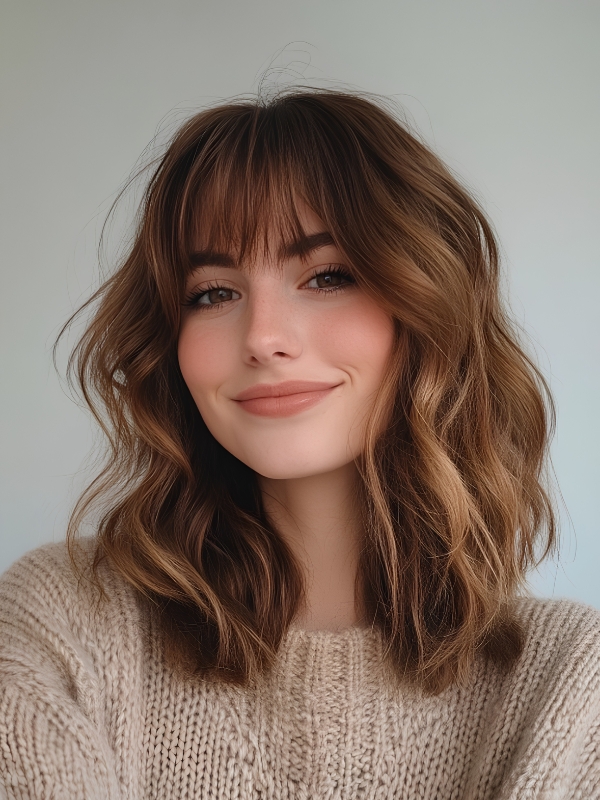
A lob (long bob) paired with curtain bangs keeps the cut low-maintenance while adding movement around the face. It suits nearly every face shape and works well on straight or wavy hair.
Bob with Curtain Bangs
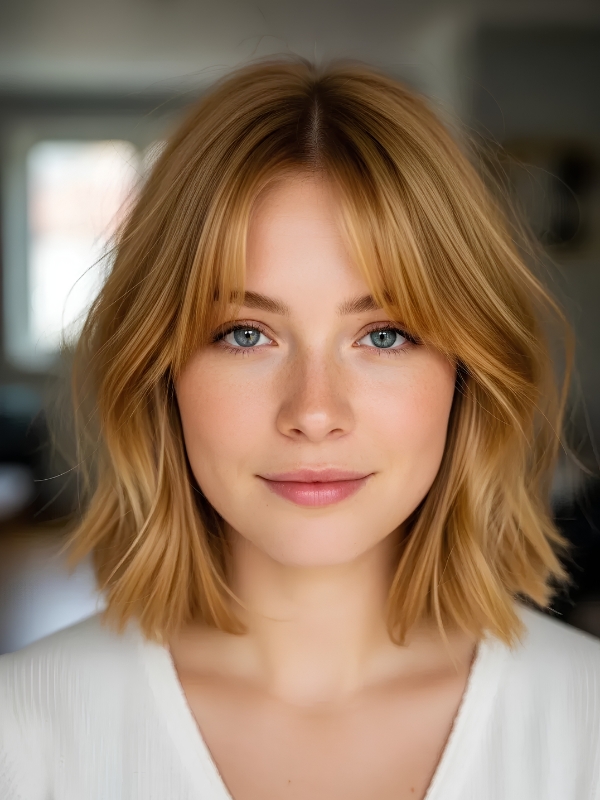
A classic bob gets a softer, less severe finish when curtain bangs are added at the front. This combination is especially flattering for round and square faces because the fringe breaks up width.
Wispy Curtain Bangs

Thinned-out, feathery pieces replace a dense fringe line. Wispy curtain bangs suit fine hair and anyone who wants a subtle, barely-there fringe.
Fringe Curtain Bangs

This is the standard curtain bang: parted in the center, tapering longer toward the cheekbones. It’s the most versatile version and a safe starting point for first-time bang wearers.
Curly Bob with Bangs
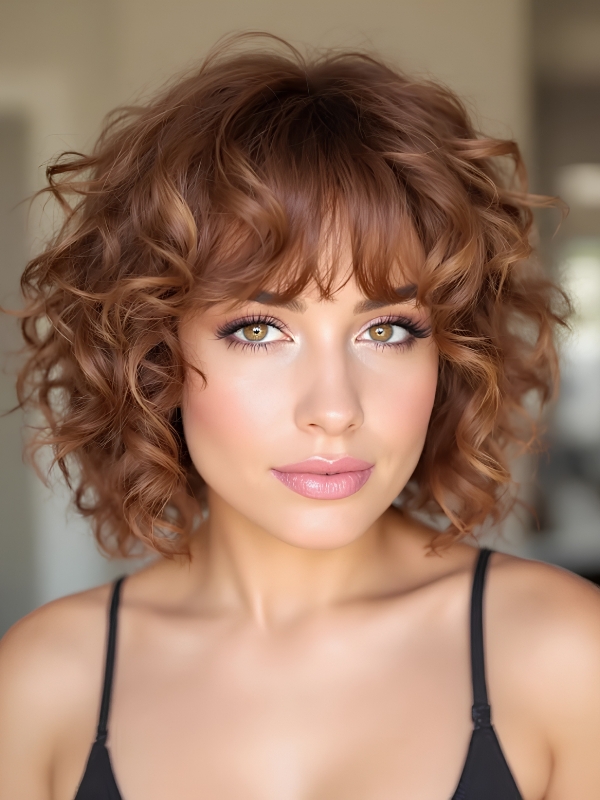
On curly hair, bangs are usually cut dry so the stylist can see exactly how each curl falls. A curly bob with curtain bangs keeps shrinkage in mind and leaves extra length at the front.
Also Read This: What Is a High Taper Fade Haircut? Types, Styles & Complete Guide (2026)
Unstyled Curtain Bangs
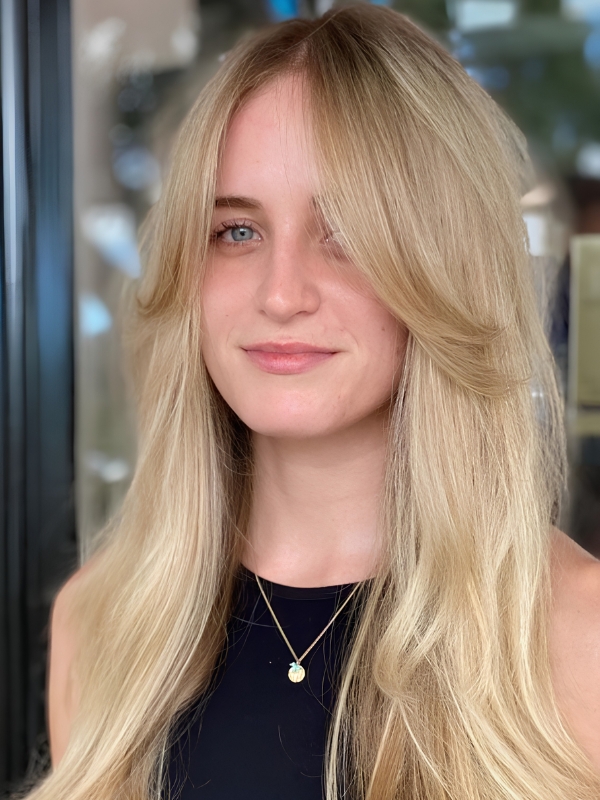
Left to air-dry naturally, unstyled curtain bangs have a relaxed, undone texture. This low-effort version has become popular for its natural, second-day-hair appeal.
Wispy Fringe

Similar to wispy curtain bangs but often shorter and choppier, a wispy fringe skims just above the brow line for a soft, textured look.
Short Curtain Bangs
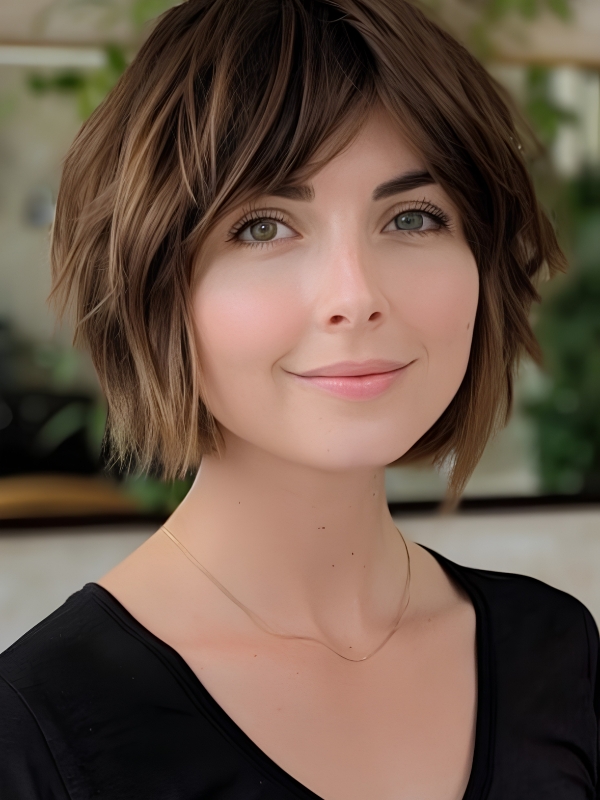
Sitting above the eyebrows, short curtain bangs suit oval and heart-shaped faces best. They require more frequent trims since shorter lengths grow out faster visually.
Birkin Bangs
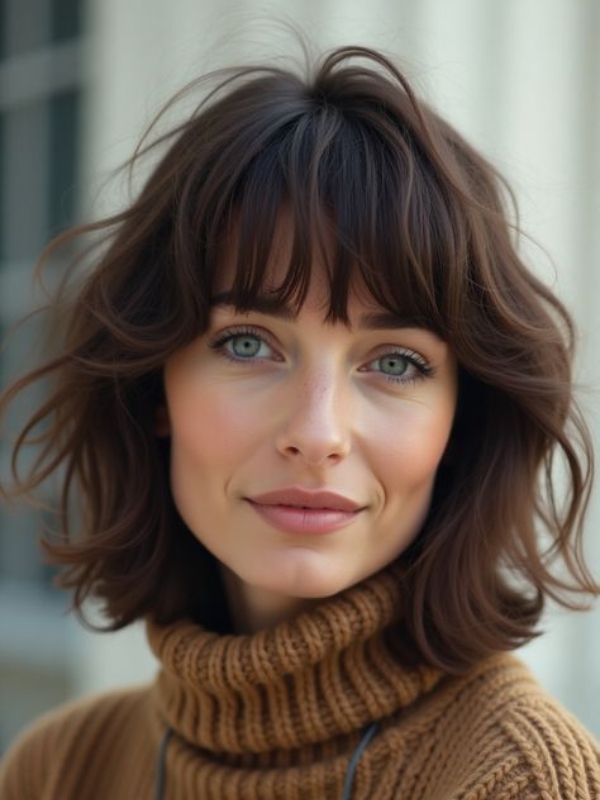
Named after Jane Birkin’s iconic 1970s fringe, these are fuller, slightly shorter curtain bangs with a raw, undone edge. They pair beautifully with medium-length layered hair.
Torn Bangs

A razor or point-cutting technique creates deliberately uneven, “torn” edges instead of a clean line. Torn bangs add an edgy, textured finish to straight or wavy hair.
Long Curtain Bangs
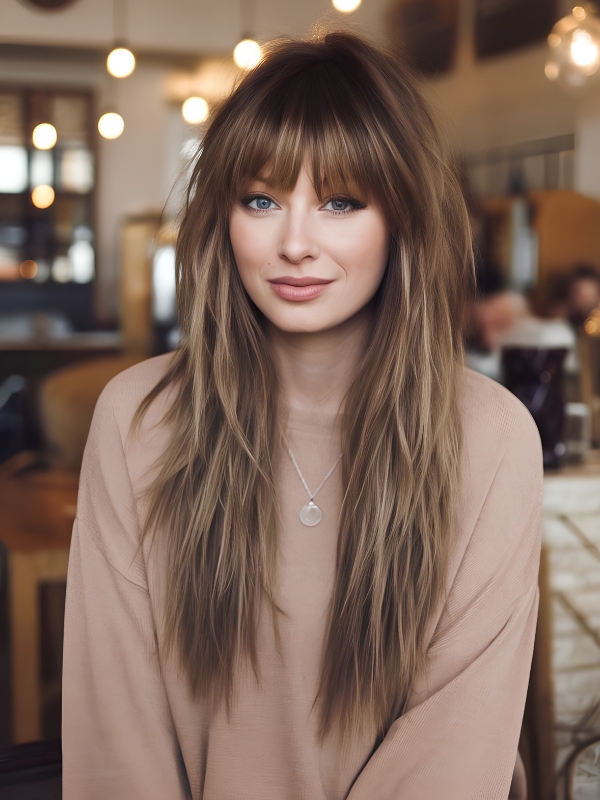
Reaching past the cheekbones, sometimes to the chin, long curtain bangs are the easiest to grow out and the simplest to tuck behind the ears when needed.
Curtains Hairstyle
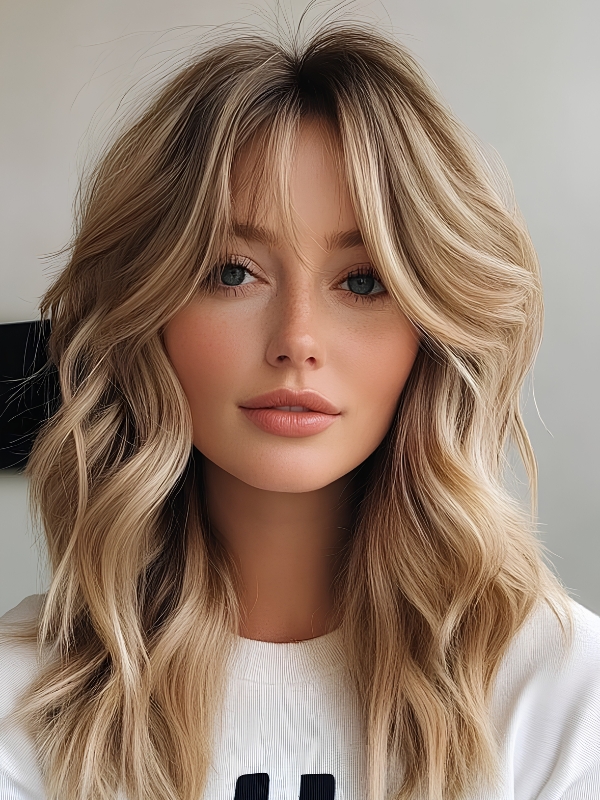
Beyond bangs alone, the broader “curtains” hairstyle applies the same center-part, sweep-out shape to the whole front section of hair, extending the framing effect further back.
Face-Framing Layers
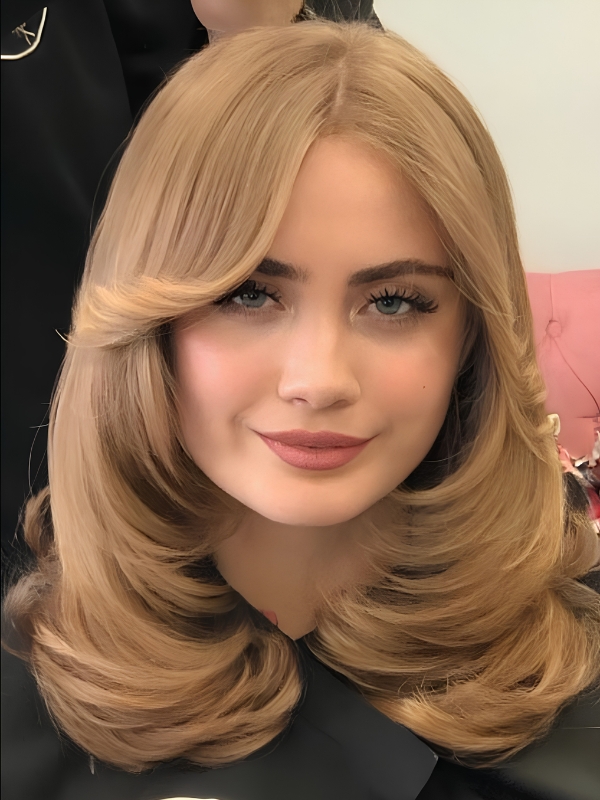
Many stylists blend curtain bangs directly into face-framing layers rather than cutting a separate fringe line. This creates a seamless transition and is a strong option for anyone with a prominent forehead.
Curtain Bangs vs Full Fringe vs Wispy Bangs
| Feature | Curtain Bangs | Full Fringe | Wispy Bangs |
| Coverage | Parted, open at center | Solid, covers full forehead | Thin, sheer coverage |
| Maintenance | Low to medium | High (frequent trims) | Low |
| Best face shapes | Nearly all shapes | Oval, long faces | Round, oval faces |
| Styling effort | Minimal, air-dry friendly | Requires daily styling | Minimal |
| Growing out | Easy, blends into layers | Difficult, awkward stages | Easy |
Growing Out Curtain Bangs (and Fixing an Uneven Cut)
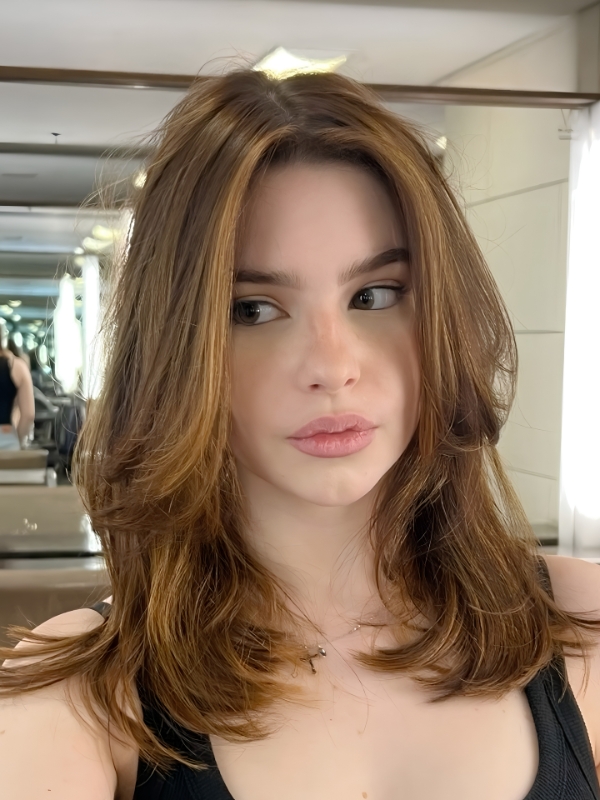
Curtain bangs are one of the easiest fringes to grow out because they’re already designed to sweep to the sides. A few tips make the process smoother:
- Tuck and pin. Use small clips or a headband to hold bangs back while they lengthen.
- Ask for a “blend trim,” not a bang trim. This keeps the length but removes bulk where it grows into the rest of the hair.
- Use a texturizing spray. It helps disguise the awkward in-between stage.
- Fix unevenness with dry cuts. If one side grows faster or a DIY trim went wrong, ask your stylist for a dry, face-framing correction rather than a wet cut, since dry cutting shows the true fall of the hair.
- Avoid trimming it yourself past small touch-ups. Curtain bangs rely on precise tapering, and uneven DIY cuts are one of the most common styling mistakes.
Final Thoughts
Curtain bangs have stayed popular for one simple reason: they adapt to almost anyone. By matching the length and thickness to your face shape and letting your natural hair texture guide the styling, you can wear this fringe in dozens of ways, from a sleek curtain bang lob to an undone, torn-edge finish.
Bring a few reference photos to your next salon visit, mention your hair type and face shape, and your stylist can shape a version that grows out as easily as it styles.