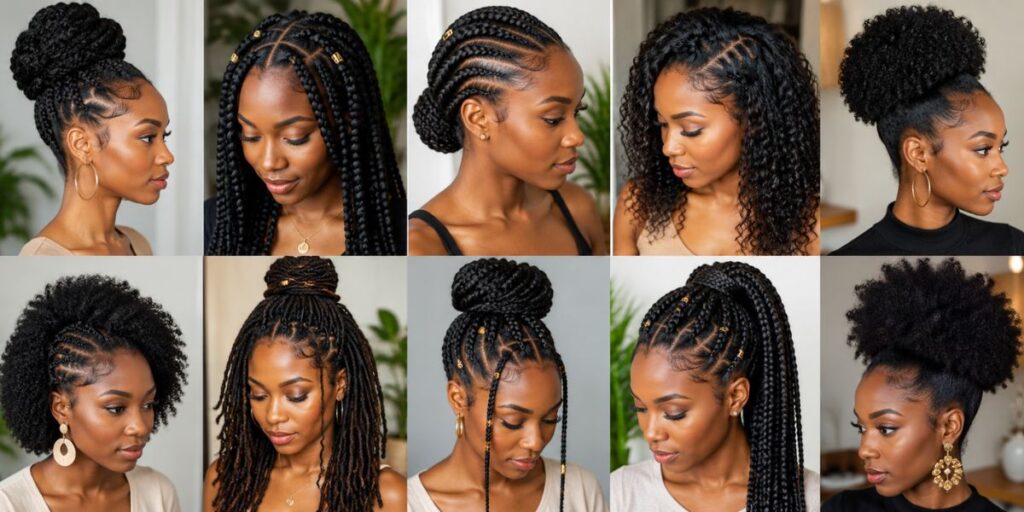
Protective hairstyles remain one of the most effective ways to grow natural hair while keeping it healthy, defined, and low maintenance.
Whether you are new to natural hair care or a longtime curly girl looking for fresh inspiration, this guide breaks down the best protective styles for 2026, how to choose the right one for your texture, and the prep and aftercare that actually make styles last.
Why Protective Hairstyles Matter
Protective hairstyles are not just a beauty trend. They are a practical strategy for anyone trying to grow out coily, curly, or transitioning hair without constant damage.
Reduce Breakage and Split Ends
Daily combing, brushing, and heat styling wear down the hair cuticle over time. Protective styles tuck the ends away and limit manipulation, which means fewer opportunities for strands to snap or split.
Retain Length and Moisture
Because the ends of your hair are the oldest and most fragile part, keeping them tucked into braids, twists, or buns helps seal in moisture and prevents length from breaking off before it can be retained.
Save Styling Time and Protect From Environmental Stressors
A well installed protective style can cut your morning routine down to minutes. It also shields hair from sun exposure, wind, chlorine, and friction from clothing or pillowcases, all of which contribute to dryness and damage.
How to Choose the Right Protective Hairstyle for Your Hair Type, Texture, and Lifestyle
Not every protective style works for every head of hair. Matching the style to your hair’s needs is the difference between healthy growth and unnecessary damage.
Assess Your Hair Porosity and Density
- Low porosity hair struggles to absorb moisture, so lighter styles that allow easy product penetration, like twists, tend to work best.
- High porosity hair loses moisture quickly and benefits from styles that seal ends completely, such as braids with sealed tips.
- Fine or low density hair does better with lightweight styles like flat twists or medium box braids to avoid tension and thinning.
- Thick or high density hair can usually handle fuller styles like Senegalese twists or larger braids without added extensions weighing it down.
Protective Hairstyles for Sleeping
Even the best protective style can suffer from nighttime friction. A satin or silk bonnet, scarf, or pillowcase reduces rubbing that leads to frizz, dryness, and loosened edges while you sleep.
Match Duration and Maintenance Level to Your Schedule
If you travel often or have a packed schedule, choose styles that last six to eight weeks with minimal upkeep, such as knotless braids or crochet locs. If you prefer to switch looks frequently, twist outs or bantu knots offer versatility with a shorter wear time.
10 Best Protective Hairstyles to Try Now
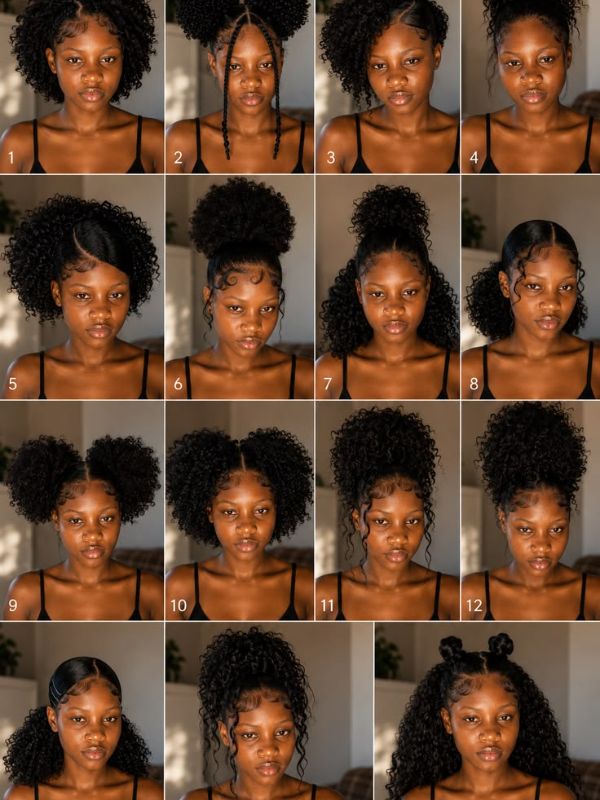
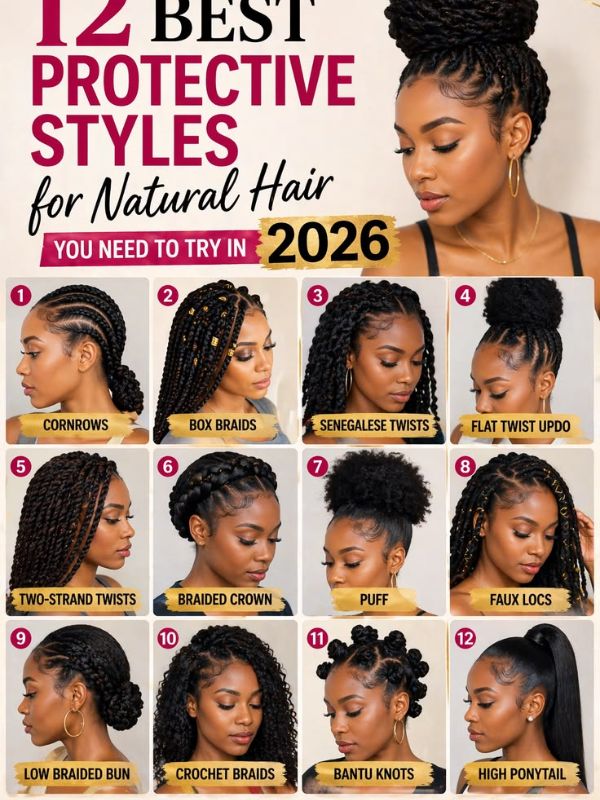
Here is a curated list of the top performing protective hairstyles trending in 2026, based on versatility, hair health benefits, and ease of maintenance.
| Style | Best For | Average Wear Time | Maintenance Level |
| Knotless braids | Sensitive scalps, all textures | 6 to 8 weeks | Low |
| Box braids | Extended wear, versatility | 6 to 10 weeks | Low to medium |
| Two strand twists | Beginners, low tension | 2 to 4 weeks | Medium |
| Passion twists | Soft, natural texture lovers | 4 to 6 weeks | Low |
| Cornrows | Sleek, professional looks | 4 to 6 weeks | Low |
| Faux locs | Loc lovers who are not ready to commit | 6 to 8 weeks | Low to medium |
| Bantu knots | Short term curl definition | 1 to 3 days | Low |
| Crochet braids | Quick installation, volume | 4 to 6 weeks | Low |
| Flat twist updo | Everyday low manipulation | 1 to 2 weeks | Medium |
| Wigs and sew ins | Maximum protection, styling freedom | 4 to 8 weeks | Medium |
- Knotless braids feed hair in gradually at the root, which reduces tension and helps prevent traction alopecia around the hairline.
- Box braids are a timeless choice that suits nearly every hair type and can be worn sleek or textured.
- Two strand twists are beginner friendly, require no extensions, and can double as a twist out once removed.
- Passion twists use a wavy, textured hair extension that mimics natural curl patterns for a soft finish.
- Cornrows work as a standalone style or as a protective base underneath wigs.
- Faux locs give the appearance of locs without permanent commitment and protect natural hair underneath.
- Bantu knots are ideal for short term styling, defined curls once unraveled, and minimal daily upkeep.
- Crochet braids allow for fast installation using pre looped or pre twisted hair, cutting salon time significantly.
- Flat twist updos keep hair close to the scalp for a neat, low manipulation everyday look.
- Wigs and sew ins offer full styling versatility while keeping natural hair completely braided and protected underneath.
Protective Hairstyles for White Hair Growth
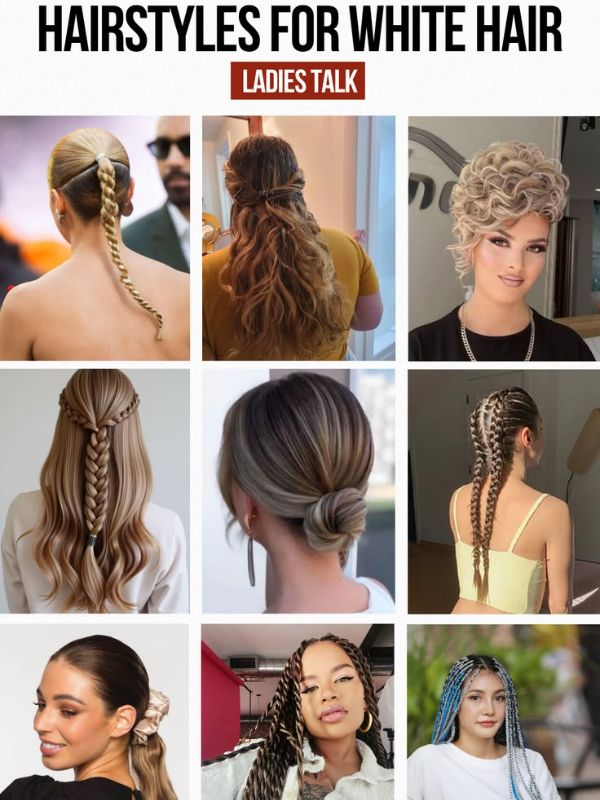
Gray and white natural hair tends to be coarser and drier due to reduced melanin and natural oil production. Softer styles like two strand twists, flat twist updos, and loosely installed knotless braids work well because they avoid excess tension on more fragile, drier strands, while still supporting healthy growth.
Also Read This: Best French Crop Taper Fade Haircut: Styles, Tips & Barber Guide (2026)
Step by Step Prep and Installation Tips for Long Lasting Protective Styles
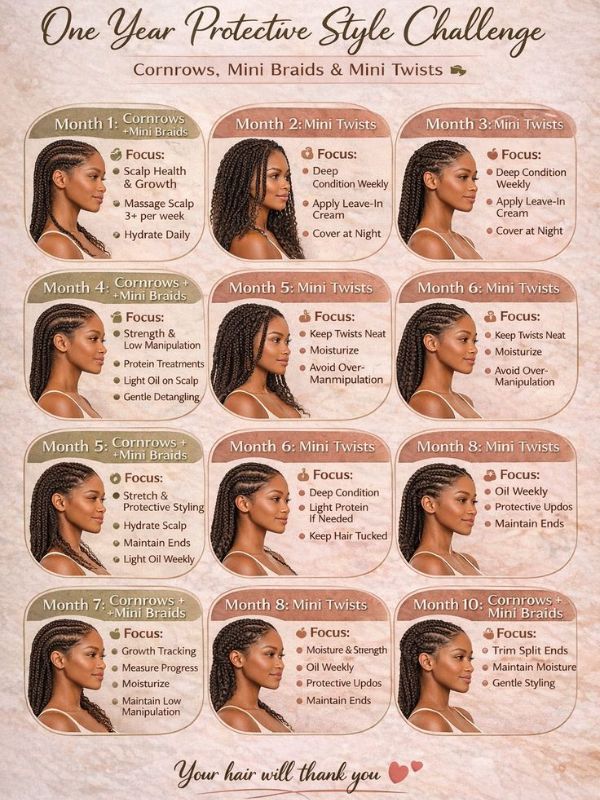
Preparation matters as much as the style itself when it comes to how long a protective style lasts and how healthy your hair looks underneath it.
Pre Styling Care: Cleansing, Deep Conditioning, and Protein Balance
- Start with a clarifying shampoo to remove product buildup and oil.
- Follow with a deep conditioning treatment to restore moisture.
- Add a protein treatment if your hair feels weak or overly elastic, but skip it if your hair already feels stiff or brittle.
- Detangle thoroughly on wet, conditioned hair using a wide tooth comb before installing any style.
- Apply a leave in conditioner and light oil to seal in moisture before braiding or twisting begins.
Maintenance and Nighttime Care While Wearing Protective Hairstyles
Once installed, a protective style still needs attention to stay fresh and to keep your scalp healthy underneath.
- Wrap hair in a satin or silk scarf or bonnet every night.
- Moisturize your scalp with a lightweight oil two to three times per week.
- Use a diluted leave in spray to refresh strands without causing buildup.
- Avoid excessive pulling into tight ponytails, which strains the same tension points repeatedly.
Protective Hairstyles for Long Hair
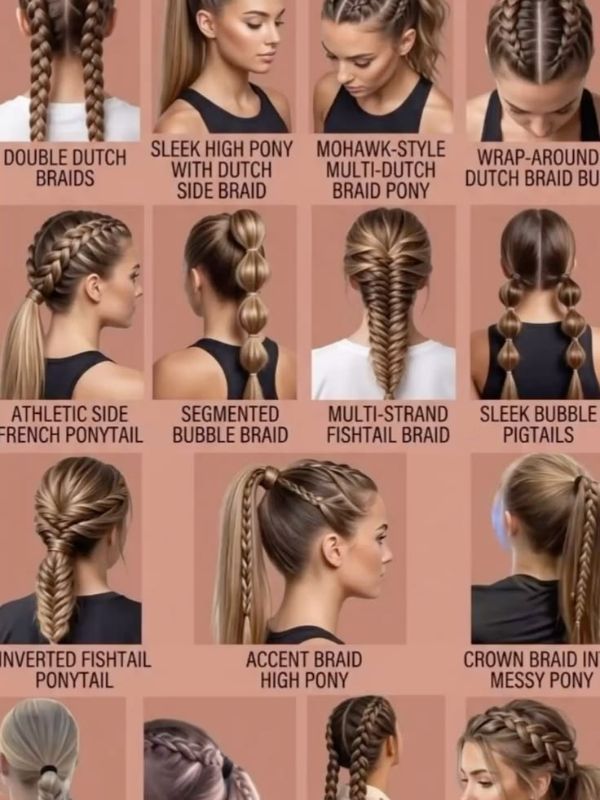
Longer natural hair benefits most from styles with reinforced sections, such as box braids, Senegalese twists, or sew ins, since the added length increases weight and the risk of tension at the root if not distributed evenly.
Signs You Have Too Much Tension or Buildup
- Persistent headaches or scalp soreness after installation
- Small bumps or redness along the hairline
- Visible flaking or itching that will not resolve with washing
- Thinning or shorter hairs along the edges
How Long Is Too Long and Safe Removal Practices
Most protective styles should not be worn longer than eight weeks, since new growth at the root increases matting and tangling risk over time. When removing a style, apply oil to loosen knots, work in small sections, and detangle gently with fingers before reaching for a comb.
Products and Tools That Actually Help
Leave In Moisturizers, Scalp Oils, and Satin Accessories
- Water based leave in conditioners for daily moisture without weighing hair down
- Lightweight scalp oils, such as jojoba or tea tree blends, for itch relief and hydration
- Satin or silk bonnets, scarves, and pillowcases to reduce friction while sleeping
- Mousse or edge control in small amounts for smoothing without excess residue
What to Avoid: Product Ingredients That Cause Buildup
Steer clear of heavy waxes, mineral oil as a primary ingredient, and alcohol based sprays, since these can clog the scalp, dull shine, and make styles harder to maintain over several weeks of wear.
Styling Variations and Transitional Looks
Protective styles do not have to look the same every day. Try a half up bun with box braids, accessorize twists with beads or cuffs, or pin cornrows into an updo for a dressier occasion. When it is time to transition out of a style, a twist out or braid out using the leftover pattern gives you a defined, low effort curl look before your next install.
Final Thoughts
The best protective hairstyle is one that fits your hair type, your schedule, and your willingness to maintain it properly.
Focus on gentle installation, consistent moisture, and giving your scalp regular breaks, and you will see the length retention and hair health benefits that make protective styling worth the effort year after year.