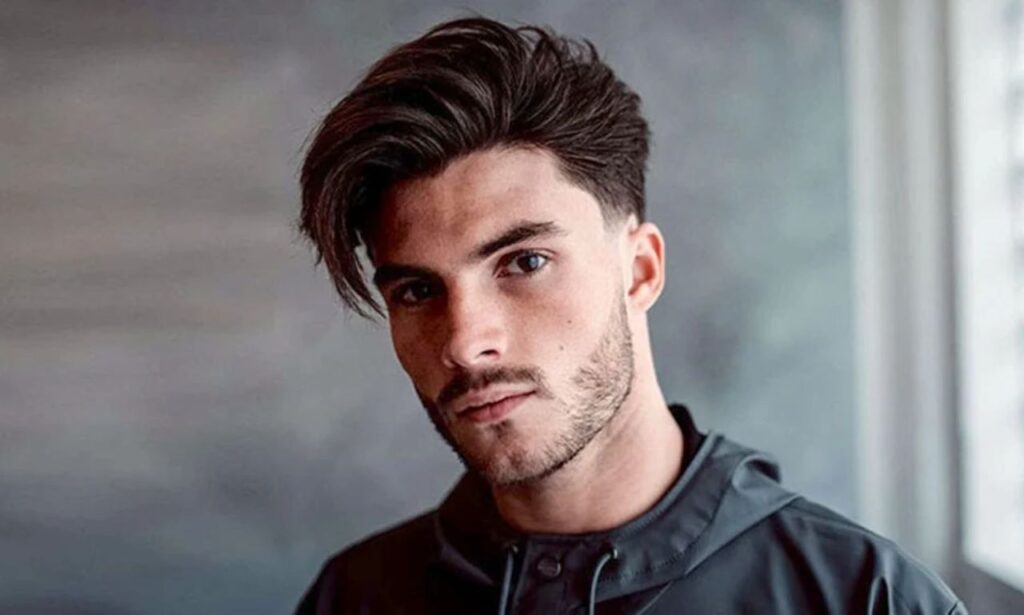
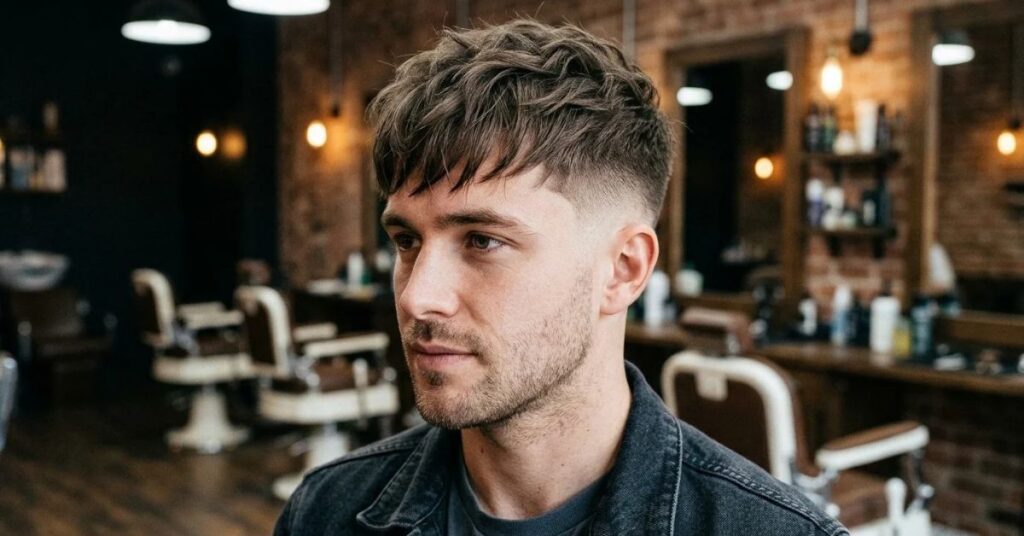
A mid taper fade textured fringe is a men’s haircut with sides that shorten gradually from the temple down, and a choppy, forward-falling top. It looks sharp without feeling severe. It also works for most hair types.
This guide covers eight styles, how to match them to your hair and face, and exactly what to tell your barber. You will also find a realistic maintenance plan, so nothing here is guesswork.
8 Best Mid Taper Fade Textured Fringe Styles
Each style below uses the same base: a mid taper on the sides and a textured top. What changes is the length, the volume and the finish.
Classic Textured Styles
1. Classic Textured Fringe
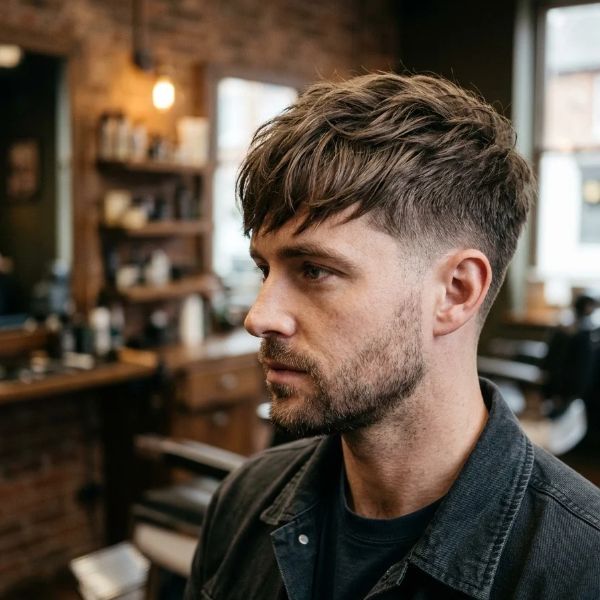
This is the standard version. The top sits at about 2 to 3 inches and falls forward to the brow line. The barber cuts into the ends so the hair separates into pieces instead of one flat sheet.
- Best for: Straight to slightly wavy hair
- Finish: Matte clay or paste
- Ask for: Mid taper, point cut top, fringe to the brow
2. Choppy Textured Fringe
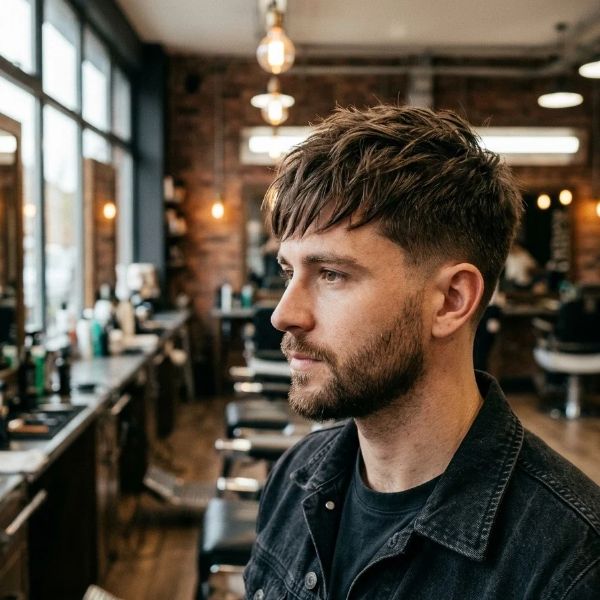
The choppy version has more contrast between short and long pieces. It looks messy on purpose and suits men who want a lived-in finish.
- Best for: Medium to thick hair
- Finish: Sea salt spray, then a light paste
- Ask for: Heavy texturizing and uneven fringe lengths
Volume-Focused Variations
3. Textured Fringe with Volume
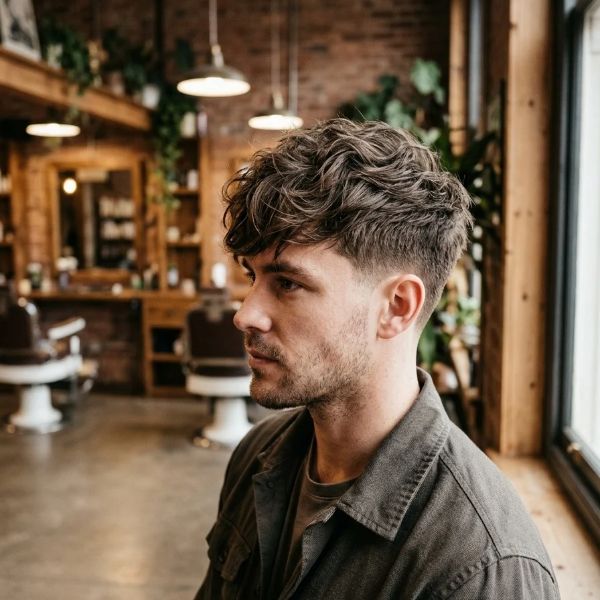
Here the top is slightly longer and lifted at the front. Volume makes the fade look more dramatic and adds height for men with longer or narrower faces.
- Best for: Fine to medium hair that needs lift
- Finish: Blow dry, then use a light powder or cream
- Ask for: Longer layers at the crown and front
4. Textured Fringe with Blowout
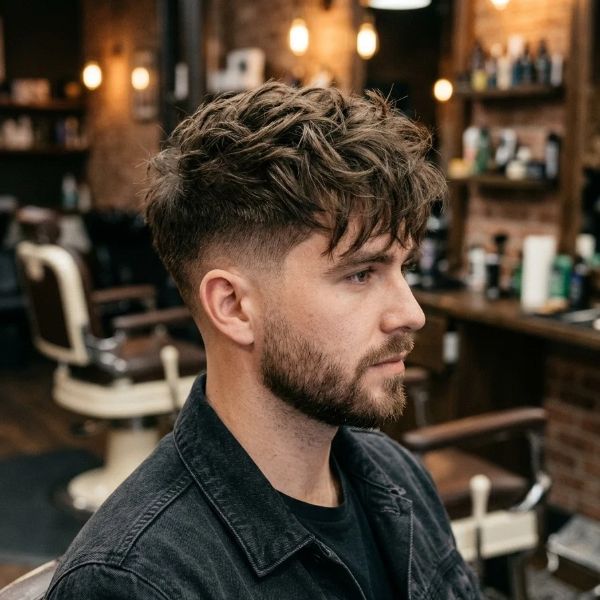
A blowout gives the top a soft, airy shape. The hair moves up and away from the forehead, then falls into a relaxed fringe. Some barbers pair it with a blowout taper, where the sides keep a little extra length.
- Best for: Thick or coarse hair
- Finish: Blow dry with a round brush and add a flexible-hold cream
- Ask for: Mid taper with a blowout top
Wavy and Natural Texture Styles
5. Wavy Textured Fringe
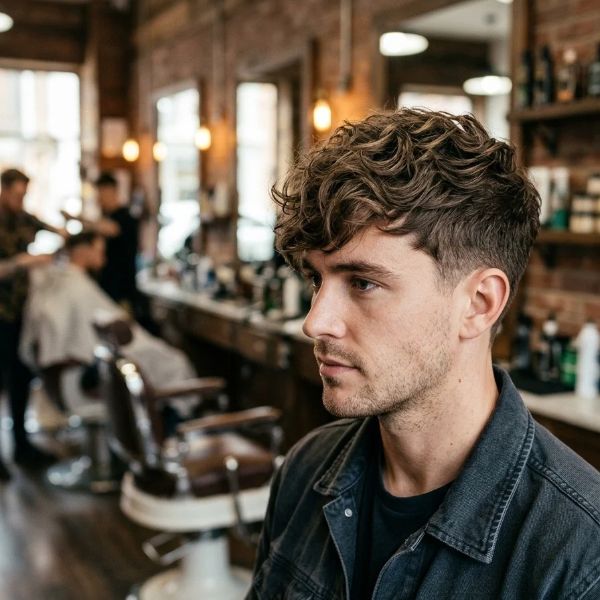
Waves already have built-in texture, so this style leans into them. The barber removes bulk and shortens the sides so the waves do not look heavy.
- Best for: Type 2 waves
- Finish: Curl cream and air drying
- Ask for: Wave-friendly layers and minimal razor use on top
6. Curly Textured Fringe
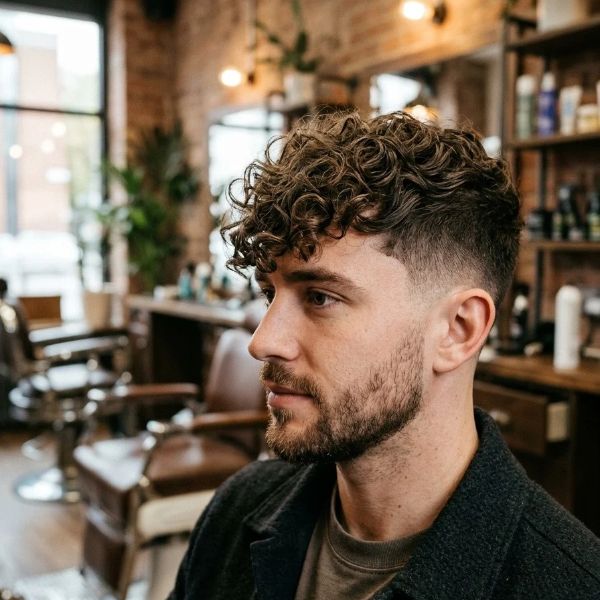
Curls fall onto the forehead above a clean taper. The contrast between tight curls and neat sides is the whole appeal. Keep the top long enough, usually 3 to 4 inches, so curls can form properly.
- Best for: Type 3 curls
- Finish: Leave-in conditioner and curl gel
- Ask for: Dry cutting, so the barber sees how curls actually sit
Detail and Combination Styles
7. Side-Swept Textured Fringe
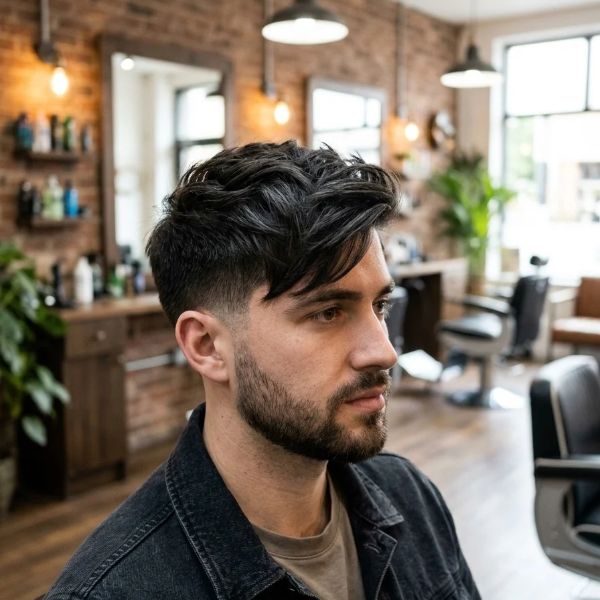
The fringe sweeps diagonally across the forehead. It suits men who want a slightly neater look for work or events. It also hides a high forehead or an uneven hairline well.
- Best for: Most hair types, especially natural side parts
- Finish: Light pomade
- Ask for: A side-swept fringe with soft, textured ends
8. Textured Fringe with Design
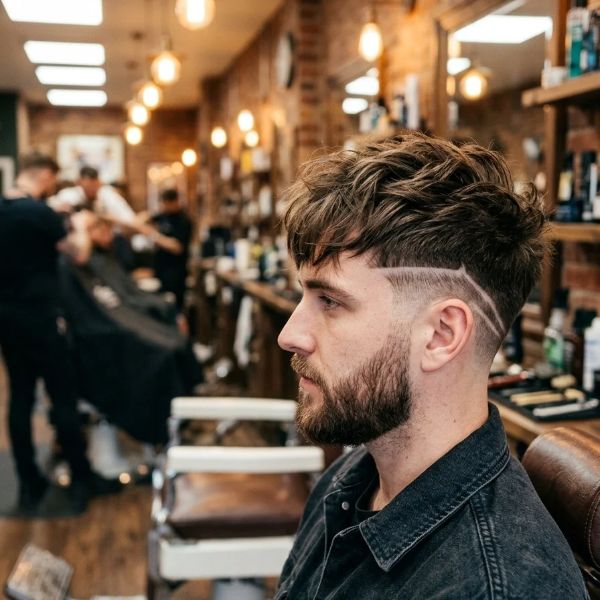
A shaved line, part or pattern sits in the fade or the side. Designs draw the eye, so the lines must be clean. Pick a simple design if you plan to get a haircut every 3 weeks.
- Best for: Men who want a personal detail
- Finish: Matte product on top so the design stays the focus
- Ask for: Design cut after the fade is finished
Mid Taper Fade Textured Fringe Explained: What Makes the Texture Work
Two parts do the work here: the taper and the top.
A mid taper starts shortening hair around the temple and ear line, then blends down to the neckline. It does not go as high as a high fade, so it looks balanced. It is also not as subtle as a low taper.
The texture comes from technique, not product:
- Point cutting: Snipping into the ends at an angle
- Slide cutting: Gliding scissors along the hair to thin it
- Razor texturizing: Used sparingly for softer edges on straight hair
Product only enhances what the cut has already built. If the haircut has no texture, no clay will fix it.
Why Textured Fringe Is Still Everywhere in 2026
The fringe has been popular for several years, and there are practical reasons it has not faded.
- It looks styled even when you spend two minutes on it.
- It works across ethnicities and hair types.
- It grows out gracefully, which makes barber visits less stressful.
- It pairs well with beards, glasses and casual or smart clothing.
- Barbers can adjust it endlessly, from a skin fade to a soft taper.
Men also want hair that looks natural, not rigid. A choppy fringe delivers that, and the taper keeps the shape clean.
Pros and Cons: What You’re Signing Up For
Pros:
- Versatile for work, school and weekends
- Easy to style with a small amount of product
- Hides a high forehead or a thin hairline when cut well
- Suits many face shapes with small tweaks
Cons:
- The fade loses sharpness in 2 to 3 weeks
- Needs the right product to keep texture
- Cowlicks at the front can be difficult to manage
- Very fine hair may look flat without a blow dry
If you hate frequent barber visits, ask for a softer taper that grows out gently.
Choosing by Hair Type: What Actually Holds Texture
Straight Hair
Straight hair shows cuts clearly, so point cutting works well. It can also fall flat, so use sea salt spray or a texture powder at the roots.
Wavy Hair
Wavy hair gives natural movement. Avoid heavy gel, which flattens waves. Use a light cream and let it air dry or diffuse it.
Thick Hair
Thick hair needs thinning, or the fringe sits like a helmet. Ask your barber to remove weight inside the top section. A blowout works nicely here.
Curly Hair
Curly hair needs length to curl. Cut it dry, keep it moisturized and avoid brushing when dry.
Face Shape Matchups
Oval Face
Oval faces suit nearly any version. Try the classic fringe or the choppy cut.
Round Face
Add height and avoid a heavy, flat fringe. A volume style or a side-swept fringe lengthens the face.
Square Face
A softer fringe balances a strong jaw. The wavy or choppy styles work well.
Heart-Shaped Face
Keep the fringe slightly longer and softer across the forehead to balance a narrow chin.
Long Face
Avoid too much height. A forward-falling fringe that covers part of the forehead shortens the look.
Diamond Face
A textured fringe with moderate length softens wide cheekbones. Keep the sides clean and not too tight.
Rectangular Face
Go for a fuller fringe with less vertical lift. The side-swept style works well.
Age Group Breakdown
Teenagers
Teens usually want a style that handles fast mornings. The choppy or classic fringe is easy and school-friendly. Check dress codes before asking for a bold design.
Young Men
This age group can experiment with the blowout, curly or design versions. A skin fade can add a sharper look, but a mid taper stays the safest all-rounder.
Professional Men
Choose the side-swept or classic style with a softer taper. Use less product and a matte finish for a polished but modern look.
Talking to Your Barber: The Exact Guard Numbers
Guard numbers help you avoid confusing words like “short” or “a bit off.” Every barber blends slightly differently, so treat these as a starting point.
Taper Fade Guard Sizes
| Zone | Typical guard |
|---|---|
| Neckline and sideburns | #0.5 or #1 |
| Lower sides | #1.5 or #2 |
| Mid sides (temple level) | #3 |
| Upper blend | #4, then scissors |
| Top | 2 to 4 inches, scissor cut |
Script to use: “I’d like a mid taper fade, starting at the temple, with a textured fringe about 3 inches long. Please point cut the top and keep the neckline natural.”
Bring a photo and mention your hair type. Also say whether you want a skin fade or a tapered fade that keeps some length.
Video Guide: Watch the Texture Get Cut In
Watching the cut helps more than reading about it. Search for a barber tutorial on a “mid taper textured fringe” and look for these moments:
- How the barber sections the top
- How the clipper is angled for the taper
- Where point cutting happens
- How the fringe is checked while dry
Embed your preferred video here and add a short caption describing what viewers should watch for.
Common Mistakes That Flatten the Texture
- Cutting the top too short. Under 2 inches limits movement.
- Using too much product. Heavy pomade weighs hair down.
- Skipping the blow dry. Fine hair often needs it for lift.
- Ignoring the cowlick. A cowlick changes how the fringe falls.
- Getting a fade that is too high. It makes the top look heavier.
- Washing every day with harsh shampoo. Dryness can leave hair limp or frizzy.
- Going too long between cuts. The taper goes soft and the shape is lost.
Maintenance Reality Check
Daily Styling
Follow this simple routine:
- Start with damp or towel-dried hair.
- Blow dry the fringe forward and up for 1 to 2 minutes.
- Warm a pea-sized amount of product between your palms.
- Work it through from the back to the front.
- Pull out the ends to create separation.
Products That Work Best
- Matte clay: Strong hold, no shine. Good for thick hair.
- Sea salt spray: Adds grit for straight or fine hair.
- Texture powder: Lifts roots without weight.
- Curl cream: Defines waves and curls.
- Light pomade: Helpful for a neat, side-swept finish.
Washing Routine
Wash 2 to 4 times a week with a gentle shampoo. Condition the ends, especially for waves and curls. Rinse product out fully so buildup does not flatten the top.
Touch-Up Frequency
- Every 2 to 3 weeks: If you want a crisp fade
- Every 3 to 4 weeks: For a relaxed look
- Every 6 to 8 weeks: Top trim only if the fringe stays long
Textured Fringe vs Other Fringe Styles
Textured Fringe vs Blunt Fringe
A blunt fringe is cut straight across and looks sharp and polished. A textured fringe has broken, uneven ends and a softer shape. Blunt cuts need straight, healthy hair. Textured cuts forgive more.
Textured Fringe vs Edgar Cut
The Edgar cut has a very short, straight fringe line and tight sides. The textured fringe is longer and looser. Choose the Edgar for a graphic look and the textured fringe for movement.
Textured Fringe vs Curtain Fringe
A curtain fringe parts in the middle and falls to both sides. It needs more length and suits straight or wavy hair. The textured fringe falls forward and works on shorter hair.
Frequently Asked Questions
What is a mid taper fade textured fringe?
It is a haircut with sides that taper from the temple down and a choppy, forward-falling top.
How long should hair be for a textured fringe?
Aim for 2 to 4 inches on top. Curly hair needs the upper end of that range.
What guard number is used for a mid taper?
Barbers typically use #0.5 or #1 at the neckline, then blend up to #3 or #4.
How often should I get a haircut?
Every 3 to 4 weeks keeps the shape clean. Go every 2 to 3 weeks for a sharper fade.
Is a mid taper different from a mid fade?
Yes. A taper leaves some length at the bottom, while a fade usually goes much shorter, sometimes to skin.
What product is best for a textured fringe?
Matte clay or paste suits most hair. Use sea salt spray for fine hair and curl cream for curls.
Does a textured fringe work for thin hair?
Yes. Ask for a slightly longer top, then use texture powder and a quick blow dry for lift.
Can I get this style with a beard?
Yes. Ask your barber to blend the taper into your beard so the lines look connected.
Does it suit a receding hairline?
Often yes. A forward-falling fringe covers the temples and softens the hairline.
Conclusion
The mid taper fade textured fringe stays popular because it is balanced, flexible and easy to wear. Choose the version that fits your hair type and face shape, then give your barber clear details: guard numbers, top length and the kind of texture you want.
Keep the routine simple. Use the right product, avoid heavy styling and book regular trims. Start with the classic or choppy fringe if you are unsure, then adjust from there.

Abu Bakar is a passionate hairstyle and grooming writer who loves sharing the latest haircut trends, styling ideas, and hair care tips. He creates simple and helpful content for readers of goskyip.com to stay confident and stylish every day.