The mid taper fade fringe is one of the most requested men’s haircuts right now, and it is easy to see why. The sides stay clean and tidy, while the front keeps enough length to look relaxed and modern. It works for school, the office and weekends out.
This guide explains what the cut is, how it differs from a mid fade, which fringe style suits you and how to ask for it. You will also find styling steps, trim schedules and the mistakes that ruin the cut.
What Is a Mid Taper Fade Fringe Haircut?
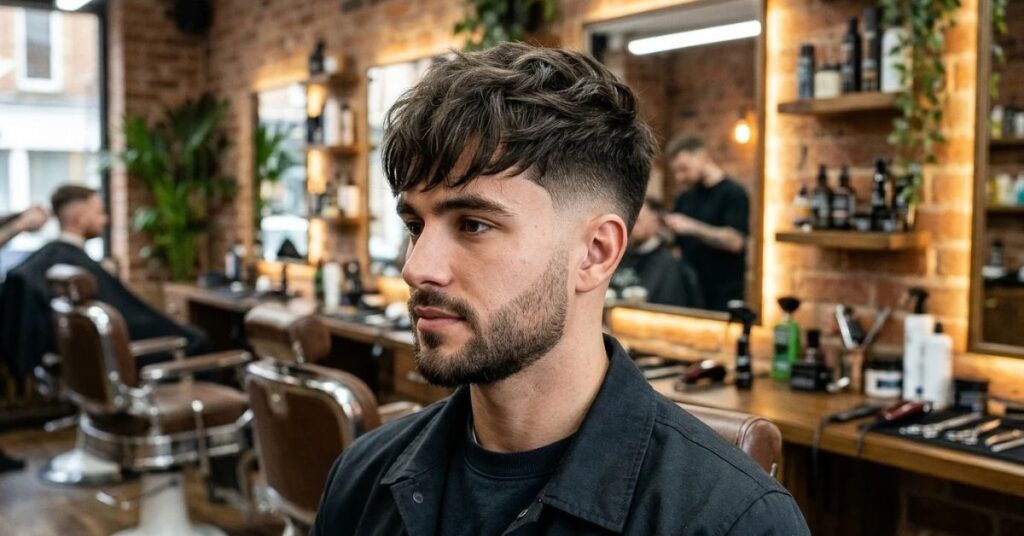
A mid taper fade fringe is a short-sides haircut with a longer, forward-falling top. The sides and back are tapered, starting around the temple and ear level. The hair on top is left long enough to fall onto the forehead as a fringe.
In simple terms, it has two parts:
- The taper: hair gets gradually shorter from the top of the head down toward the sideburns and neckline.
- The fringe: the front section is kept longer so it falls forward instead of being pushed back.
Most fringes in this style sit between about 1.5 and 3 inches (4 to 8 cm), depending on hair type and how much you want to show your forehead.
Quick answer: A mid taper fade fringe is a haircut with a gradual taper that begins at mid-height on the sides and a longer fringe styled over the forehead.
What’s the Difference Between a Mid Fade and a Mid Taper?
These two terms are often mixed up, and the difference changes your final look.
| Feature | Mid Taper | Mid Fade |
|---|---|---|
| Starting point | Mid-height on the sides | Mid-height on the sides |
| How short it gets | Keeps some length, rarely reaches skin | Often drops to skin or a very short guard |
| Contrast | Soft and subtle | Bold and sharp |
| Best for | Office, school, natural grow-out | Streetwear, high-contrast looks |
| Maintenance | Looks fine for 3 to 4 weeks | Looks best for 2 to 3 weeks |
A taper follows the natural hairline and mostly shortens the sideburns and nape. A fade removes much more weight and blends down to a very short length or skin.
For most people choosing a fringe, the taper is the safer pick. It keeps the look neat without drawing too much attention to the sides.
Why Mid Taper Fade Fringe Is So Popular in 2026
Several reasons explain the trend:
- It is versatile. The same cut can look smart, casual or sporty depending on how you style the fringe.
- It grows out well. A taper blends back into the sides gently, so you do not get a harsh line after three weeks.
- It suits many hair types. Straight, wavy and curly hair can all carry a fringe with the right cut.
- It needs little effort. Two minutes with a texture product is often enough.
- It balances neat and relaxed. Clean sides with a soft front look intentional without trying too hard.
Barbers also like it because it is easy to adjust. A client can start with a short fringe, then grow it into a curtain or side-swept shape over a few months.
6 Mid Taper Fade Fringe Styles to Try
1. Short Fringe with Mid Taper Fade
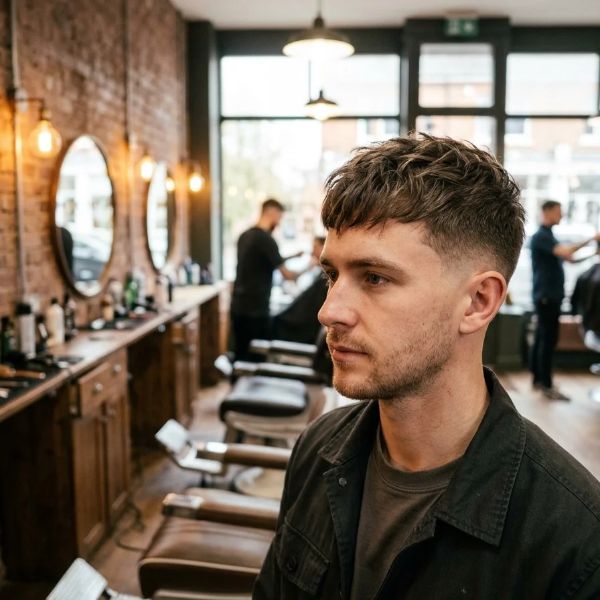
This is the easiest starting point. The fringe sits just above the eyebrows and is cut straight or slightly uneven.
It suits men with thick hair or a lower hairline. It also works well for anyone nervous about going longer. Use a small amount of clay to keep the front from lifting.
2. Curtain Fringe with Mid Taper Fade
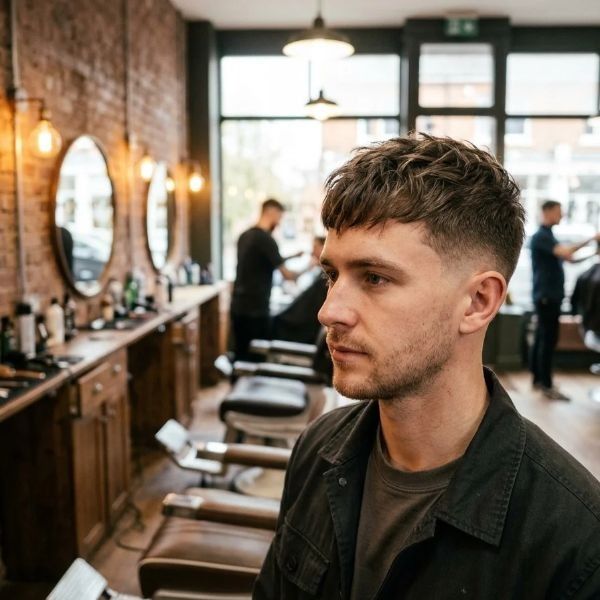
A curtain fringe parts in the center or slightly off-center and falls to both sides, like curtains. The tapered sides keep it from looking too shaggy.
It needs about 3 to 4 inches (8 to 10 cm) on top. It works best on straight or lightly wavy hair. Fine hair may need a bit of sea salt spray for hold.
3. Side-Swept Fringe with Mid Taper Fade
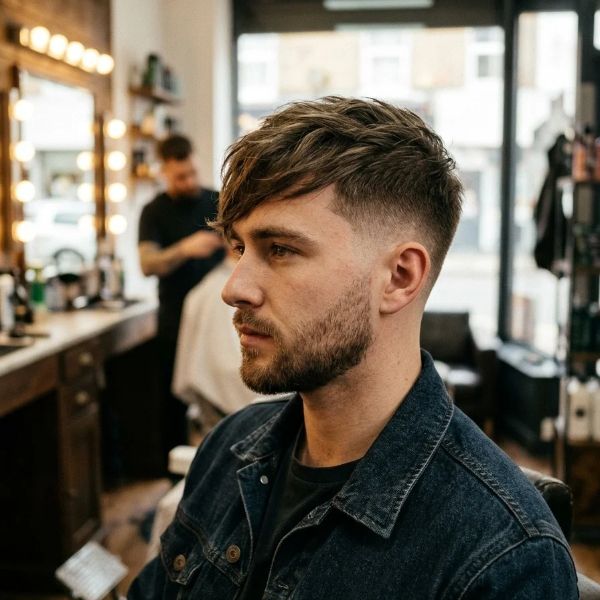
Here the fringe is combed or blown across the forehead to one side. The result is smart and clean, with a slightly classic feel.
This style works well for professional settings. A light pomade gives a soft shine without a stiff finish.
4. Choppy Fringe with Mid Taper Fade
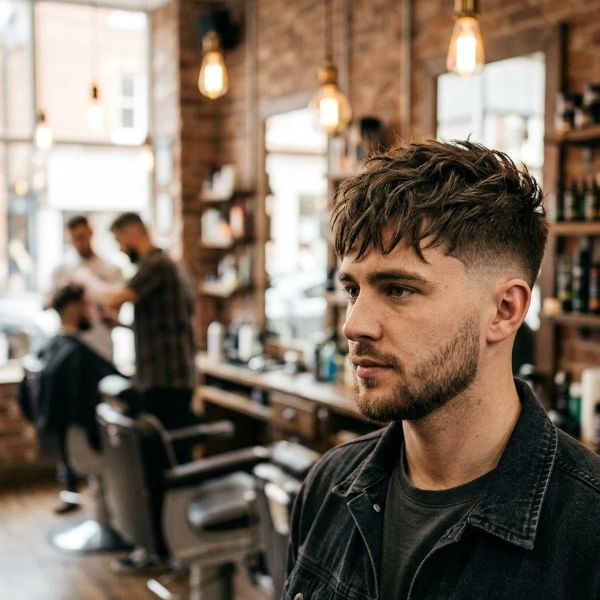
A choppy fringe is cut with a razor or point-cutting for a broken, uneven edge. It looks lived-in and full of movement.
It suits thick or coarse hair because the technique removes bulk. Style it with matte paste and your fingers. Do not comb it flat.
5. Fringe with Mid Taper Fade Blowout

A blowout adds volume at the front and crown. You dry the hair upward and forward with a brush or your fingers, then set it with a light product.
This style is popular with younger guys. It gives the fringe height and makes thin hair look fuller. A mid taper keeps the shape from looking too wide at the sides.
6. Wavy Fringe with Mid Taper Fade
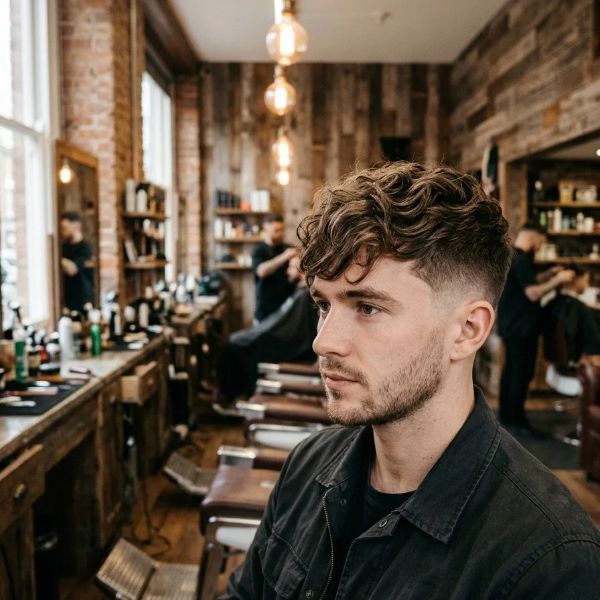
Natural waves give the fringe soft bends and movement. The taper trims the sides so waves do not puff outward.
Leave a little more length so the waves have room to curl. Use a curl cream or light mousse and let the hair air dry for the best pattern.
Common Mid Taper Fade Fringe Mistakes to Avoid
1. Cutting the Fringe Too Short
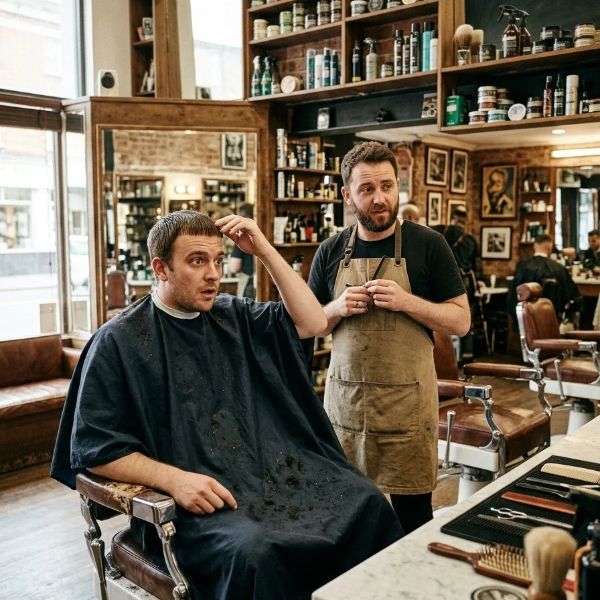
Hair looks longer when dry than when wet, and wavy hair springs up even more. A fringe cut too short ends up sitting high on the forehead and loses its shape. Ask the barber to cut it slightly longer, then adjust.
2. Letting the Barber Guard-Cut the Fringe
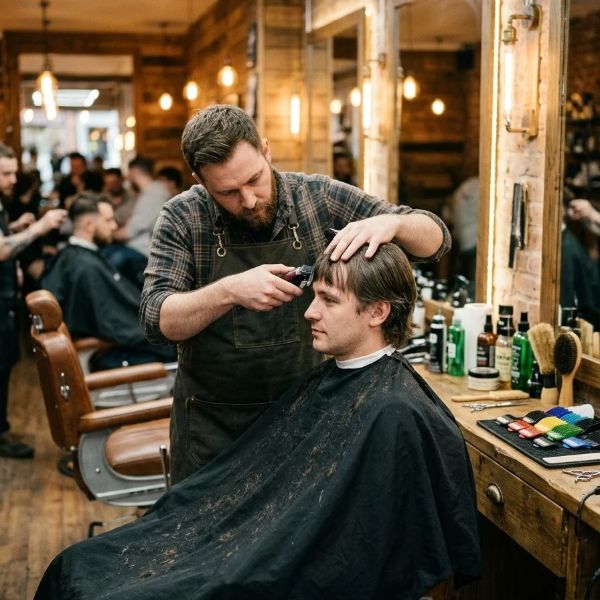
Clipper guards remove length evenly, which makes the fringe look flat and blunt. Ask for scissor work or point cutting on top so the ends look soft and natural.
3. Skipping Heat Protection When Blow-Drying

Daily heat dries out the fringe, causing split ends and frizz. Spray a heat protectant before using a hair dryer, and keep the dryer on medium heat.
4. Choosing a Full Mid Fade Instead of a Mid Taper
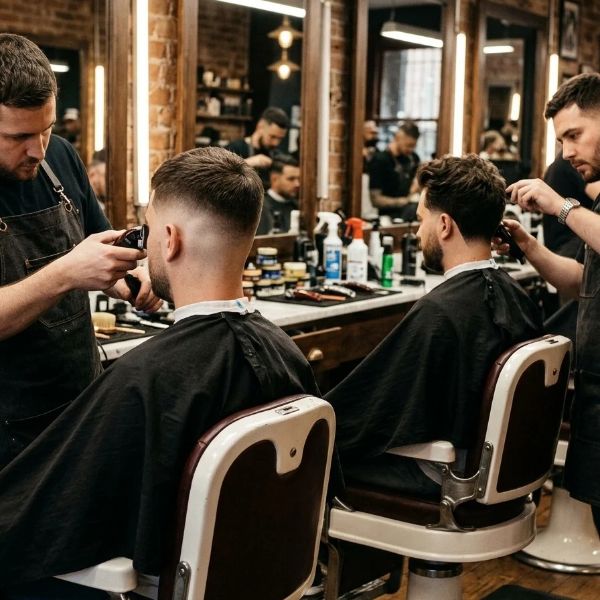
A skin-short fade can look too harsh next to a soft fringe. If you want a gentler look, ask clearly for a taper and mention that you want to keep some length around the ears and neckline.
5. Waiting Too Long Between Fringe Trims

A fringe grows into your eyes quickly. Wait too long and the shape is gone. Book a trim before it gets annoying, not after.
6. Using Heavy Wax on Textured Fringes

Thick wax clumps the hair and makes it look greasy. Textured and choppy fringes work better with matte clay, paste or a light cream.
How to Style a Mid Taper Fade Fringe
Daily Styling Routine
- Start with damp hair. Towel-dry until it is no longer dripping.
- Apply a prep product. Use sea salt spray for texture or a light mousse for volume.
- Blow-dry the fringe forward. Use medium heat and move the dryer constantly.
- Add a pea-sized amount of product. Rub it between your palms first.
- Shape with your fingers. Push the fringe forward or to the side, then tweak the ends.
- Finish lightly. A short burst of hairspray helps if you need all-day hold.
The whole routine takes about three to five minutes once you get used to it.
Products That Work Best
- Matte clay: strong hold with no shine, good for choppy and short fringes.
- Texture paste: flexible hold, good for most hair types.
- Sea salt spray: adds grip and body to fine or straight hair.
- Light pomade: best for side-swept looks that need a neat finish.
- Curl cream: helps wavy and curly fringes keep their shape.
- Heat protectant: essential if you blow-dry regularly.
How Often Should You Trim the Fringe?
Hair grows roughly half an inch (about 1.25 cm) per month. For the sides, book a tidy-up every 3 to 4 weeks. The fringe can often go 4 to 6 weeks, but if it keeps falling into your eyes, trim it sooner.
Which Face Shape Suits a Tapered Fringe?
The right fringe depends on your face shape. Use these tips as a guide, not a strict rule.
Oval Face
Oval faces are balanced, so most fringe styles work. A curtain fringe or side-swept fringe both look good.
Round Face
Choose a longer, side-swept or textured fringe with a bit of height. Avoid a very short, straight-across fringe, which can make the face look wider.
Square Face
A choppy or textured fringe softens a strong jawline. A mid taper keeps the sides tidy without adding more angles.
Long Face
A fuller fringe that covers part of the forehead helps shorten the look of the face. A curtain fringe or short blunt fringe works well. Avoid extra height on top.
Heart-Shaped Face
A side-swept or light, wispy fringe balances a wider forehead and narrower chin. Keep the sides slightly fuller by choosing a taper instead of a skin fade.
Best Mid Taper Fade Fringe Styles by Age Group
Teenagers
Teens often want a trendy, low-effort look. A short or choppy fringe with a mid taper works well. It also meets most school grooming rules because the sides stay neat.
Young Men
For men in their twenties and early thirties, a blowout or wavy fringe suits a more expressive style. Texture and movement are the focus here.
Professional Men
A side-swept fringe with a clean mid taper works best at the office. Choose light pomade or paste with a natural finish, and keep the fringe off the eyebrows.
Does a Tapered Fringe Make You Look Younger or Older?
A tapered fringe usually makes you look younger. The soft front and relaxed shape give a youthful feel, especially when the hair has texture.
It can look older if the fringe is combed flat, styled with heavy product or paired with a very severe fade. For a fresher look, keep the front loose and the finish matte.
If you have a receding hairline, a slightly longer and textured fringe can help soften it. A very thin fringe may highlight it.
How to Ask Your Barber for a Mid Taper Fade Fringe
Key Phrases to Use With Your Barber
- “I want a mid taper with a longer fringe on top.”
- “Please taper the sides and keep some length around the ears.”
- “Cut the top with scissors, not clippers.”
- “Leave the fringe about [show length with your fingers].”
- “I want a soft blend, not a skin fade.”
Bringing a photo helps, but explain what you like about it. Hair type and density change how a cut looks on you.
Choosing the Right Length and Guard Number
Guard choices vary by barber and clipper brand, so use these as a rough guide:
- Bottom of the taper: a #1 or #2 guard for a clean, soft look.
- Blending up: a #3 or #4 near the mid-point of the sides.
- Top and fringe: left long and cut with scissors, about 1.5 to 4 inches (4 to 10 cm).
If you prefer a stronger contrast, ask for a shorter guard at the bottom. If you want the softest option, ask the barber to start higher.
Common Barber Mistakes to Mention
- A taper that starts too high or too low. Say “mid” and point to the temple or ear line.
- A blunt, heavy fringe. Ask for texture or point cutting.
- Hard lines at the blend. Ask for a smooth, gradual transition.
- Ignoring cowlicks. If you have one at the front, tell the barber so the fringe is cut to work with it.
Mid Taper Fade Fringe: Video Guide
A short video helps you see the blend and the fringe styling in action. When you search for a tutorial, look for one that shows both the barber’s cutting steps and a full styling routine.
Editor’s note: embed a trusted barber tutorial here, titled something like “Mid Taper Fade Fringe Haircut Tutorial and Styling Guide.” Add a short caption that tells readers what they will learn, such as clipper blending, fringe cutting and finishing with clay.
Frequently Asked Questions
What is a mid taper fade fringe?
It is a haircut with tapered sides starting at mid-height and a longer fringe on top that falls onto the forehead.
How long should the fringe be?
Most fringes are between 1.5 and 3 inches (4 to 8 cm), though curtain styles can go up to 4 inches.
Is a mid taper better than a mid fade?
A taper is softer and easier to maintain, while a fade is sharper and more contrasted. The best one depends on your style.
What hair type works best?
Straight, wavy and curly hair all work, as long as the fringe is cut to suit the hair’s natural movement.
Can I get this haircut with thin hair?
Yes. A blowout or textured fringe adds volume, and a taper keeps the sides from looking bulky.
How often should I get a trim?
Every 3 to 4 weeks for the sides, and every 4 to 6 weeks for the fringe.
What product should I use?
Matte clay or texture paste works best for most styles. Use light pomade for a neater finish.
Is this haircut suitable for work?
Yes. A side-swept fringe with a clean mid taper looks professional in most offices.
Does it work on curly hair?
Yes. Leave extra length on top, and use curl cream to keep the shape defined.
How long does it take to style?
Usually three to five minutes once you know your routine.
Conclusion
The mid taper fade fringe works because it balances clean sides with a relaxed front. It adapts to different hair types, face shapes and ages, and it grows out gracefully.
To get the best result, choose a fringe style that suits your face, ask your barber for scissor work on top and keep up with regular trims. Use the right product, protect your hair from heat and bring clear instructions to your next appointment.
If you are unsure where to start, begin with a short or side-swept version and adjust the length over time. A good barber and a simple routine will do the rest.

Abu Bakar is a passionate hairstyle and grooming writer who loves sharing the latest haircut trends, styling ideas, and hair care tips. He creates simple and helpful content for readers of goskyip.com to stay confident and stylish every day.