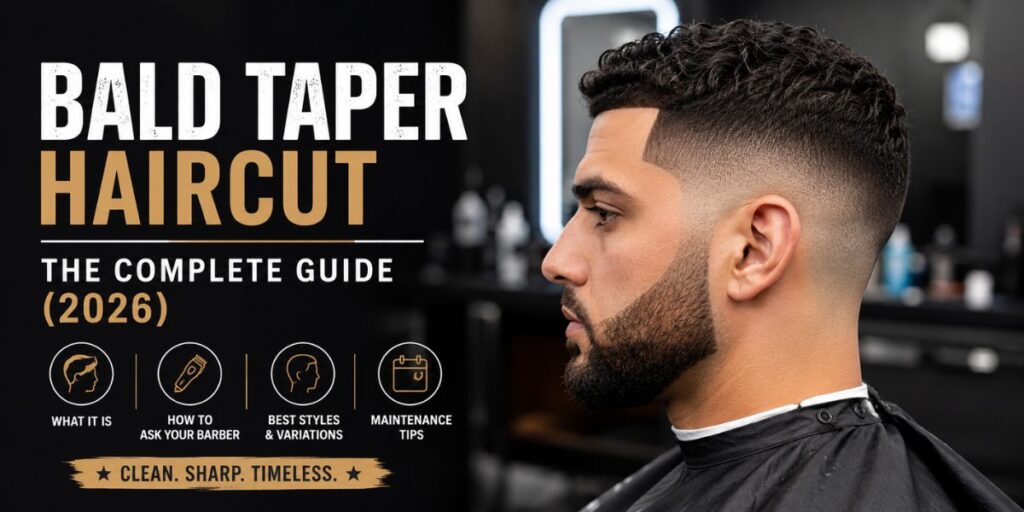
The bald taper haircut is one of the sharpest, most requested cuts in barbershops right now, and for good reason.
It takes the clean control of a taper and pushes the edges all the way down to bare skin, giving you crisp lines without the full commitment of a skin fade.
Whether you have straight, curly, or textured hair, this guide breaks down exactly what a bald taper is, how it’s cut, how to maintain it, and which tools actually matter.
What Is a Bald Taper Haircut?
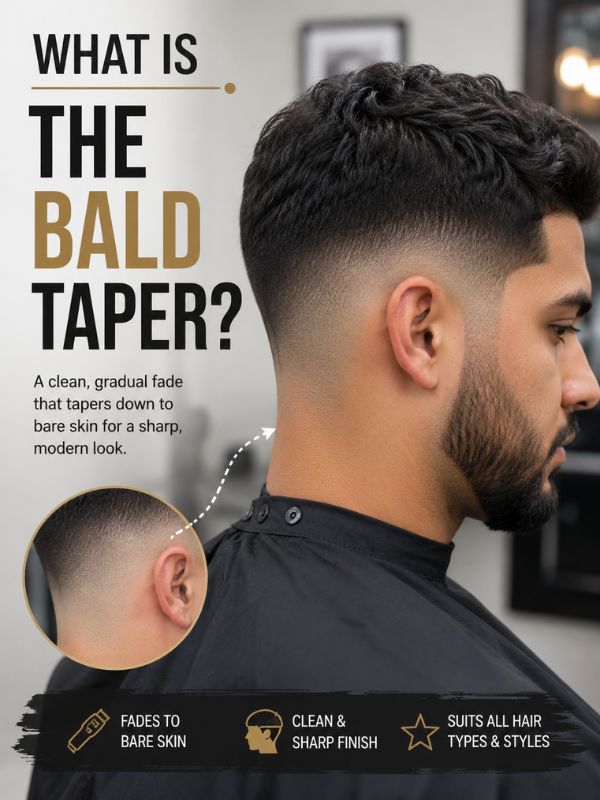
A bald taper haircut is a style where the hair gradually shortens from a longer length on top down to completely bare skin at the perimeter — around the temples, sideburns, and nape of the neck.
Unlike a full bald fade, which blends across a wide section of the head, the bald taper keeps the skin-to-hair transition tight and concentrated near the hairline.
The rest of the haircut above that zone stays largely untouched, so the fade acts as a frame rather than the main feature.
This makes the bald taper a versatile finishing technique. It works underneath almost any haircut on top, from a textured crop to a slick side part, giving the whole style a cleaner, more intentional look.
Bald Taper vs. Taper Fade vs. Bald Fade
People mix these terms up constantly, so here’s a quick side-by-side comparison.
| Style | Transition Zone | Ends At | Best For |
| Bald Taper | Narrow (about 1 inch) | Bare skin | Clean, subtle edges without a full fade |
| Taper Fade | Gradual, wider blend | Short hair (not skin) | Softer contrast, low-maintenance regrowth |
| Bald Fade | Wide section of the head | Bare skin | Bold, high-contrast statement look |
The main difference comes down to how much of the head is involved. A regular taper fade leaves a bit of hair near the neckline, while the bald version shaves that area completely bare. A bald fade, by contrast, extends the skin blend much higher up the sides.
How to Cut a Bald Taper Haircut
Cutting a clean bald taper is about precision, since the transition zone is small and mistakes show up fast. Here’s the general process a barber follows:
- Section and prep the hair. Start with clean, dry hair and comb through to identify natural growth patterns, especially around the nape.
- Set the guideline. Using a trimmer or edger with no guard, create a straight line about half an inch above the natural hairline at the sideburns and neckline.
- Take the base to skin. Use a foil shaver or a closed trimmer blade below the guideline to clear the area down to bare skin. Keep this section minimal — this isn’t a full fade, so going too high ruins the effect.
- Blend upward. Switch to a clipper on a closed #1 guard and work upward from the skin line using light, rocking strokes to feather the transition.
- Work in half-guard increments. Open and close the clipper lever between passes so there’s no visible line between the skin and the hair above it. Jumping straight from skin to a full guard almost always leaves a hard edge.
- Shape around the ears and neck. Follow the natural curve of the head, keeping the skin-to-hair width consistent all the way around.
- Finish the lineup. Use a straight razor or detail trimmer to sharpen the hairline, sideburns, and neckline for a defined, barbershop-quality edge.
- Cut and blend the top last. Once the perimeter is set, style or trim the top length to complement the tight taper below.
The whole point of this cut is control. Since the blend happens in a much smaller space than a bald fade, a heavy hand with the clippers can quickly turn a bald taper into something wider than intended.
Maintenance and Aftercare
A bald taper looks its sharpest in the first few days, then starts to soften as regrowth fills in the skin section. Keeping it fresh comes down to a few consistent habits:
- Book touch-ups every 2–3 weeks. Because the skin section is small, regrowth is noticeable faster than on a longer taper.
- Moisturize the scalp. Freshly shaved skin can dry out or flake, especially in the first day or two after a cut.
- Use a light aftershave or soothing balm on the bald section to prevent irritation and razor bumps.
- Avoid heavy products near the edges. Thick pomades or waxes can clog the skin section and make regrowth look patchy.
- Protect the style at night. A satin pillowcase or durag helps preserve texture on top and keeps the edges from getting mussed.
- Touch up the neckline at home between barber visits with a detail trimmer if you want to stretch out appointments.
Suggested Maintenance Schedule
| Timeframe | What to Do |
| Days 1–3 | Moisturize skin section, avoid heavy product buildup |
| Week 1–2 | Light at-home edge-ups if regrowth shows |
| Week 2–3 | Full barber touch-up to reset the taper |
| Ongoing | Regular scalp care and nighttime hair protection |
Also read this: Ice Cream Haircut: Complete Guide, Best Variations & Styling Tips (2026)
Bald Taper Haircut for Straight Hair

Straight hair shows every line clearly, which makes the bald taper especially sharp — but it also means blending mistakes are harder to hide.
Barbers typically take extra passes with a half-guard when working on straight hair to soften the transition, since straight strands don’t have natural texture to disguise an uneven line the way curly or wavy hair does.
On straight hair, the bald taper pairs particularly well with classic tops like a side part, a textured crop, or a simple crew cut.
The contrast between the smooth, flat top and the crisp skin edges gives the whole haircut a tailored, put-together look that works equally well for office settings and casual wear.
Tools You’ll Need
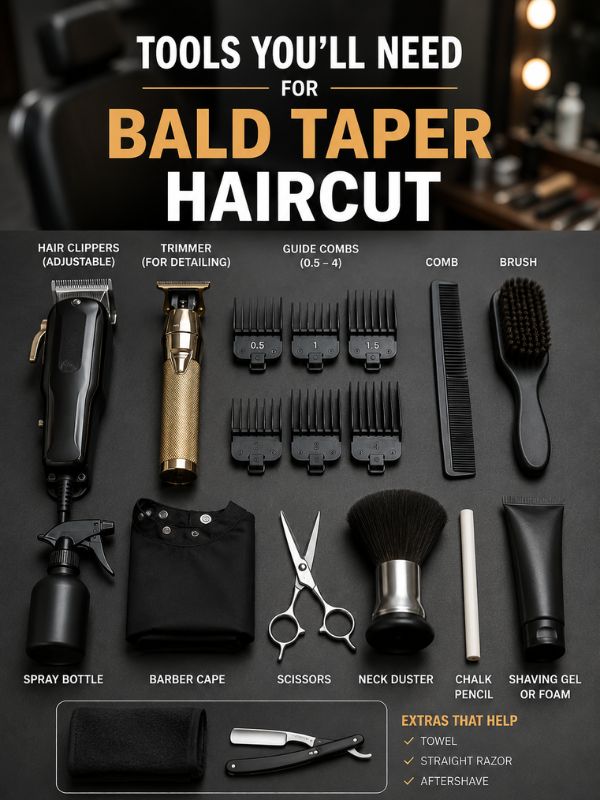
Whether you’re a barber or cutting at home, a bald taper requires a specific set of tools to get the transition right:
- Clippers with an adjustable taper lever – for the main blending work between guard lengths
- Detail trimmer (T-blade) – for crisp guidelines around the hairline, sideburns, and neckline
- Foil shaver or straight razor – to take the base section down to smooth, bare skin
- Clipper guards (especially half-guards) – to create gradual, seamless transitions
- Barber comb – for sectioning and clipper-over-comb work on top
- Spray bottle – to keep hair damp and manageable during longer sessions
- Aftershave or scalp balm – for post-cut skin care
Investing in quality clippers with a reliable taper lever makes the biggest difference. Cheap tools tend to pull hair and overheat, which makes it much harder to keep a clean, consistent blend in such a tight zone.
Similar Styles to the Bald Taper
If you like the look of a bald taper but want to explore variations, these related styles are worth knowing:
- Low Bald Taper – Starts closer to the neckline for a subtle, low-key look.
- Mid Bald Taper – Begins around the temple area, offering a balance between subtle and bold.
- High Bald Taper – Starts higher near the temples for maximum contrast.
- Taper Semi Bald Fade – A softer version that doesn’t go fully bare but mimics the sharp look near the edges.
- Bald Taper with Waves – Popular with curly and coily hair types, framing natural texture with clean sides.
- Afro Bald Taper – Pairs volume on top with a tight, clean perimeter, common in Black barbershop culture.
Common Names for the Bald Taper Haircut
This style goes by several names depending on the barbershop or region, including:
- Bald taper fade
- Skin taper
- Taper to skin
- Zero taper
- Bald edge taper
- Skin edge fade
Asking for any of these should get your barber to understand roughly the same concept, though it always helps to bring a reference photo to your appointment.
Final Thoughts
The bald taper haircut proves that you don’t need a full fade to get sharp, professional results. By keeping the skin-to-hair transition tight and controlled, it delivers clean edges that frame almost any style on top, from straight and sleek to curly and voluminous.
With the right tools, a skilled hand, and touch-ups every couple of weeks, it’s a cut that stays looking fresh and intentional between every visit to the chair.