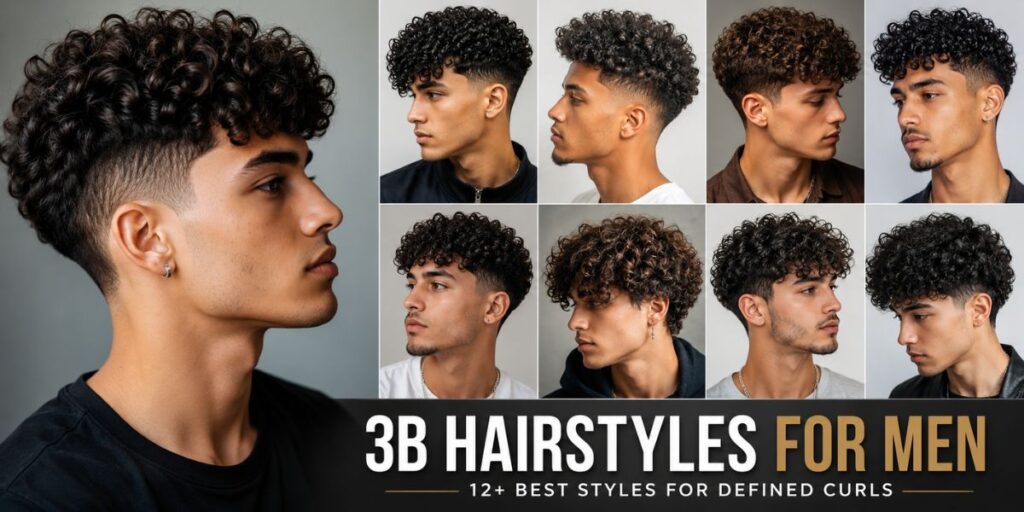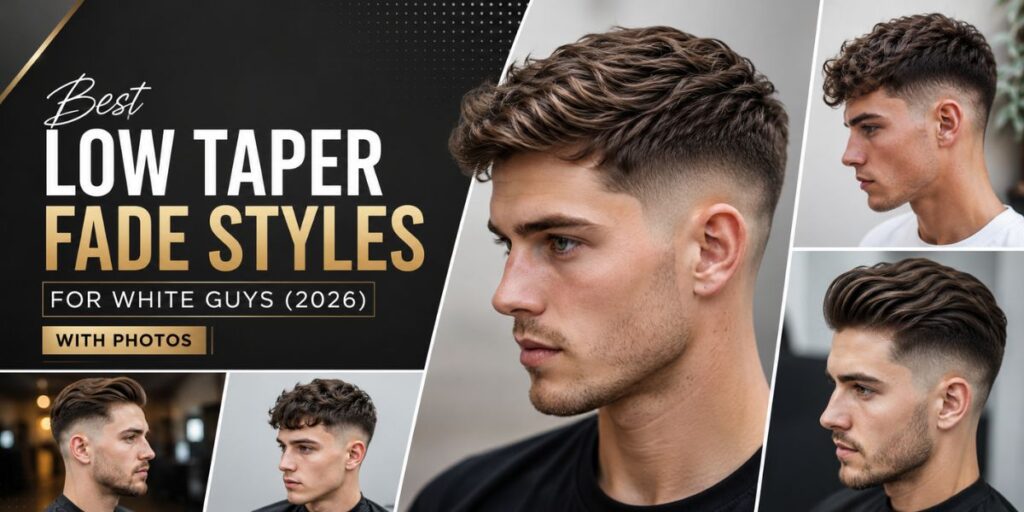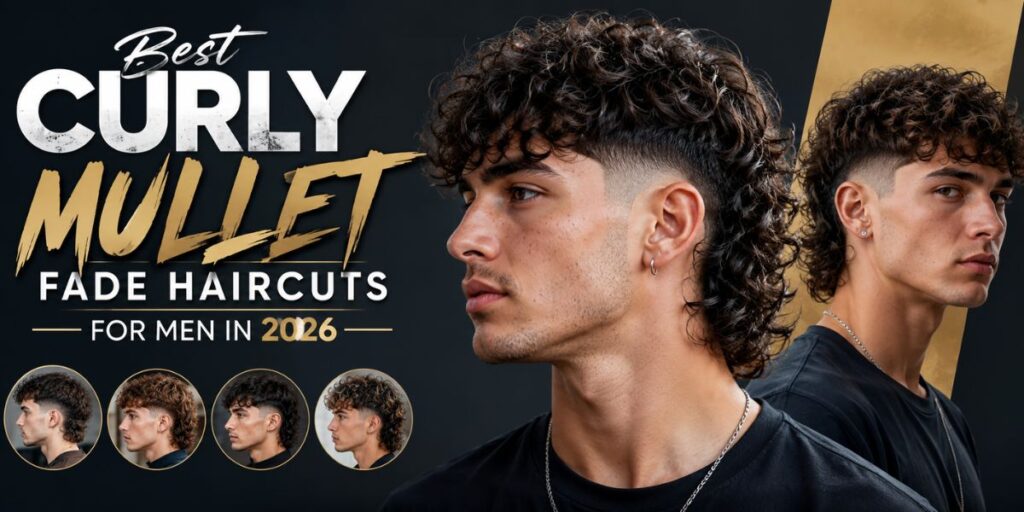
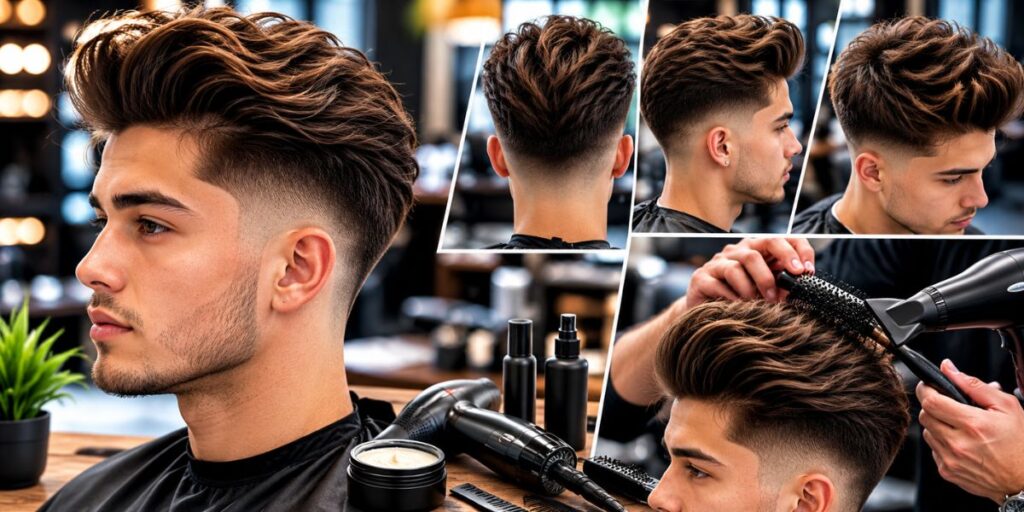
The blowout fade pairs a sharp, faded side with a lifted, voluminous top. It works for almost every hair type and face shape, which is why it has become one of the most requested cuts in barbershops today. This guide covers everything from the cut itself to daily styling, home upkeep, costs, and quick fixes for common problems — so you walk into your next appointment knowing exactly what to ask for.
What Is a Blowout Fade, and Why It Works
A blowout fade combines a tight clipper fade on the sides with hair on top that’s blow-dried up and back for height. The contrast between the clean sides and full top is what gives the style its bold, finished look without requiring a complex daily routine.
Origin and rise in barber culture
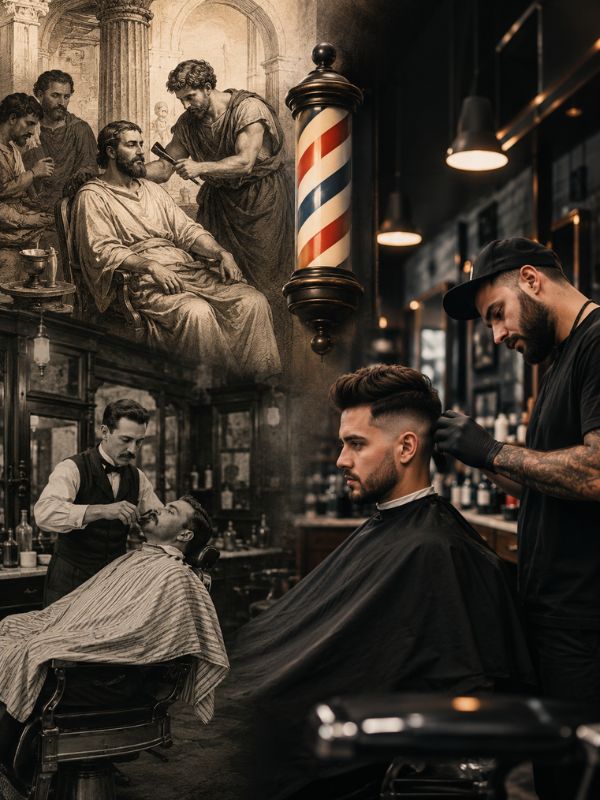
The cut grew out of classic taper and pompadour styles, but barbers started pushing the top higher and the sides tighter to create more contrast. Social media accelerated its popularity — short clips of the blow-dry reveal made the style easy to showcase and easy to copy, pushing it into mainstream men’s grooming trends.
Key features that define the blowout fade
- Faded sides that blend from skin or a short guard up into longer top hair
- Top hair lifted with a round brush and blow dryer for volume
- A clean, visible line of contrast between the fade and the top
- Texture and movement instead of a flat, slicked-down finish
Blowout Fade Types, Pick the Right One
Not every blowout fade looks the same. The fade height and the finish on the sides change the entire vibe of the cut, so it helps to know the variations before you sit in the chair.
High blowout fade, low blowout fade, mid fade explained
| Type | Fade Start Point | Best For |
| High blowout fade | Above the temple, near the crown | Bold, high-contrast looks; round or oval faces |
| Mid fade | Mid-way between ear and temple | Balanced, everyday-friendly versions |
| Low blowout fade | Just above the ears | Subtle contrast; workplace-friendly styles |
Skin fade versus tapered finish, which to choose
A skin fade shaves the sides down to bare skin for maximum contrast and a crisp edge. A tapered finish gradually shortens the hair without going to the skin, giving a softer, lower-maintenance silhouette. Choose a skin fade for sharp, dramatic contrast; choose a taper if you want a softer look that grows out more gracefully.
Who Should Get a Blowout Fade, Face Shapes and Hair Types
The blowout fade is flexible, but adjusting the height and volume to your face shape and hair texture makes a real difference in how polished the final result looks.
Best fits for round, square, oval, and long faces
- Round faces: A high blowout fade adds vertical height and slims the face.
- Square faces: A mid fade with moderate volume softens strong jawlines.
- Oval faces: Almost any blowout fade height works well here.
- Long faces: A low blowout fade with side volume avoids adding extra length.
Hair texture guide, fine, thick, curly, straight
| Hair Type | What to Expect |
| Fine hair | Needs lightweight volumizer; avoid heavy product that flattens the top |
| Thick hair | Holds volume naturally; thin out top weight if it feels bulky |
| Curly hair | Adds natural texture; use cream-based products to control frizz |
| Straight hair | Needs root lift from blow-drying since it has less natural body |
Step-by-Step Hybrid Cosmetology Barber Guide to Cutting a Blowout Fade
Getting a clean blowout fade is part clipper skill and part styling skill. A barber needs to nail both the fade blend and the blow-dry to deliver the full effect.
Tools and setup every barber needs
- Adjustable clipper with sharp blades
- A full set of clipper guards for blending
- Foil shaver for a clean skin-fade finish
- Blow dryer with a concentrator nozzle
- Round brush and a wide-tooth comb
- Heat protectant and a lightweight pre-styler
Clipper technique, blending, and guard progression
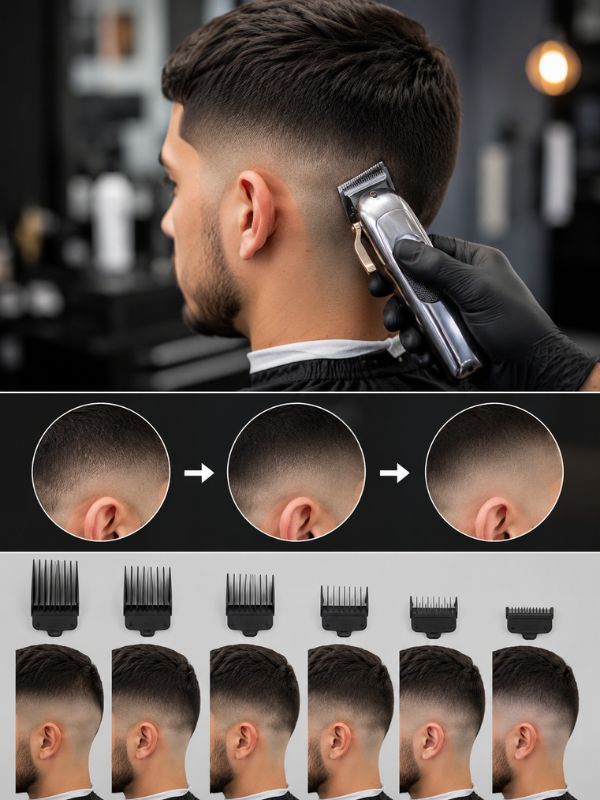
- Start with a guideline at the desired fade height.
- Work down through guard sizes in small steps to avoid visible lines.
- Blend with shorter guards near the hairline and ears.
- Cross-check the blend in different lighting and from multiple angles.
- Detail the edges with a trimmer for a sharp finish.
Blow-drying and finishing techniques for lasting volume
Towel-dry hair to about 70% before styling. Apply a heat protectant, then use a round brush to lift sections of the top while directing warm air upward and back. Finish with a cool shot of air to lock the shape, then add a small amount of paste or pomade to set it without stiffness.
Also Read This: Mid Fade Haircuts: Versatile Styles for Every Client
How to Do a Blowout Fade at Home, Simple Method
Cutting the fade yourself is risky, but styling an existing blowout fade at home is manageable with the right tools and a little patience.
Beginner-friendly steps and realistic expectations
- Apply a volumizing product to damp hair.
- Blow-dry in sections, lifting at the roots with a round brush.
- Direct airflow upward and slightly backward.
- Finish with a small amount of paste for hold.
If you’re cutting your own fade, start with longer guards and go slowly — you can always take more off, but you can’t put hair back.
Common mistakes to avoid, and quick fixes
| Mistake | Fix |
| Skipping heat protectant | Always apply before blow-drying to prevent damage |
| Using too much product | Start small; build up only if needed |
| Drying hair flat instead of lifting | Use a round brush and direct air upward |
| Cutting guard sizes too aggressively | Step down gradually between guards |
Styling Products and Daily Routine for Volume and Hold
The right products make the difference between a flat top and a full, shaped blowout. Less is usually more here.
Product breakdown, pomade, cream, matte paste, heat protectant
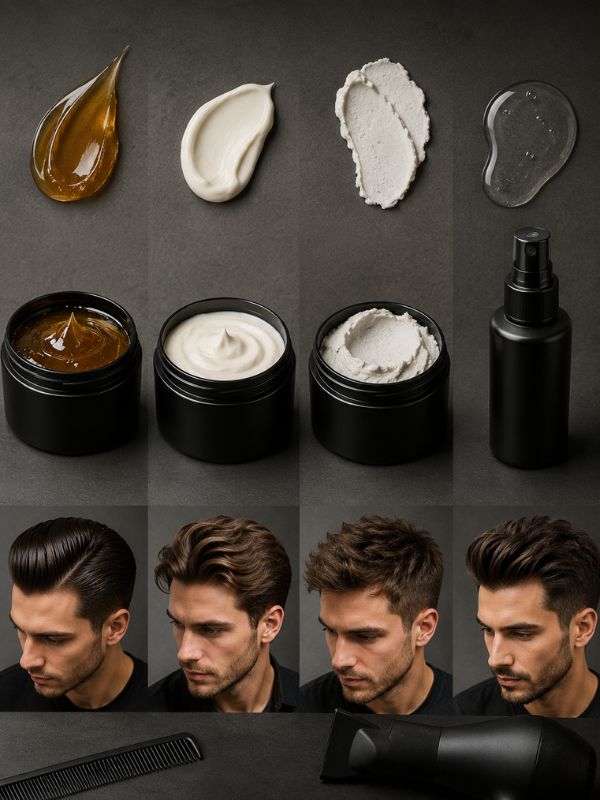
- Pomade: Adds shine and moderate hold; best for a polished look.
- Matte paste: Builds texture without shine; good for natural movement.
- Styling cream: Smooths frizz and works well on curly or wavy hair.
- Heat protectant: A non-negotiable step before any blow-drying.
Daily blow dry routine and brush choices
Wash every two to three days to avoid stripping natural oils. After washing, towel-dry, apply heat protectant, then lift the top with a round brush while blow-drying upward. A vent brush speeds up drying for quick mornings, while a round brush gives more defined shape and curl.
Maintenance, How Often to Trim, and Longevity Tips
A blowout fade looks sharpest in the first week or two, then gradually softens as hair grows out.
Growth timeline, when the fade starts to lose shape
- Week 1–2: Fade lines are crisp; minimal styling effort needed.
- Week 3–4: Fade starts to soften; top hair gains extra length and weight.
- Week 4+: A fresh trim is usually needed to restore contrast.
Quick touch-up hacks between barber visits
- Use a trimmer to clean up the neckline and edges at home.
- Brush the top up daily to keep volume from collapsing as hair grows.
- Apply a small amount of paste to disguise a softening fade line.
Cost, Booking, and What to Ask Your Barber
Pricing varies by location, barber experience, and whether you want a skin fade or taper.
Typical price range and factors that affect cost
| Factor | Effect on Price |
| Skin fade vs. taper | Skin fades often cost more due to extra detail work |
| Barber experience level | Senior barbers typically charge more |
| Location | Urban shops tend to price higher than suburban ones |
| Add-ons (beard line-up, design) | Each add-on increases total cost |
Most blowout fades fall in a moderate mid-range haircut price bracket; ask your local shop for an exact quote since rates vary widely by city.
How to bring references, communicate length and shape clearly
- Bring 2–3 photos showing the fade height and top length you want.
- Mention your face shape and any styling habits (e.g., “I blow-dry it up every day”).
- Ask the barber to show you the guideline before they fade it in.
Troubleshooting Common Issues
Even a well-cut blowout fade can run into styling problems day to day.
Fixing uneven fades, dealing with cowlicks and thin spots
An uneven fade usually means the blend wasn’t checked from multiple angles — point it out at your next visit so the barber can correct it. Cowlicks respond well to directed blow-drying against their natural fall, while thin spots benefit from a lightweight volumizing product instead of heavy paste.
Managing frizz, humidity, and loss of volume
Use a smoothing cream on humid days and avoid skipping heat protectant, since frizz often starts with heat damage. If volume drops by midday, a small amount of dry shampoo at the roots can restore lift without a full re-style.
Final Notes
The blowout fade earns its popularity by balancing sharp, clean sides with bold volume on top. Match the fade height to your face shape, pick lightweight products suited to your hair type, and stay consistent with trims every three to four weeks. Get the cut from a skilled barber, learn the home blow-dry routine, and this style will stay sharp, full, and easy to manage between visits.