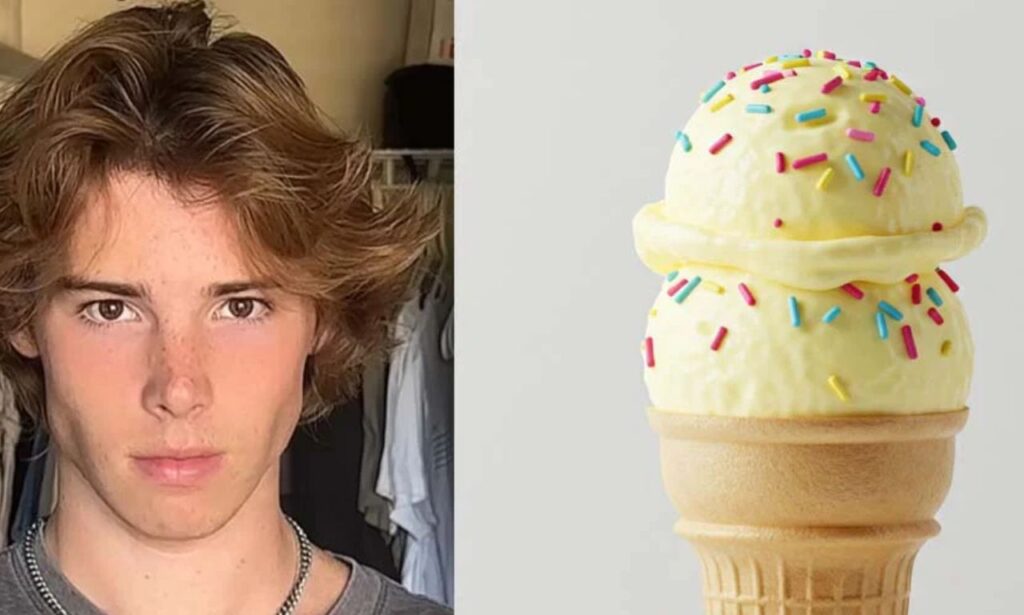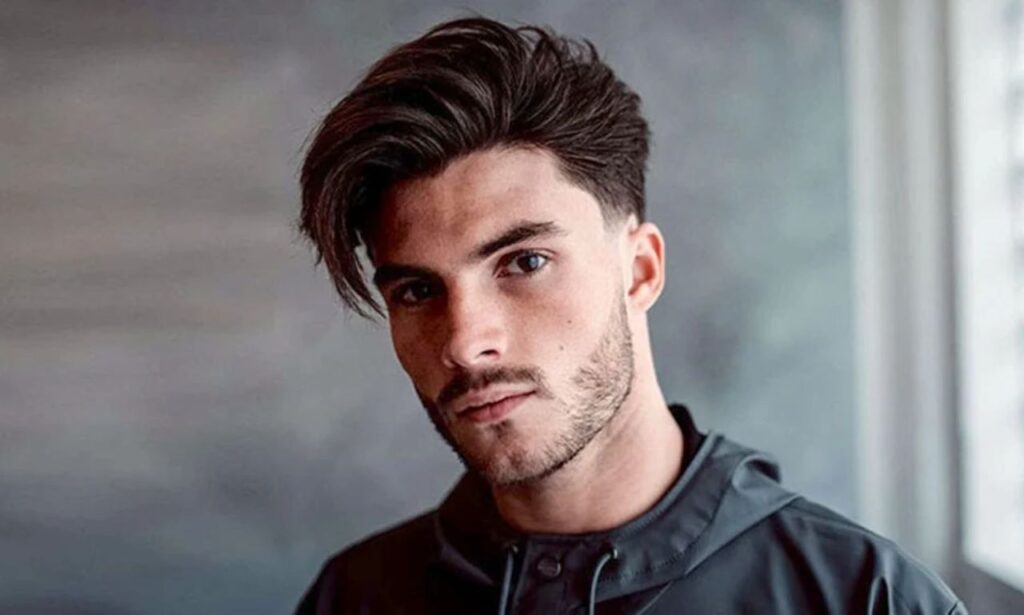
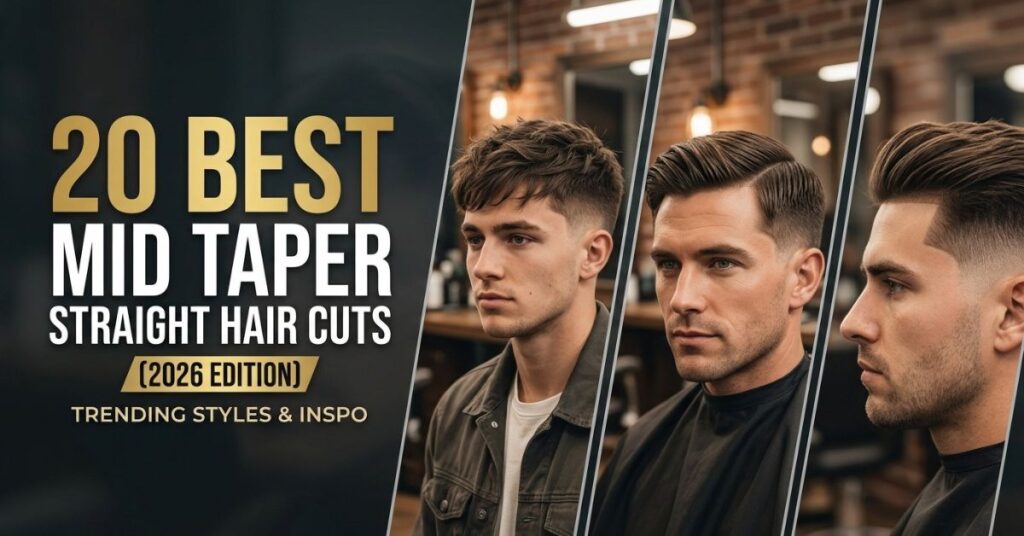
Straight hair looks sharp, but it can also fall flat. It shows every uneven line, and it rarely adds volume on its own. That is why mid taper straight hair is one of the most requested cuts at barbershops right now.
The mid taper gives you clean sides, a smooth blend, and enough length on top to style however you like. In this guide, you will find 20 tested styles, barber phrases, guard numbers, face shape advice, and a simple care routine. Everything is written to help you walk into the chair with confidence.
Visual Guide: Mid Taper Fade for Straight Hair
Before you pick a style, picture the structure. A mid taper has three zones:
- Top: Longer hair, usually 2 to 5 inches, styled forward, up, or back.
- Blend zone: A smooth gradient that begins around the temple and ear level.
- Edges: Short, tidy hair around the ears and neckline.
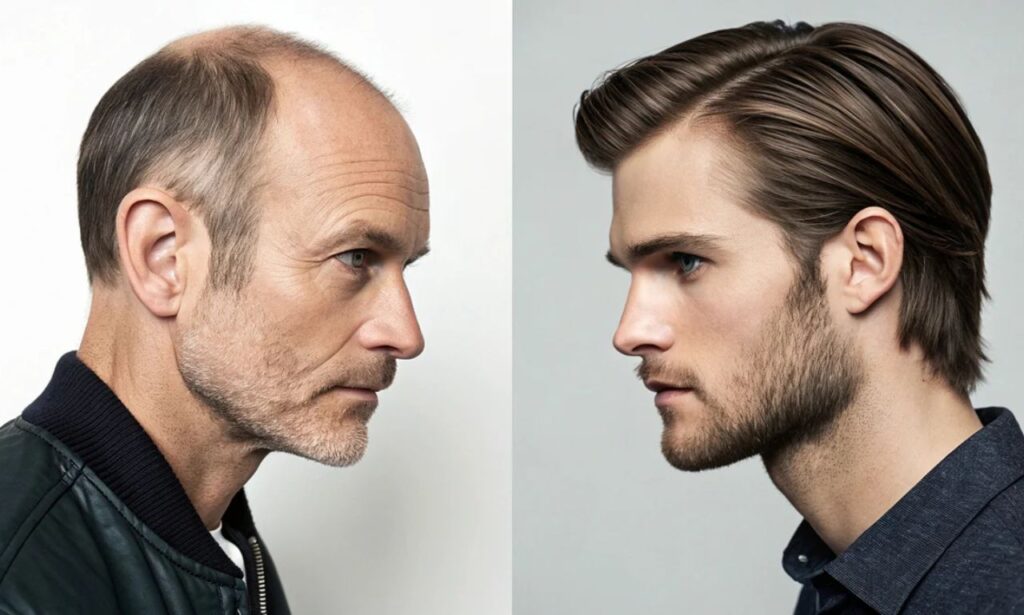
Suggested image alt text for your gallery: “mid taper fade straight hair side view”, “mid taper straight hair back view”, and “mid taper fade straight hair front view with fringe”.
Straight Hair Types: 1A, 1B, 1C, Which One Is Yours?
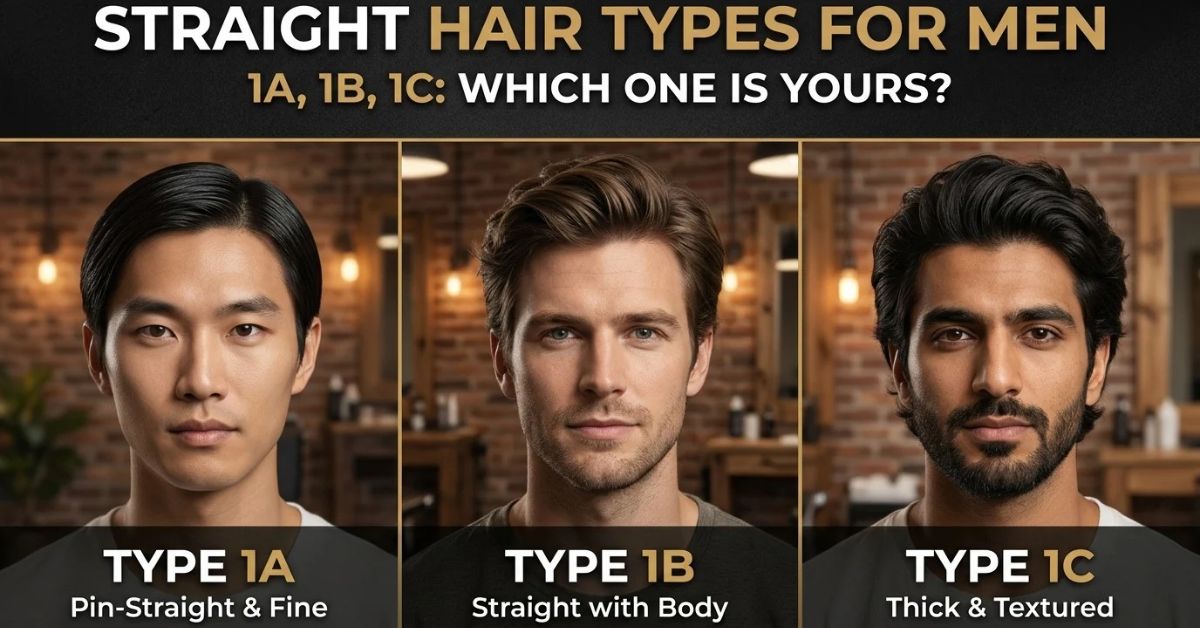
Not all straight hair behaves the same. Knowing your type helps you choose the right length and product.
- 1A (fine and sleek): Very thin, shiny, and flat. It lacks volume and holds styles poorly. Choose texture powder and a slightly longer top.
- 1B (medium with body): The most common type. It holds shape well and works with almost every style in this list.
- 1C (thick and coarse): Strong, dense strands that resist styling. A skilled barber will thin the top and keep the taper tight so the sides do not puff out.
What Is a Mid Taper Fade Straight Hair Cut?
A mid taper fade is a haircut where the sides and back gradually get shorter, starting around the temple line. The word “mid” describes where the taper begins. A low taper starts near the ear and neckline. A high taper starts closer to the crown.
The key difference between a taper and a fade is the finish. A taper leaves some length at the edges. A fade often goes down to the skin. A mid taper fade combines both ideas: a controlled gradient with a clean, short finish.
On straight hair, the result looks especially crisp because there is no curl or wave to hide the transition.
Why This Cut Works So Well for Straight Hair in 2026
Three reasons explain its popularity:
- Balanced contrast. The sides stay neat while the top carries the personality.
- Easy daily styling. Straight hair responds quickly to a blow dryer and a small amount of product.
- Wide range. You can go from corporate polished to relaxed and textured with the same base cut.
Barbers also like this cut because it grows out well. The taper softens as it lengthens instead of looking suddenly overgrown.
Straight-Hair Problems This Cut Solves
- Flat top: Shorter sides make the top look fuller by comparison.
- Heavy sides: Straight hair can hang straight down and add width. Tapering removes that bulk.
- Limp texture: The top can be layered or point-cut for movement.
- Messy neckline: A clean taper keeps the back sharp between visits.
- Styling fatigue: One cut supports many looks, so you never feel stuck.
20 Best Mid Taper Fade Styles for Straight Hair
Mid Taper Fade Straight Hair: Blowout and Volume Styles
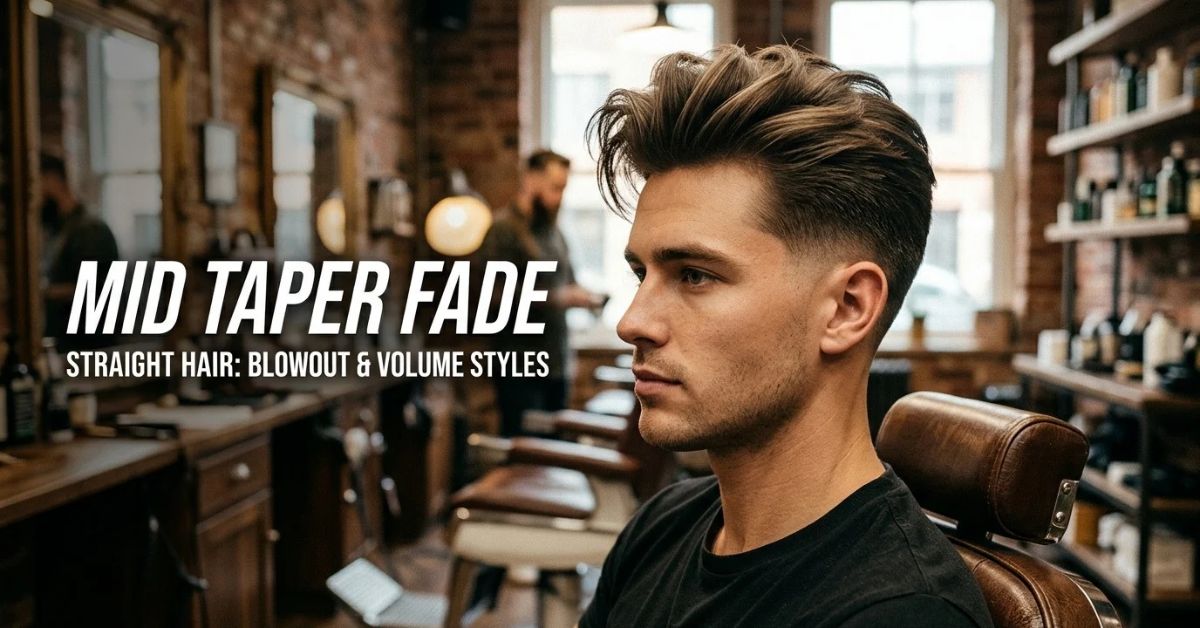
1. Mid Taper Fade Blowout Straight Hair
This is the volume king. Keep 3 to 4 inches on top and blow dry upward with a round brush. Finish with sea salt spray for lift. It suits fine 1A hair that needs body.
Mid Taper Fade Straight Hair with Fringe
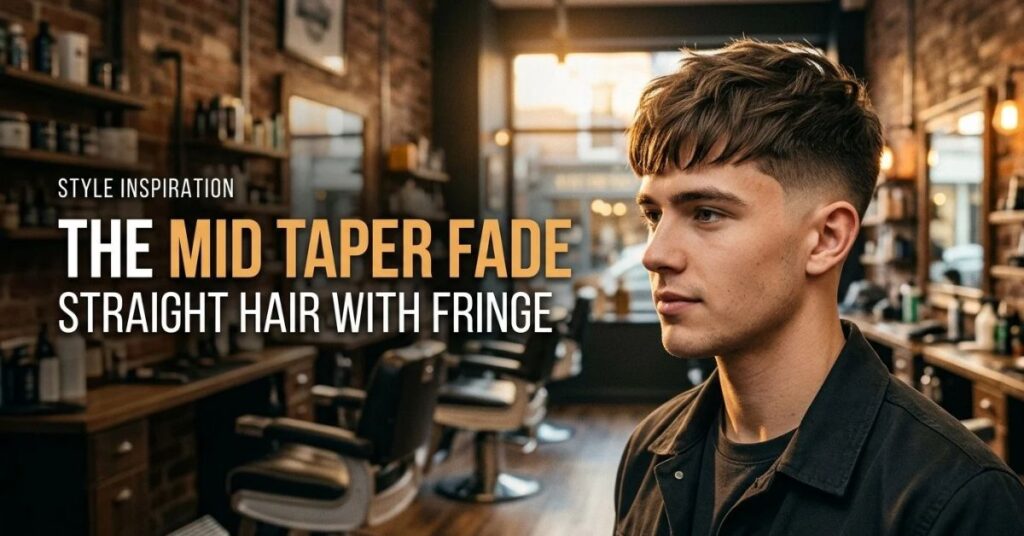
2. Mid Taper Fade Fringe Straight Hair
A blunt fringe sits across the forehead above a tight taper. It looks modern and clean. Ask for the fringe to be cut slightly shorter in the center so it does not poke your eyes.
3. Mid Taper Fade Textured Fringe Straight Hair
Here the fringe is point-cut and broken up with clay. The edges look choppy and casual. It works well on 1B hair and hides small growth irregularities.
Short and Long Mid Taper Fade Styles
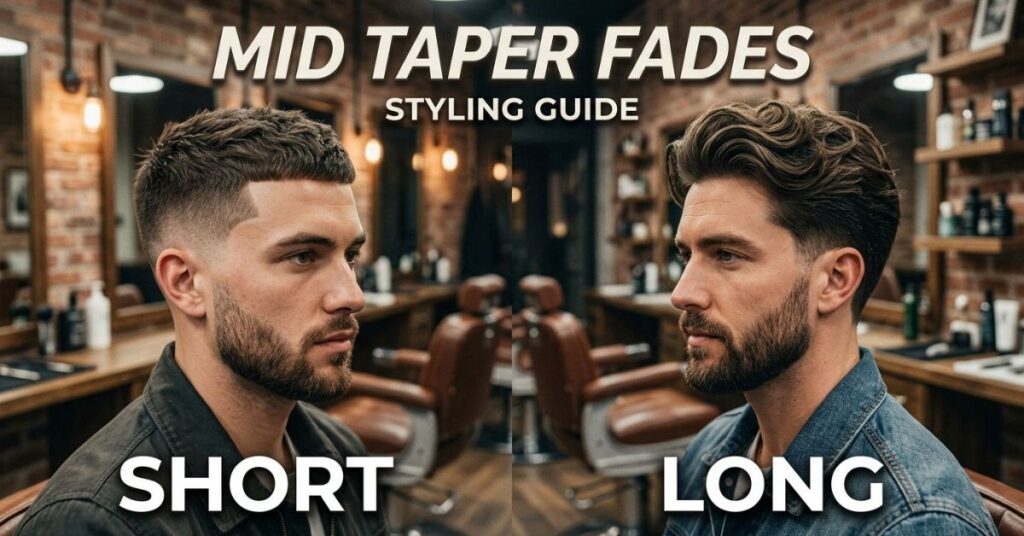
4. Mid Taper Fade Short Hair Straight
Keep the top around 1 to 2 inches. Comb it forward or to the side. This is the easiest option for busy mornings and gym routines.
5. Mid Taper Fade Long Hair Straight
Leave 5 to 7 inches on top and push it back or to the side. The tight sides stop long hair from looking shapeless. Use a light cream to control frizz.
Blonde Mid Taper Fade Styles
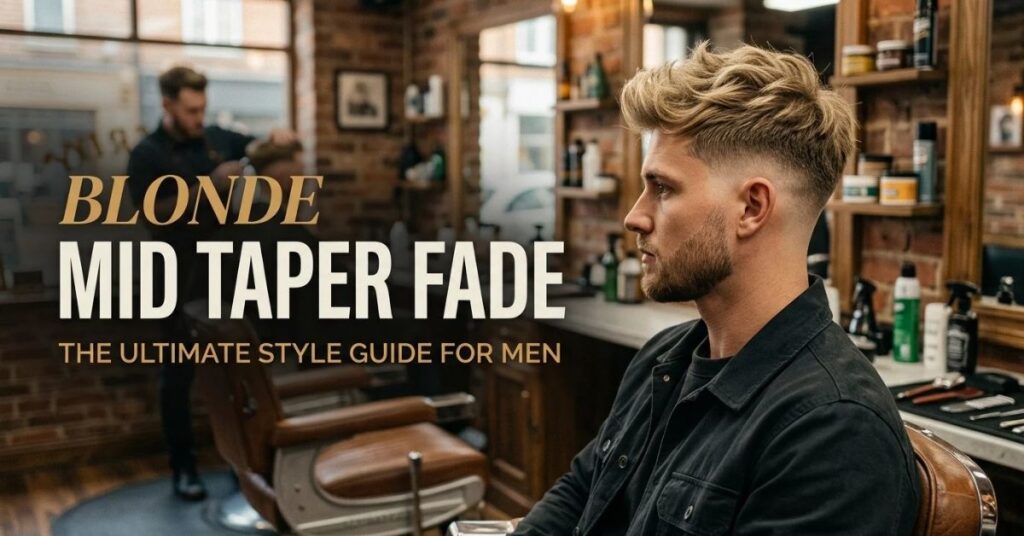
6. Mid Taper Fade Blonde Straight Hair
Bleached or natural blonde looks bright against a faded edge. Use purple shampoo weekly to avoid brassiness. Ask your colorist to protect the scalp near the taper line.
Burst, Drop and Skin Fade Combos for Straight Hair
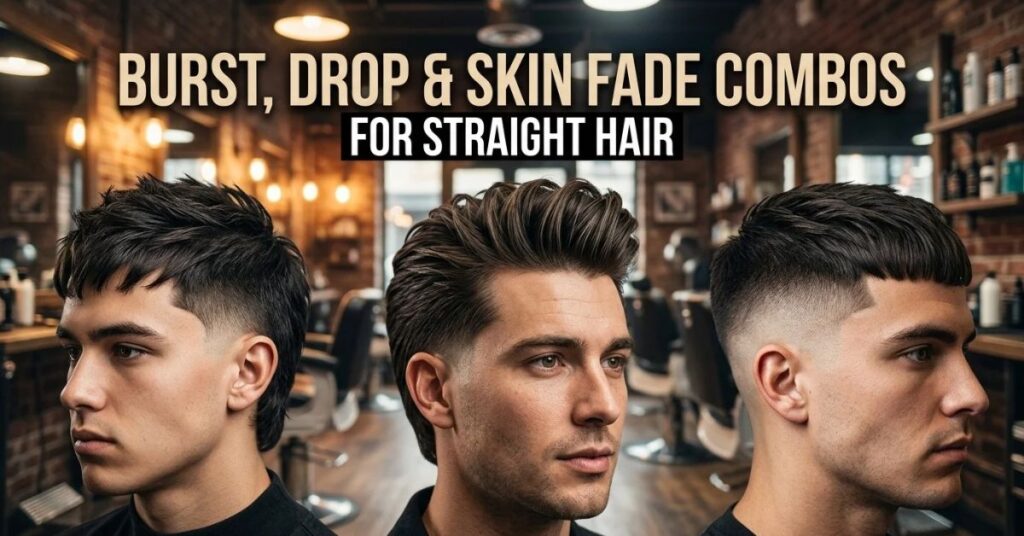
7. Mid Taper Burst Fade Straight Hair
The fade curves around the ear in a semicircle. It adds shape and works best when the top is long enough to contrast.
8. Mid Taper Drop Fade Straight Hair
The fade line drops behind the ear. It frames the head and suits oval and square faces. Expect a slightly higher price because it takes more skill.
Buzz Cut and Low Mid Taper Combos
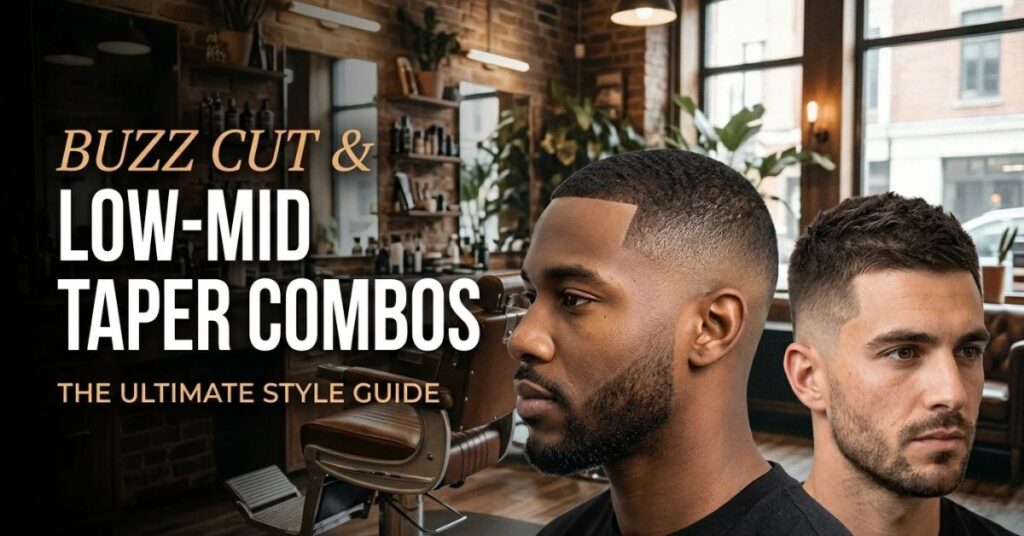
9. Mid Taper Fade Buzz Cut Straight Hair
Use a number 3 or 4 guard on top and taper the sides to a number 1. It is low maintenance and ideal for hot weather.
10. Low Mid Taper Fade Straight Hair
This softer option starts the blend slightly lower than a true mid taper. It looks professional and keeps more hair around the temples.
Slick Back, Beard and French Crop Styles for Straight Hair
11. Mid Taper Fade Slick Back Straight Hair
Apply a medium-hold pomade to damp hair and comb it straight back. The taper keeps the shape neat. It looks sharp in suits and formal settings.
12. Mid Taper Fade With Beard Straight Hair
Blend the taper into the beard at the sideburn so there is no hard break. A trimmed beard adds structure to round and heart-shaped faces.
13. French Crop Mid Taper Fade Straight Hair
A short, blunt fringe with a textured top and a clean taper. It is easy to style and flatters straight hair that grows downward.
Design, Fluffy and Middle Part Styles for Straight Hair
14. Mid Taper Fade With Design Straight Hair
A razor-etched line or small pattern can be added to the shaved zone. Straight hair shows detail clearly, so ask for clean, thin lines.
15. Mid Taper Fade Fluffy Straight Hair
Blow dry with a light mousse for a soft, airy top. This look is popular with younger guys and pairs well with a slightly longer taper.
16. Mid Taper Fade Middle Part Straight Hair
The 90s middle part is back. Keep the top at chin length or shorter and tuck the sides behind the ears. The tapered sides keep it modern.
Mid Taper Fade for Asian Straight Hair
17. Mid Taper Fade Straight Hair Asian
Asian hair is often thick and very straight (types 1B to 1C). Ask the barber to thin the top and keep the taper tight so the sides lie flat. A matte clay adds control without shine.
Additional Mid Taper Fade Variations
18. Two Block Mid Taper Fade Straight Hair
Two distinct sections: a longer top and shorter sides with a sharp contrast. It is popular in Korean-inspired grooming.
19. Mid Taper Fade Quiff Straight Hair
Push the front up and back with a blow dryer and wax. The taper makes the quiff stand out. It suits oval and square faces.
20. Mid Taper Fade Curtains Straight Hair
The top parts in the center and falls to each side. Keep it slightly layered. It is relaxed, youthful, and easy to grow out.
Before and After: What a Mid Taper Fade Does for Straight Hair
Before: The sides sit flat and wide. The top lacks lift. The neckline looks uneven within two weeks.
After: The sides are narrow and clean. The top looks fuller. The head shape looks balanced, and the neckline stays tidy.
Most men notice that the cut reads as “intentional” even when styling takes under five minutes.
How to Ask Your Barber for a Mid Taper Fade
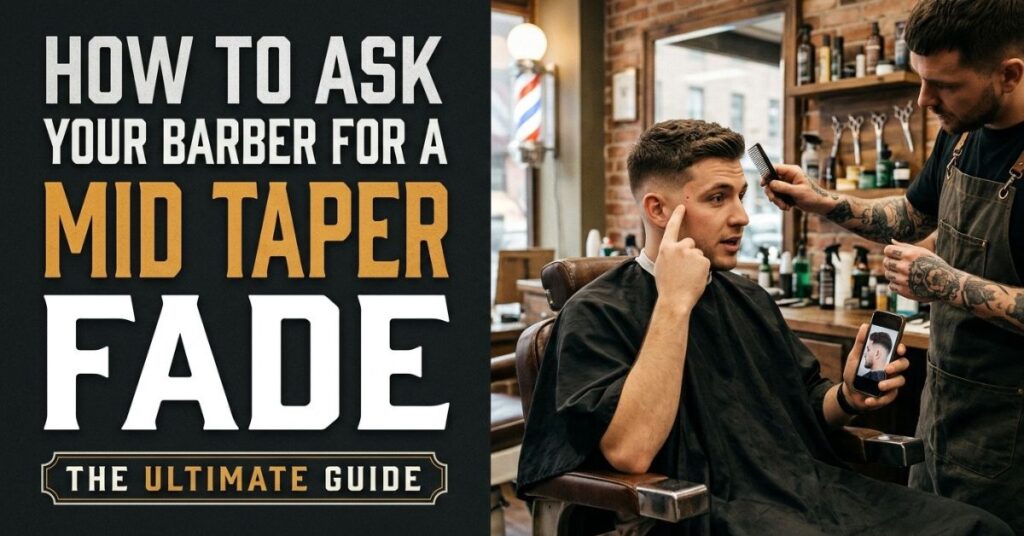
Key Phrases to Use With Your Barber
- “Mid taper starting at the temple.”
- “Leave about 3 inches on top.”
- “Blend it into the neckline, no hard line.”
- “I want it tapered, not down to skin.” (or “down to skin” if you want a bolder look)
- “Please texture the top for movement.”
Bring a photo. It removes guesswork.
The Guard Number Blending Sequence
Most barbers follow this order:
- Start with a number 4 or 3 around the temple line.
- Step down to a number 2 around the mid sides.
- Finish with a number 1 or bare blade near the ears and neck.
- Use scissors or a trimmer to blend the top into the taper.
Guard Number Table: What Each Guard Leaves
| Guard | Length (inches) | Length (mm) |
|---|---|---|
| 1 | 1/8 | 3 |
| 2 | 1/4 | 6 |
| 3 | 3/8 | 10 |
| 4 | 1/2 | 13 |
| 5 | 5/8 | 16 |
| 6 | 3/4 | 19 |
| 8 | 1 | 25 |
Common Mistakes to Mention
- Ask the barber not to start the taper too high.
- Request a soft neckline instead of a squared block.
- Say clearly if you want the top blended or disconnected.
How Much Does a Mid Taper Fade Cost?
Prices depend on your city and the barber’s experience. As a general guide in the US, expect roughly $25 to $50 at a neighborhood shop and $50 to $80 at an upscale salon. Add a tip of 15 to 20 percent. Designs, beard work, or coloring can add $10 to $40.
Check local prices before you book, as they vary widely by region.
Common Mid Taper Fade Mistakes to Avoid
- Starting the taper too high. It turns into a high taper and can look severe.
- Skipping the top. A great taper cannot rescue an uneven top.
- Using too much product. Straight hair gets greasy and heavy fast.
- Waiting too long between cuts. The blend grows out and the shape disappears.
- Ignoring your hair type. A 1A strand needs different styling than a 1C strand.
- Over-washing. It strips oils and makes straight hair look limp.
How to Maintain a Mid Taper Fade for Straight Hair
Touch-Up Schedule
- Every 2 weeks for a crisp skin fade look.
- Every 3 to 4 weeks for a softer taper.
- Every 5 to 6 weeks for longer top styles with a relaxed taper.
Daily Styling Routine
- Towel dry gently.
- Apply a pea-sized amount of product.
- Blow dry in the direction you want the hair to fall.
- Shape with fingers or a comb.
- Finish with a light spray if needed.
5-Minute Blow-Dry Routine at Home
- Rough dry on medium heat, lifting roots with your fingers.
- Use a round brush on the front section for volume.
- Switch to cool air for 20 seconds to set the shape.
- Add texture powder at the crown.
- Check the sides and smooth anything out with a comb.
Styling Tools for Straight Hair
- Compact blow dryer with a nozzle
- Round or vent brush
- Fine-tooth comb
- Small trimmer for neckline touch-ups between cuts
Products That Work Best
- Texture powder or sea salt spray: best for fine 1A hair.
- Matte clay: ideal for thick 1B and 1C hair.
- Light pomade: good for slick back and side part styles.
- Lightweight cream: controls frizz on longer tops.
Best Mid Taper Fade for Straight Hair by Face Shape
Oval Face
Almost anything works. Try the quiff or slick back.
Round Face
Add height on top. A quiff or blowout lengthens the face. Avoid a heavy, wide fringe.
Square Face
Soft textured fringe or side part softens strong angles.
Heart-Shaped Face
A fringe or curtains balance a wider forehead and narrow chin.
Oblong Face
A fringe or French crop shortens the face visually. Keep the top shorter.
Diamond Face
Choose a fringe or middle part that adds width at the forehead.
Best Mid Taper Fade Styles by Age Group
Teenagers
Try the fluffy, curtains, or two block styles. They are easy to grow and low maintenance.
Young Men
Blowout, textured fringe, and quiff offer the best mix of trend and versatility.
Professional Men
Slick back or short side part with a low mid taper looks polished for the office.
Older Men and Grey Hair
Keep the top short and neat. Grey straight hair looks distinguished with a clean taper and a light matte product. Avoid heavy gel, which can highlight thinning.
Mid Taper Fade vs Other Fades for Straight Hair
Mid Taper Fade vs Low Taper Fade
A low taper starts near the ear and neckline, so it keeps more length on the sides. A mid taper starts at the temple and looks bolder.
Mid Taper Fade vs High Taper Fade
A high taper begins near the crown and creates more contrast. A mid taper is more balanced and office friendly.
Mid Taper Fade vs Skin Fade
A skin fade goes to bare skin. A taper keeps a small amount of length. Skin fades need more frequent upkeep.
Mid Taper Fade vs Mid Fade
A mid fade goes shorter, often to the skin, and creates a stronger visual contrast. A mid taper is gentler and keeps more length at the edges.
Frequently Asked Questions
What is a mid taper fade for straight hair?
It is a cut where the sides and back gradually shorten from the temple, while the top stays longer and easy to style.
How long should the top be for a mid taper fade?
Between 1 and 5 inches works well. Choose shorter for low maintenance and longer for styling options.
How often should I get a touch-up?
Every 2 to 4 weeks keeps the blend clean. Longer gaps soften the shape.
Does a mid taper fade suit thin straight hair?
Yes. Shorter sides make the top look fuller, and texture powder adds lift.
What product is best for straight hair?
Matte clay for thick hair, texture powder for fine hair, and a light pomade for sleek looks.
What is the difference between a mid taper and a mid fade?
A taper leaves some length at the edges. A mid fade often goes down to the skin.
Can I get a mid taper fade with a beard?
Yes. Ask your barber to blend the taper into the beard at the sideburn.
How much does it cost?
Typically $25 to $50 at a regular barbershop, though prices vary by city and barber.
Conclusion
Mid taper straight hair is a smart choice if you want a cut that looks sharp, grows out gracefully, and works with many styles. Pick the length and style that suit your hair type and face shape, bring a reference photo, and use the exact phrases in this guide. With a simple routine and regular touch-ups, your cut will look fresh every day.

Abu Bakar is a passionate hairstyle and grooming writer who loves sharing the latest haircut trends, styling ideas, and hair care tips. He creates simple and helpful content for readers of goskyip.com to stay confident and stylish every day.