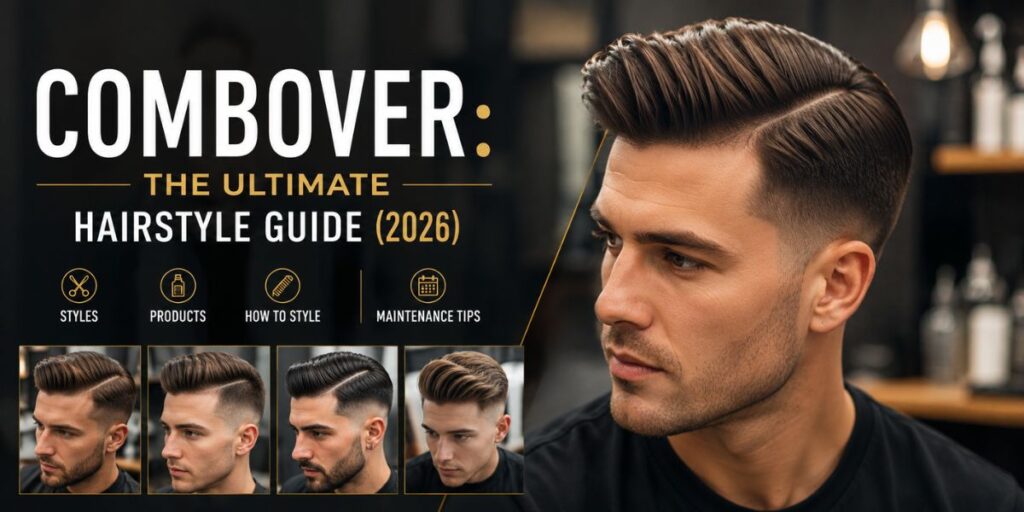
The combover has quietly become one of the most requested men’s haircuts at barbershops worldwide. Once associated mainly with older men trying to hide a bald spot, it is now worn by teenagers, athletes, and businessmen alike.
Modern barbers have reshaped the classic combover into something sharp and versatile, pairing it naturally with skin fades, tapers, and textured tops.
This guide covers everything you need to know about the combover in 2026: what it is, how barbers cut it, the tools required to style it at home, and how it compares to related looks like the side part and slick back.
Whether you have thick, fine, or thinning hair, there is a version of this style that works for you.
What Is a Combover?
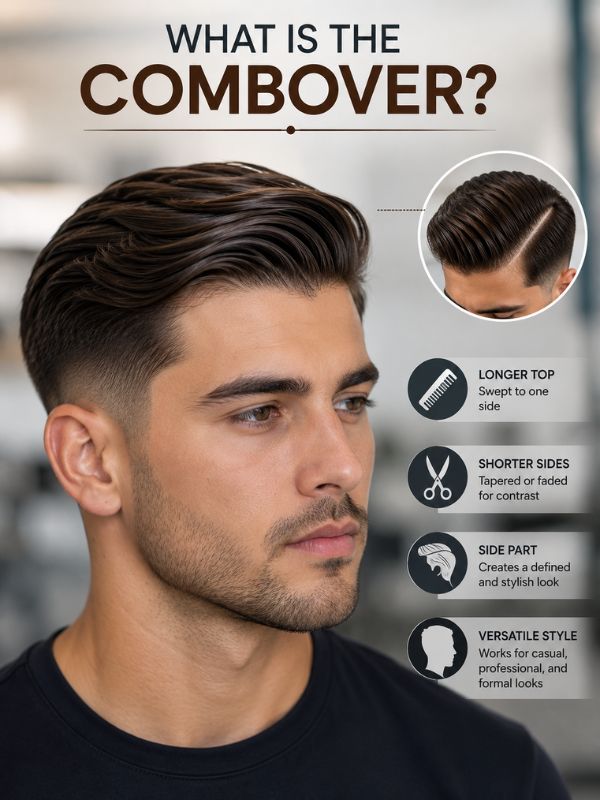
A combover is a men’s hairstyle where the hair on top of the head is grown longer than the sides and combed or brushed to one side, covering the shorter hair underneath.
The core idea is simple: length on top, shorter sides, and a defined parting that directs the hair across the crown.
Traditionally, the style was worn by men with thinning hair who grew the remaining strands long enough to sweep across the scalp and disguise bald patches, which earned it a reputation as an outdated look.
The modern combover is a different story: it is now cut with intention rather than concealment, often finished with a taper or fade so the longer top has something clean to contrast against.
Key characteristics of a combover include:
- A defined side parting, natural or razor sharp
- Noticeably longer hair on top than on the sides
- Hair swept or combed in one direction, usually following its natural growth pattern
- Compatibility with straight, wavy, and curly hair textures
How to Cut a Combover
Getting a clean combover is a matter of proportion and precision. Here is the general process most barbers follow.
- Consult and section the hair. The barber examines your hair type, density, and the direction it naturally falls before deciding where to place the parting.
- Cut the sides first. Using clippers with a guard (commonly a #2 to #6), the sides and back are trimmed short. This is also where a taper or fade gets its shape.
- Establish the parting. The parting can be a soft, natural line combed in with a fine tooth comb, or a “hard part,” where a razor is used to shave a crisp line into the skin for extra definition.
- Cut the top with scissors. Hair on top is left noticeably longer, usually between two and four inches depending on how much volume you want. Point cutting or texturizing shears can be used to add movement.
- Blend the sides into the top. The barber blends the shorter length into the longer top so there is no harsh line, unless a fade is intentionally left visible for contrast.
- Style and finish. Hair is combed forward, then swept to the side, and finished with a styling product to lock the shape in place.
Bringing a reference photo to your barber and specifying the fade type, top length, and part style helps avoid miscommunication.
Maintenance and Aftercare
A combover looks its best when it is kept fresh, which means regular trims and a short daily styling routine.
- Trim every two to four weeks if you have a fade or taper on the sides, since these grow out and lose their sharp edge faster than the top.
- Trim every four to six weeks for a looser combover without a hard fade.
- Wash with a moisturizing shampoo two to three times a week rather than daily, since overwashing can dry out the hair and make it harder to style.
- Style on towel dried, not soaking wet, hair. Excess water dilutes styling products and weakens hold.
- Reapply product only as needed. A small amount of pomade, clay, or cream goes a long way; too much product weighs the top down and flattens the volume a combover depends on.
Daily upkeep is quick, and most men can restyle a combover in under five minutes with just a comb, a blow dryer, and a small amount of product.
Tools You’ll Need
| Tool | Purpose |
| Fine tooth comb | Creates a crisp, defined parting |
| Wide tooth comb | Better for wavy or curly hair textures |
| Blow dryer | Adds lift and directs hair while styling |
| Round or paddle brush | Helps guide hair across the head for volume |
| Pomade | Classic shine and strong hold, best for straight or fine hair |
| Matte clay or paste | Natural finish with medium hold, good for thicker hair |
| Texture powder | Adds lift and grip at the roots |
| Hair scissors or clippers | For home touch ups between barber visits |
Also Read This: Line Up Haircut (2026): Best Styles, Tips & Maintenance
Combover or Comb Over
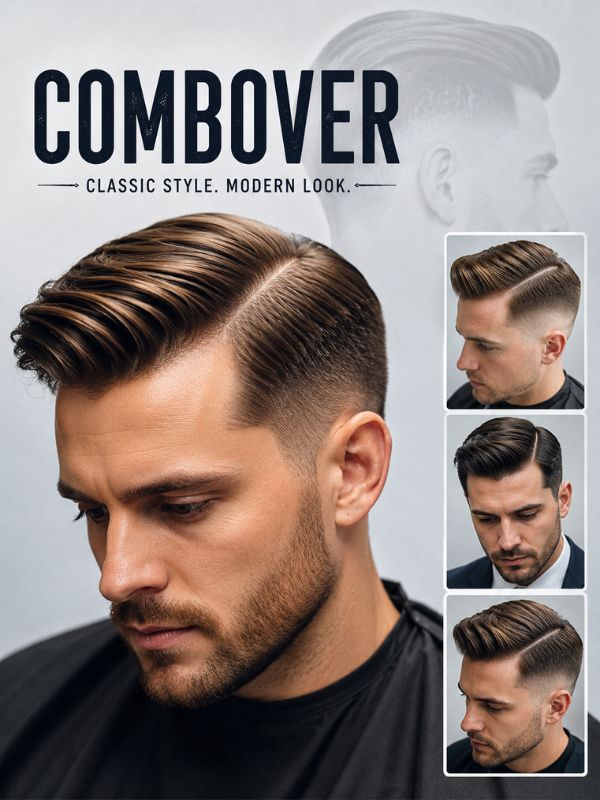
Both spellings are used interchangeably, and neither is technically wrong. “Combover” is the closed, single word form, while “comb over” or “comb-over” is the older, more traditional spelling. Dictionaries generally list the hyphenated form as the primary entry, with “combover” as an accepted variant that has become the more common choice in everyday and online writing, especially in the United States.
Some barbers draw a subtle distinction in meaning rather than spelling: “side part” often implies a tighter, more classic cut, while “comb over” describes a looser, more relaxed version. In practice, most people use both terms to mean the same haircut.
Comb Over Fade
The comb over fade is the most popular modern version of this style. It combines the classic long top and side parting with a fade on the sides and back, where the hair gradually shortens down to the skin. This creates a much sharper contrast than a traditional combover, which usually has a more gradual blend.
Common comb over fade variations include:
- Low fade combover: Fade starts near the ears, keeping more visible length on the sides for a subtler look.
- Mid fade combover: Fade begins around the temple, balancing a modern edge with a professional appearance.
- High fade combover: Fade starts high on the head, creating maximum contrast with the longer top and a bolder, more dramatic finish.
- Skin fade combover: Sides are faded all the way down to bare skin for the sharpest possible look.
This style suits professional settings well because it looks deliberate and polished, and it also flatters thinning hair since the fade draws attention toward the clean sides rather than the crown.
Combover Old Man
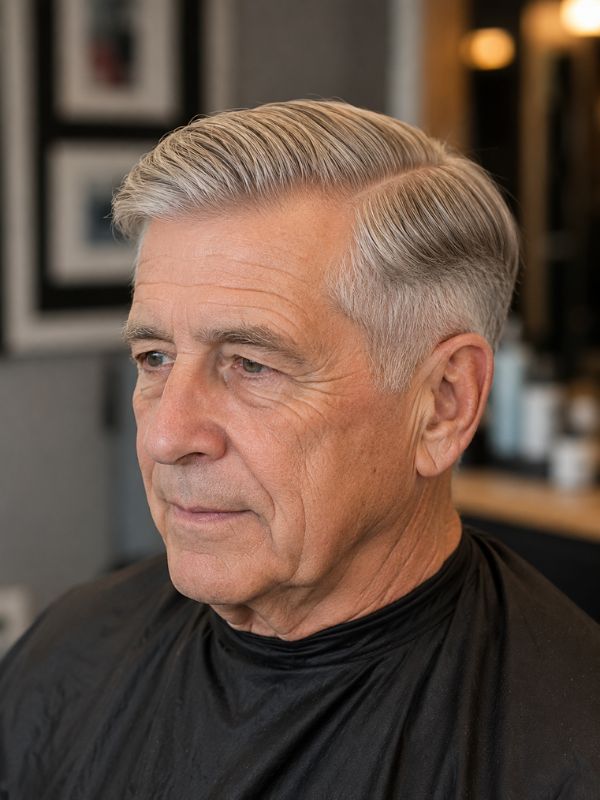
The phrase “combover old man” usually refers to the older, more traditional style once associated with hiding hair loss, where thin, longer strands are combed directly over a bald patch with little to no fade or taper. This version differs from the modern combover in a few important ways.
| Feature | Old Style Combover | Modern Combover |
| Sides | Often untapered, blends into the top | Usually faded or tapered |
| Purpose | Concealing thinning or bald areas | Deliberate style choice |
| Parting | Loose, low, and less defined | Crisp, often razor sharp |
| Product used | Heavy hold gels, sometimes hairspray | Lightweight pomades, clays, or creams |
| Overall look | Softer, less structured | Sharp, intentional contrast |
A well cut modern combover, especially one paired with a high or skin fade, can look intentional and stylish for men experiencing hair thinning rather than like an attempt to hide it.
Similar Styles
Several men’s hairstyles are closely related to the combover, and it helps to know how they differ.
- Side part: A tighter, more classic version of the combover with a distinct line separating longer and shorter hair.
- Slick back: Hair is combed straight back rather than to one side, usually with a stronger hold product for a polished finish.
- Pompadour: Features more height and volume at the front, often combed upward before sweeping back.
- Quiff: Shorter than a pompadour, with hair pushed up and slightly back for a textured, casual look.
- Undercut combover: Pairs a disconnected, very short undercut on the sides with a long, sweeping top.
Common Names
The combover goes by several other names depending on the barbershop, region, or exact styling. You may hear it referred to as:
- Side part
- Gentleman’s cut
- Businessman’s cut
- Ivy League (a slightly shorter, tighter variation)
- Executive contour
- Classic sweep
Frequently Asked Questions
Is a combover good for thinning hair? Yes, especially when paired with a fade, since the shorter sides create contrast that makes the top appear fuller.
How often should I get my combover trimmed? Every two to four weeks with a fade, or every four to six weeks for a looser style without one.
Does a combover work with curly hair? Yes, curly and wavy hair can be styled into a combover using a curl defining cream and a wide tooth comb to guide the natural texture.
What is the difference between a combover and a side part? They describe largely the same haircut, though “side part” often implies a tighter, more defined line, while “combover” can mean a looser, more relaxed sweep.
What product should I use for a combover? Pomade works well for a sleek, shiny finish, while matte clay or paste gives a more natural, textured look.
Can a combover be worn at work? Yes, it is one of the most professional looking men’s hairstyles, especially when kept neat with a low or mid fade.
Final Thoughts
The combover has earned its place as a modern classic rather than an outdated fix for thinning hair. With the right cut, the right products, and a barber who understands fades and partings, it works across nearly every hair type, face shape, and age group.
Whether you want a subtle, low maintenance version or a sharp, high contrast comb over fade, this is a style that adapts to you rather than the other way around.