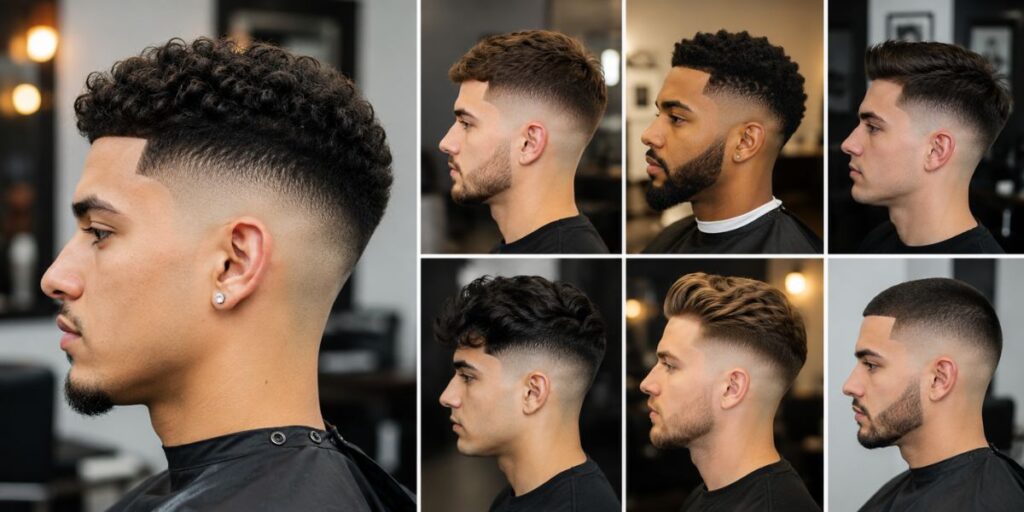
The mid fade is one of the most requested haircuts in barbershops today — and for good reason. It sits right in the sweet spot between too subtle and too bold, giving clients a clean, modern look that works at the office, the gym, or a night out. Whether you’re a barber sharpening your technique, a cosmetology student building foundational skills, or a client figuring out what to ask for, this guide covers everything you need to know about mid fade haircuts in 2025 and beyond.
What Makes a Mid Fade Different from Other Fades
A mid fade starts roughly at the temples — about midway between the ears and the top of the head. From that starting point, the hair gradually shortens as it moves down the sides and back, creating a smooth blend that tapers toward shorter lengths at the neckline.
That placement is the key difference. It gives you noticeable contrast without going extreme, which is why barbers often call it the most balanced cut in the fade family.
Quick Technical Snapshot
| Feature | Mid Fade |
| Fade start point | Around the temples (mid-head) |
| Contrast level | Moderate — visible but not aggressive |
| Blend style | Gradual, smooth transition |
| Typical guard progression | 0 or 0.5 → 1 → 1.5 → 2 → 3 |
| Refresh frequency | Every 2–3 weeks |
| Skin fade option | Yes — down to bald at the baseline |
Why Mid Fade Haircuts Work for All Hair Types
One of the biggest strengths of the mid fade is how adaptable it is across hair textures.
- Thick or coarse hair — The fade removes bulk from the sides, making the top easier to manage and style.
- Curly hair — Tapered sides let the curls on top pop without looking overgrown. A diffuser keeps curl definition sharp.
- Straight hair — The fade adds a contemporary edge to classic styles without going too trendy.
- Fine or thin hair — A softer blend and slightly longer top create the illusion of density.
- Wavy hair — Natural texture on top pairs beautifully with a clean fade line at the temples.
Classic Mid Fade Styles That Never Miss
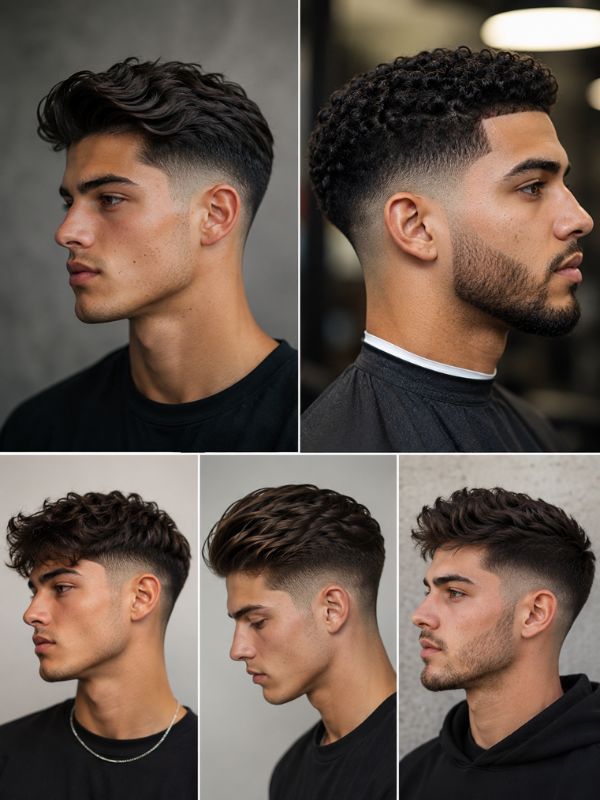
These combinations have stayed popular for years because they work across face shapes, lifestyles, and age groups.
Mid Fade + Crew Cut
Short on top, clean on the sides. Easy to maintain, professional, and sharp. Works great for clients who want zero fuss in the morning.
Mid Fade + Comb Over
Side-parted top with faded sides. Light pomade or styling cream keeps the part defined. A go-to for business-casual environments.
Mid Fade + Textured Crop
Cropped top with choppy, matte texture. Popular with younger clients and anyone who wants a low-effort daily style.
Mid Fade + Slick Back
Longer top blown back and set with pomade. Clean, polished, and versatile — works for formal events and everyday wear.
Mid Fade + Pompadour
Volume swept up and back at the front. Flatters oval and heart-shaped faces. Needs a bit of blow-dry effort but the payoff is strong.
Trendy Mid Fade Variations Clients Ask For
- Mid Skin Fade — Blends all the way down to bare skin at the baseline. Sharp, fresh, requires more frequent touch-ups.
- Mid Drop Fade — Fade line curves down behind the ear. Adds depth to the profile, pairs well with curly or voluminous tops.
- Mid Burst Fade — Fans out in a semicircle around the ear. Often paired with a mohawk or faux hawk. Bold and eye-catching.
- Mid Fade with Design — Shaved lines or geometric patterns in the faded area. Adds personality and a signature look.
- Mid Fade with Fringe — Longer hair styled forward with faded sides. Works especially well for wavy and curly hair types.
Match the Mid Fade to Face Shape and Lifestyle
Getting the fade placement right is only half the job. Matching the style to the client’s face shape and daily routine is what separates a good cut from a great one.
| Face Shape | Best Approach |
| Round | Add height on top, keep sides tight, avoid width at cheeks |
| Square | Softer blend, curved edges, optional beard to balance jaw |
| Oval | Almost any mid fade variation works — standard height is ideal |
| Heart | Leave some side weight at the top of the fade, beard blend helps |
| Diamond | Mid fade (not high), preserve temple weight to avoid narrow look |
| Rectangular/Long | Add width at sides, avoid extra height on top |
Maintenance Tips for a Fresh, Clean Mid Fade
- Book touch-ups every 2–3 weeks — skin fades and tight crops need 1–2 weeks.
- Wash 2–3 times per week — daily shampooing strips natural oils. A water rinse is fine between washes.
- Apply product on damp hair — towel dry first, then a pea-sized amount, blow-dry if you want lift.
- Use a line-up between appointments — a quick edge clean at home extends the life of the cut.
- Protect the fade at night — a satin pillowcase reduces friction and keeps textured styles fresh longer.
Mid Fade vs Low Fade vs High Fade, Plus Taper, Drop, and Burst
| Fade Type | Where It Starts | Contrast Level | Best For |
| Low Fade | Just above the ears | Subtle | Conservative settings, classic looks |
| Mid Fade | At the temples | Moderate | Most face shapes, versatile styling |
| High Fade | Near the crown | Bold/dramatic | Angular faces, statement styles |
| Taper Fade | Sideburns and neckline only | Very subtle | Maximum length on sides |
| Drop Fade | Curves behind ear | Moderate-bold | Profile depth, curly tops |
| Burst Fade | Semicircle around ear | Bold | Mohawks, faux hawks, textured tops |
Barber How-To: Clean Mid Fade Step by Step
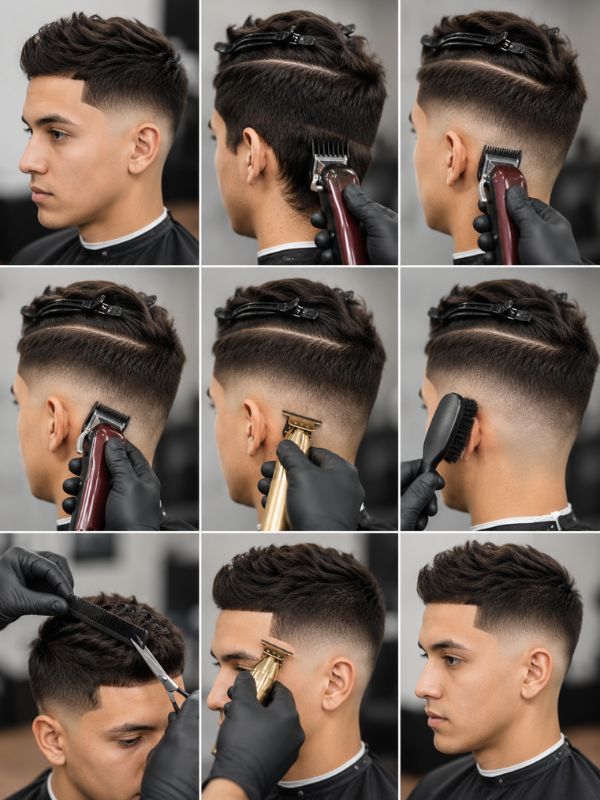
- Consultation — Ask the client how they style, where they part, how often they maintain, and how strong they want the contrast.
- Set the baseline — Foil shaver or clipper with lever closed and 0 or 0.5 guard at the very bottom. Keep the line level.
- First guideline — Number 1 guard, lever open, run a neat line around the head at temple level.
- Build the blend — Erase the hard line between baseline and guideline using lever half-open, then blend upward through 1.5 and 2.
- Refine the transition — Use 2 and 3 guards to feather into the top length. Check from front, side, and back.
- Detailing — Razor or trimmer for hairline, sideburns, and neckline. Keep edge lines sharp and symmetrical.
- Final check — Light dusting brush, show the client both sides with mirrors, confirm the blend is smooth from every angle.
Styling Products That Play Nice with a Mid Fade
| Product | Best For | Hold Level | Finish |
| Matte Paste or Clay | Textured crops, quiffs | Medium-high | Dry, natural |
| Pomade | Comb overs, slick backs | Medium-high | Shiny, polished |
| Styling Cream | Curly or wavy tops | Light | Natural, frizz-free |
| Sea Salt Spray | Loose, beachy texture | Light | Matte, lived-in |
| Powder | Quick volume refresh | Light | Dry, invisible |
Client Communication: How to Ask for a Mid Fade
Clients often struggle to describe exactly what they want. Use this language to get the right result.
- “I want a mid fade — starting around my temples.”
- “Can you take it down to the skin at the bottom?” (for a skin fade)
- “I want a drop fade — curve it down behind the ear.”
- “Keep the blend soft, I work in a professional environment.”
- “Make the contrast strong, I want it fresh for at least two weeks.”
Bring reference photos — one image is worth ten descriptions. Tell the barber how often you can come back, because it directly affects which fade style makes sense.
Common Mistakes to Avoid
For barbers:
- Starting the fade too high without client confirmation — hard to fix once done.
- Uneven baseline — always check level before blending upward.
- Over-blending into the top length — leave clear separation between fade and top.
- Rushing the guideline step — a messy guide makes the whole blend harder.
For clients:
- Waiting too long between appointments — the fade loses definition fast.
- Using too much product — weighs the blend down and makes it look grown out.
- Asking for a style that conflicts with their hair texture — consult your barber honestly.
- Skipping the consultation — even a 60-second chat prevents most disappointments.
For Cosmetology Students: Stay Motivated When Life Gets Messy

Cosmetology school is intense. Long hours on the floor, theory exams, client rotations, and outside responsibilities all compete for your energy. Everyone hits a wall at some point.
When motivation drops, connect it back to the skill in front of you. The mid fade is not just a haircut — it is a teachable moment in blending, client communication, anatomy of the head, and product knowledge. Every cut you practice builds a skill set that lasts a career.
Keep a progress log. Look back at your first attempts versus where you are now. Growth is easier to see when you track it. Talk to your instructors — most of them have been where you are.
Tips for Balancing Cosmetology School and Part-Time Work
- Tell your employer upfront — be clear about your school schedule and exam dates before conflicts arise.
- Protect non-negotiable school hours — clinic floor time, exams, and assessments cannot be moved. Block these first.
- Use slow work shifts for study — if your job allows downtime, use it for theory review.
- Choose work that complements training — a salon receptionist or assistant role builds industry connections.
- Set a hard limit on work hours — 15–20 hours per week maximum during heavy school periods.
Time Management for Beauty School Students
Poor time management is the most common reason students fall behind — not lack of skill.
- Fixed blocks — School hours, work shifts, sleep (non-negotiable).
- Study blocks — At least 30 minutes of theory review daily adds up faster than long cram sessions.
- Practice time — Use open lab hours consistently whenever your school offers them.
- Buffer time — Leave space for unexpected schedule changes, because they will happen.
A simple paper planner or free phone app works fine. The tool matters less than the habit of using it every day.
Working in a Salon While in Beauty School
Many cosmetology programs allow students to take on supervised clients or work as assistants at local salons. This is a genuine advantage if handled right.
What you gain:
- Real client interaction before graduation.
- Product knowledge from working with professional brands.
- Networking with licensed stylists who can become mentors or references.
- A head start on building a client book.
What to watch for:
- Make sure your school approves any salon work — some programs have restrictions.
- Do not let salon hours pull focus from theory coursework.
- Ask senior stylists questions, but observe first and respect their workflow.
- Every task — from sweeping to shampooing — is a learning opportunity if you pay attention.
Frequently Asked Questions
What is a mid fade haircut?
A mid fade starts at the temples and gradually shortens down the sides and back, creating a balanced blend between a low fade and a high fade.
How often should I get a mid fade touched up?
Every 2–3 weeks for most styles; every 1–2 weeks for skin fades or very tight crops.
Does a mid fade work with curly hair?
Yes. Tapered sides control volume and let the curls on top stand out with better definition.
What’s the difference between a mid fade and a taper fade?
A mid fade removes more length from the sides, while a taper only adjusts the sideburns and neckline, leaving most side length intact.
What should I tell my barber to get a mid fade?
Say “mid fade starting at the temples” and specify your preferred finish — skin, scissor, or blended — and how strong you want the contrast.
Can a mid fade look professional?
Absolutely. Paired with a comb over, crew cut, or slick back, a mid fade is clean enough for any professional setting.
Conclusion
The mid fade earns its reputation as the most versatile cut in men’s grooming because it genuinely delivers. It works across hair types, flatters most face shapes, adapts to professional and casual settings, and gives barbers and stylists a clean technical foundation to build any top style on. Whether you’re booking an appointment, practicing your technique, or managing school and work at the same time, the mid fade is worth mastering. Know the fade, know the blend, and the rest follows.