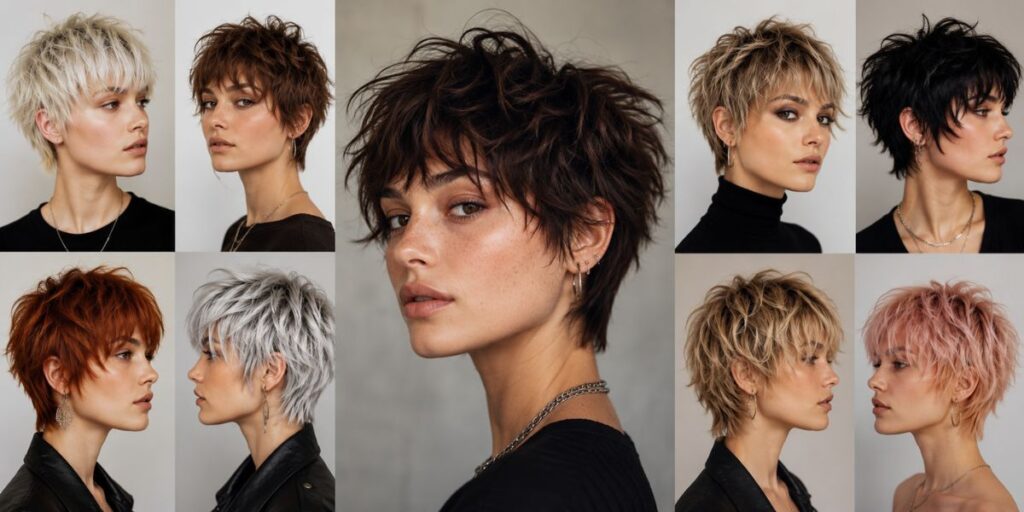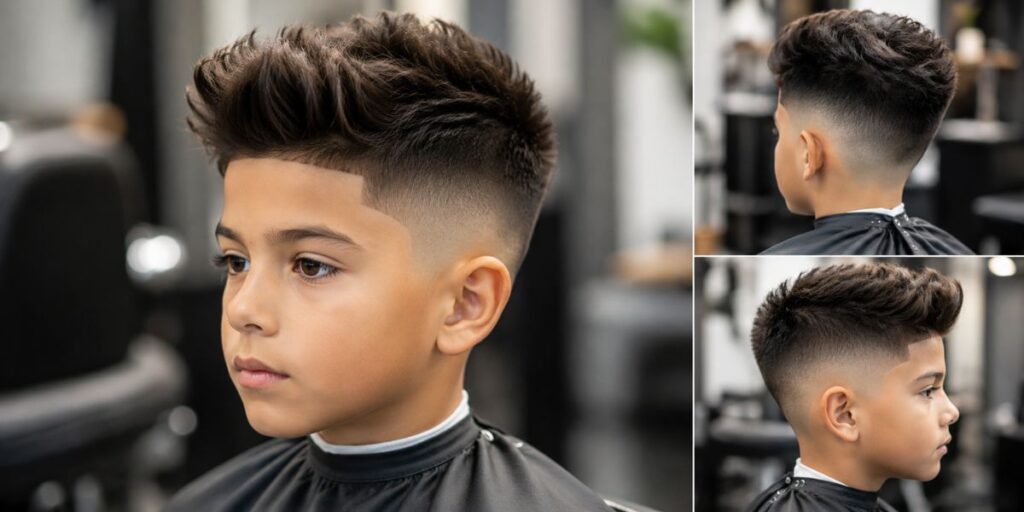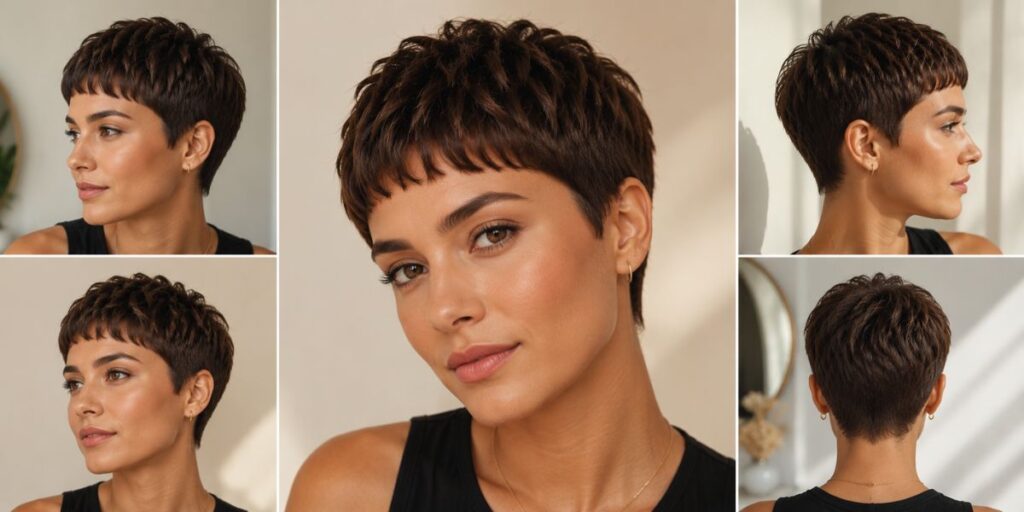
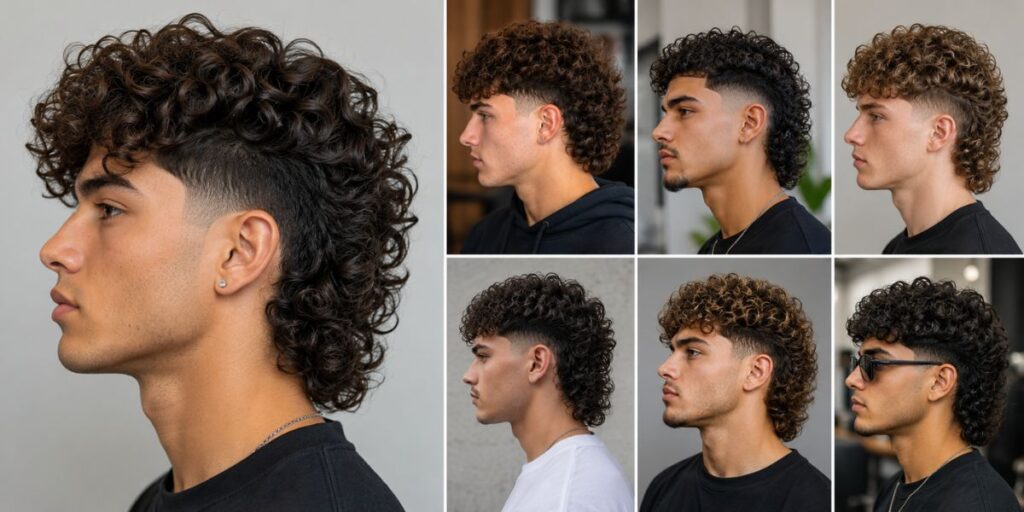
The curly taper fade mullet has quickly become one of the most sought-after men’s hairstyles of 2025. It blends the retro boldness of a mullet with clean, modern fade work and the natural texture of curls — resulting in a cut that feels expressive, structured, and surprisingly versatile. Whether you have tight 3B coils or looser 2C waves, this guide walks you through every style variation, barber communication tips, product routines, and maintenance schedules to help you own this look with confidence.
What Is a Curly Taper Fade Mullet?
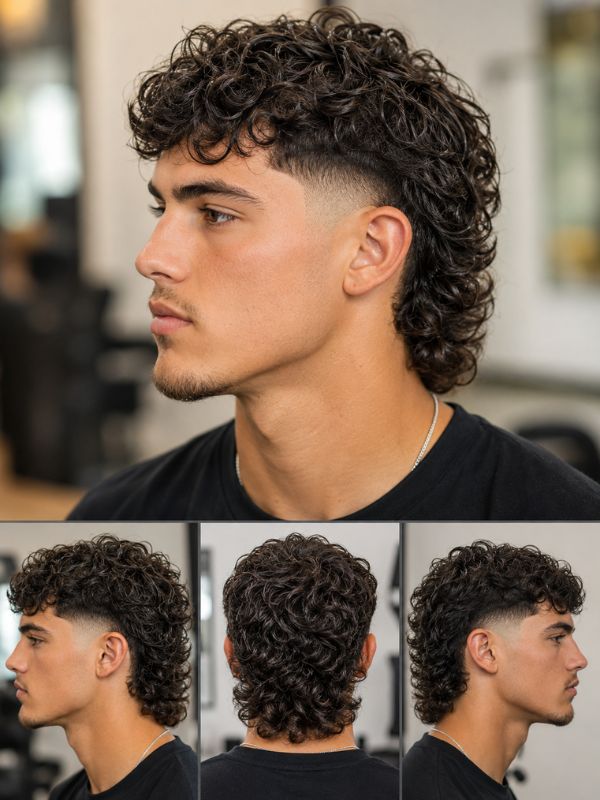
At its core, the curly taper fade mullet combines three distinct barbershop elements into one cohesive cut. The taper fade gradually shortens the hair along the sides and neckline, creating a clean transition from longer to shorter. Natural curls sit fuller on top, providing bounce, volume, and textured movement. The mullet shape then extends length at the back — that signature “business in the front, party in the back” silhouette, but refined and intentional.
Unlike the exaggerated, unkempt mullets of the 1980s, today’s version is barbershop-precise and customizable. Curly hair elevates this cut enormously because natural coils add dimension and depth that straight hair simply cannot replicate. The result is a hairstyle that reads bold on the street and polished enough for a creative workspace.
Why Choose a Curly Taper Fade Mullet?
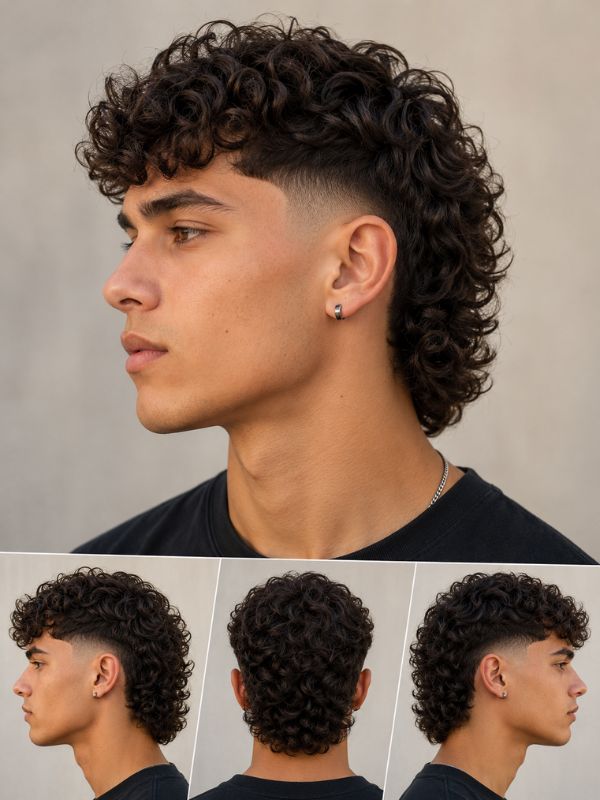
There are strong reasons why this cut has dominated barbershop inspiration boards and TikTok grooming content in recent years. Here is why men keep choosing it:
- Versatile across settings — wear it at work, a weekend festival, or a smart-casual dinner without it feeling out of place.
- Low maintenance once shaped — curls do the heavy lifting between barber visits.
- Works with most curl types — from tight coils to loose waves, the cut adapts to your natural texture.
- Suits multiple face shapes — oval, square, diamond, and round faces all work well with the right customization.
- Bold without being extreme — you get edgy mullet energy with the structure and cleanliness of a fade.
Here is a quick face shape reference guide:
| Face Shape | Best Fade Level | Style Tip |
| Oval | Mid or High Taper | Almost any variation works — experiment freely. |
| Square | Low or Mid Taper | Soft curls on top balance the jaw. |
| Round | High Taper | Height at the crown elongates the face. |
| Diamond | Low Taper | Layered sides and flowing back create natural balance. |
| Oblong | Low Taper + Volume | Avoid extra height; volume on the sides works better. |
15+ Curly Taper Fade Mullet Styles to Try Next
Classic Curly Taper Mullet

The original and most timeless version. Clean taper on the sides, full natural curls at the crown, and a modest length at the back. Nothing dramatic — just structured, stylish, and adaptable to both casual and professional settings. This is the best starting point if you are new to this cut.
Low Taper Fade Curly Mullet
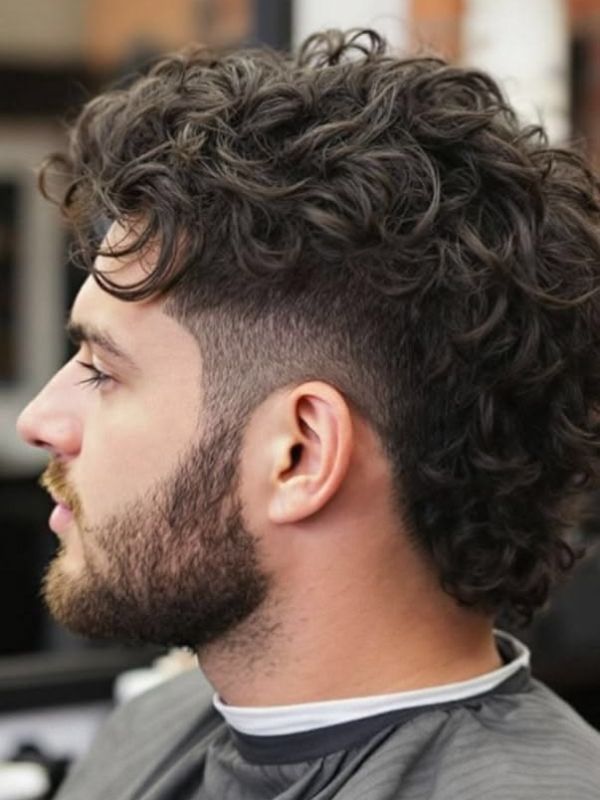
The fade begins near the neckline and barely climbs the sides, creating a soft, almost seamless transition into your curls. It is the most understated option in the curly mullet family. Ideal for traditional workplaces or anyone who wants subtle style with maximum curl definition. It also grows out the most gracefully between trims.
Mid Taper Fade Curly Mullet
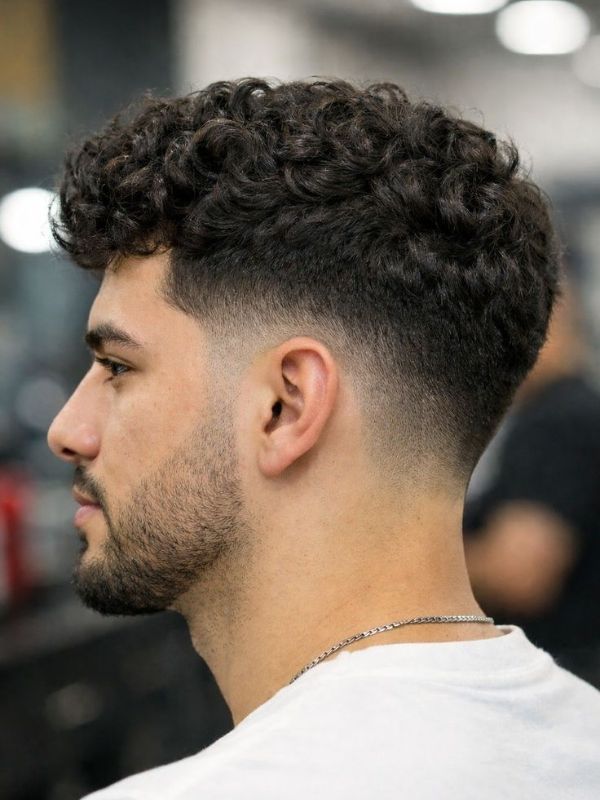
Landing around the temples, the mid fade strikes a sweet spot between subtle and sharp. It frames the curls without overshadowing them, gives the overall shape a more deliberate structure, and photographs well from every angle. Most barbers consider this the most versatile option because it suits nearly every hair type and face shape.
High Taper Fade
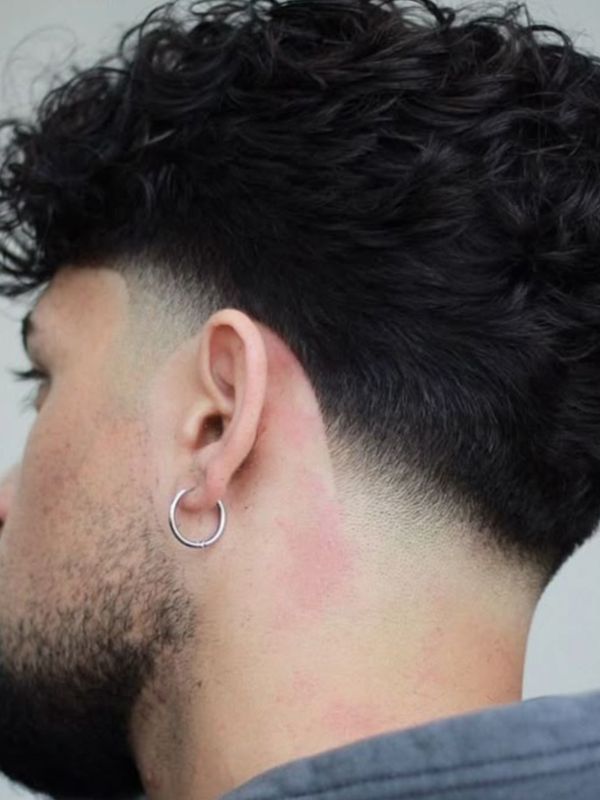
The taper starts high near the temples, creating maximum contrast between the tight sides and the fuller curls on top. This is the bolder, high-impact version that makes the curl texture pop dramatically. It suits men with thick hair and requires barber visits every two to three weeks to maintain the contrast.
Curly Burst Fade Mullet
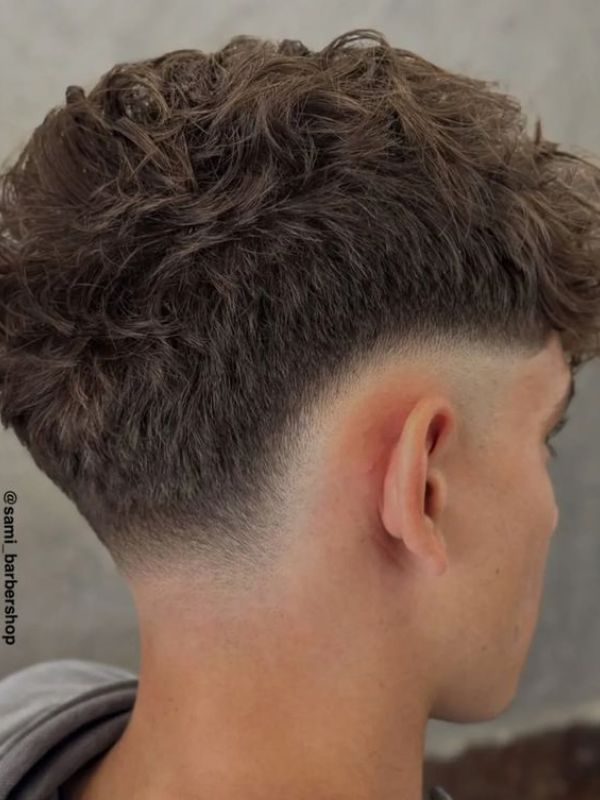
The burst fade radiates outward in a semi-circular arc around the ear rather than following a straight line. This creates a rounded, almost halo-like shape that frames the mullet beautifully. It works especially well with curly and wavy hair because the arc echoes the natural movement of coils. A bold, high-energy choice for men who want something that stands out immediately.
Taper Fade Mullet with Tight Curls
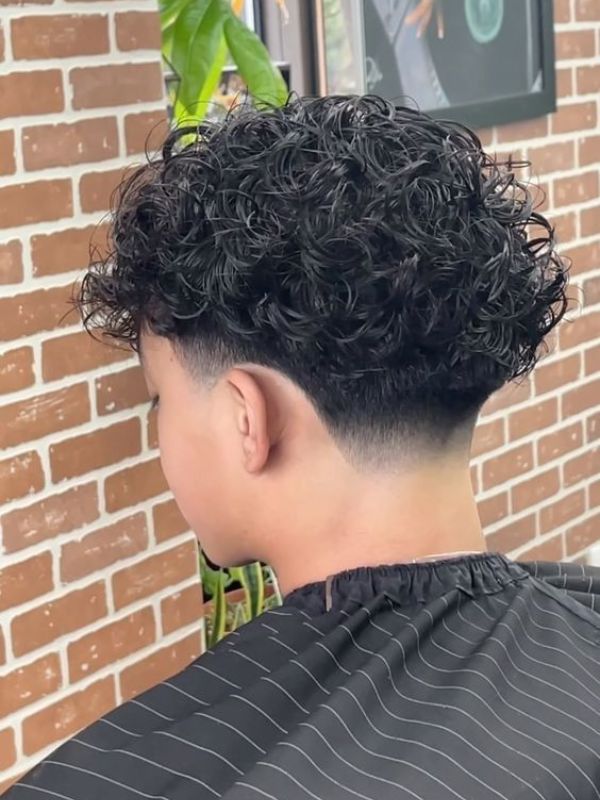
Designed for Type 3B to 4A curl patterns, this variation lets tight coils take center stage. The fade keeps the sides clean and controlled while the tightly coiled top creates dramatic visual texture and height. Product application here is key — a curl-defining cream applied on damp hair and diffused on low heat will give you maximum definition without frizz.
Loose Curl Taper Mullet
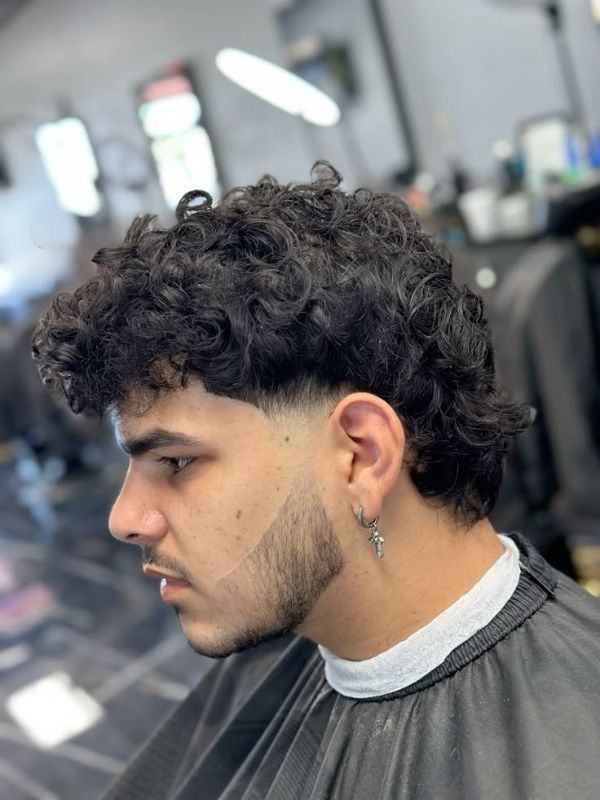
For men with 2B to 3A wave patterns, this relaxed version lets looser curls flow naturally from a tapered base. It carries a sun-dried, effortless aesthetic. Sea salt spray on damp hair and air drying is all you need. The loose curl mullet is the easiest to maintain daily and suits laid-back personal styles perfectly.
Mid Taper Mullet Curly Hair
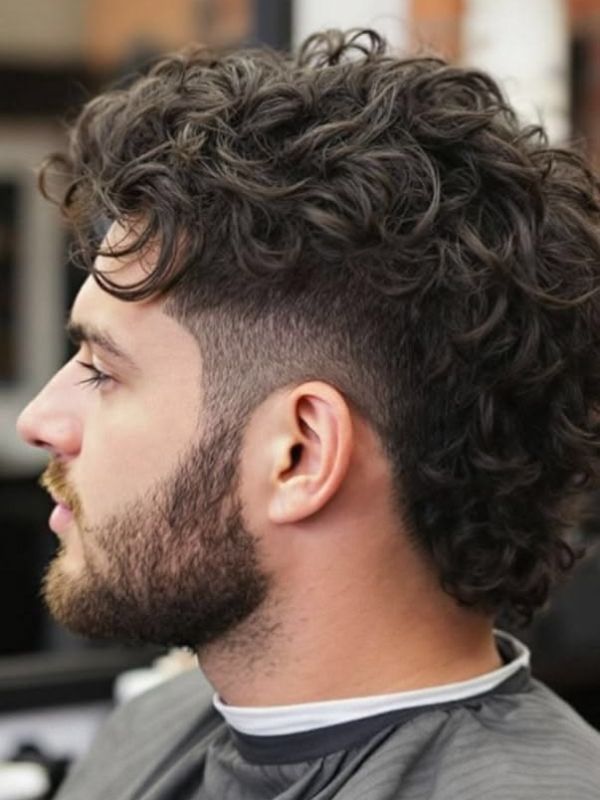
A variation worth highlighting on its own — the mid taper specifically applied to curly hair creates a look that highlights the curl pattern better than a low fade while remaining more restrained than a high fade. The curls cascade naturally from a clearly defined boundary on the sides, giving the cut a deliberate, groomed feel even on no-effort days.
Layered Curly Taper Mullet
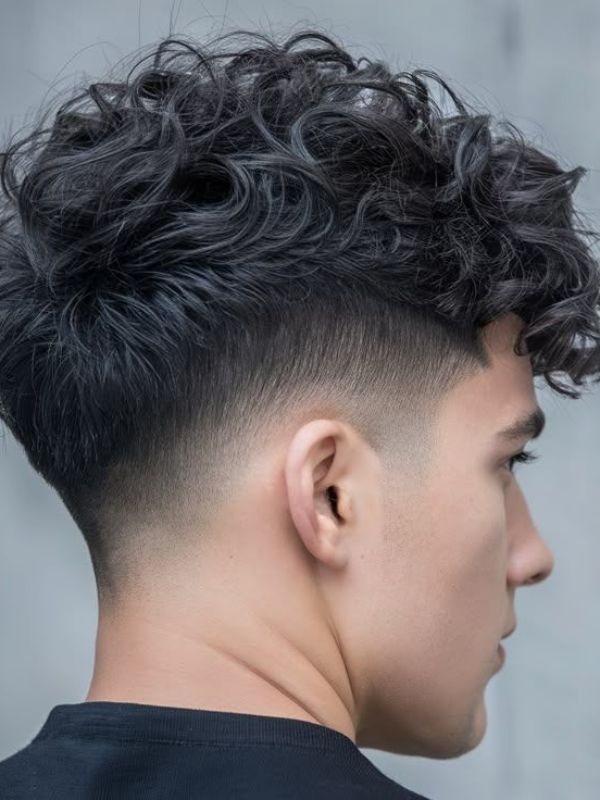
Layers cut into the top and back section of the mullet add movement and prevent the curls from clumping into a single heavy mass. This technique is particularly useful for men with thick or dense hair. The layers create visual depth while the taper on the sides keeps proportions balanced. Ask your barber for soft, feathered layers through the back for the best result.
Curly Mullet with Shaved Designs
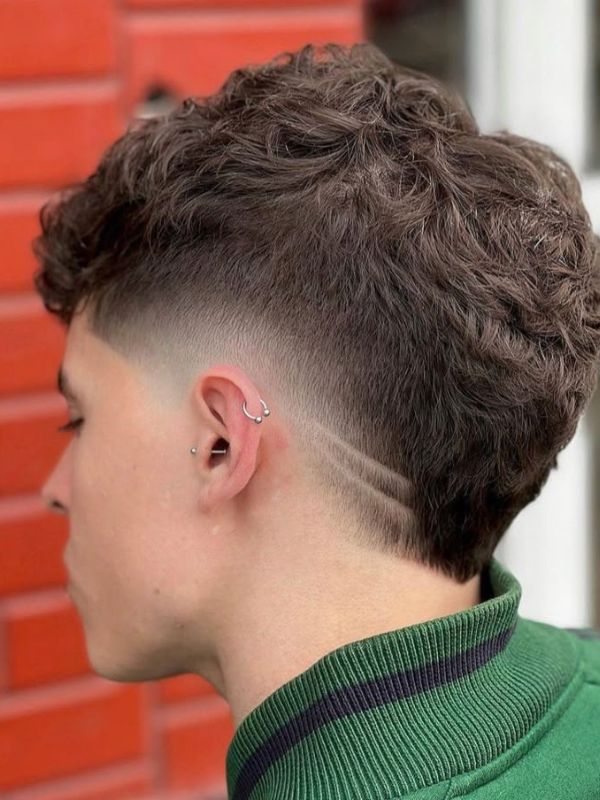
For a personalized, artistic touch, shaved geometric designs or line-up details can be added to the taper section. A zigzag line, diagonal part, or temple design turns the fade into a signature statement. This version requires more frequent barber visits to keep the design crisp, roughly every two weeks.
Curly Taper Mullet with Fringe
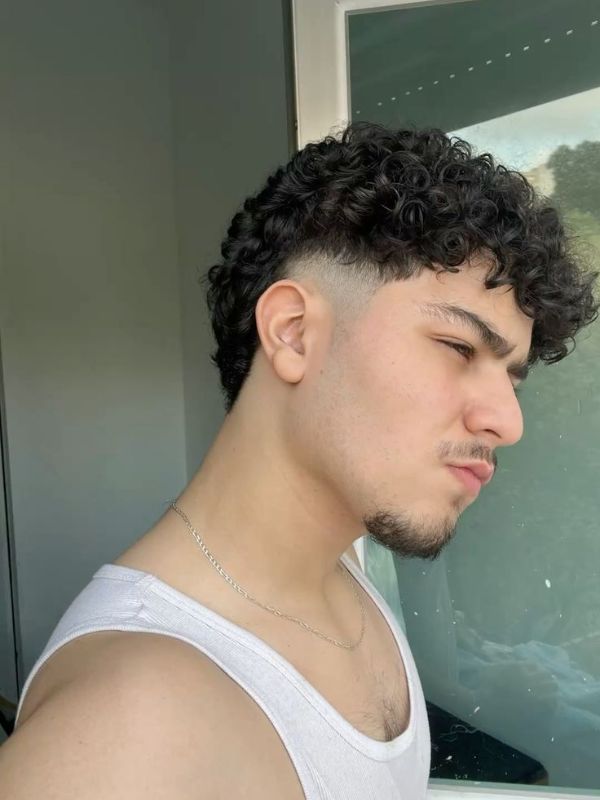
A short, textured fringe at the front adds a forward-facing focal point to the otherwise backward-leaning mullet silhouette. The fringe softens the forehead and works especially well on square and rectangular face shapes. Apply a small amount of pomade to the fringe to separate and define the curls without stiffness.
Curly Mohawk-Inspired Taper Mullet
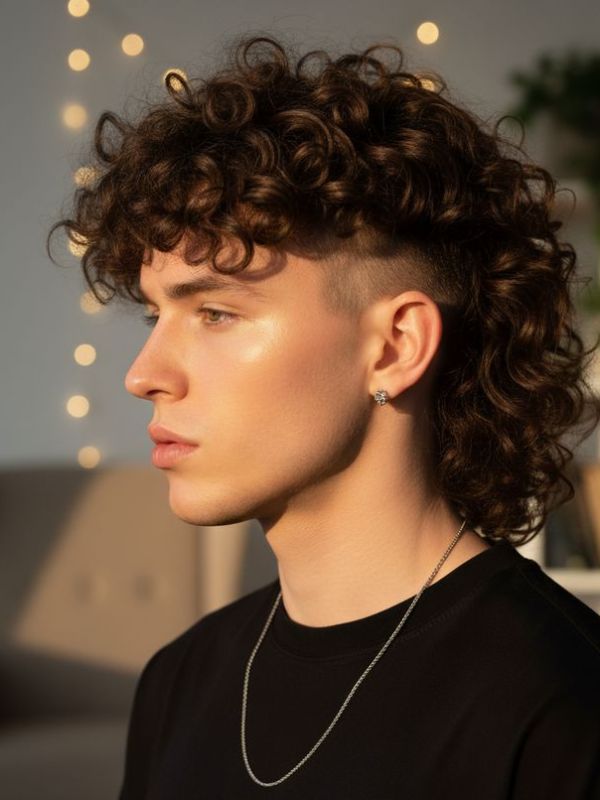
Push the taper close on both sides and let the curls run in a raised strip down the center — this is the curly mohawk fade approach. Rebellious but not reckless. The mullet length at the back grounds the cut and gives it cohesion rather than chaos. A great hybrid for men who want serious edge but still want length to style differently day to day.
Curly Taper Mullet with Volume Boost
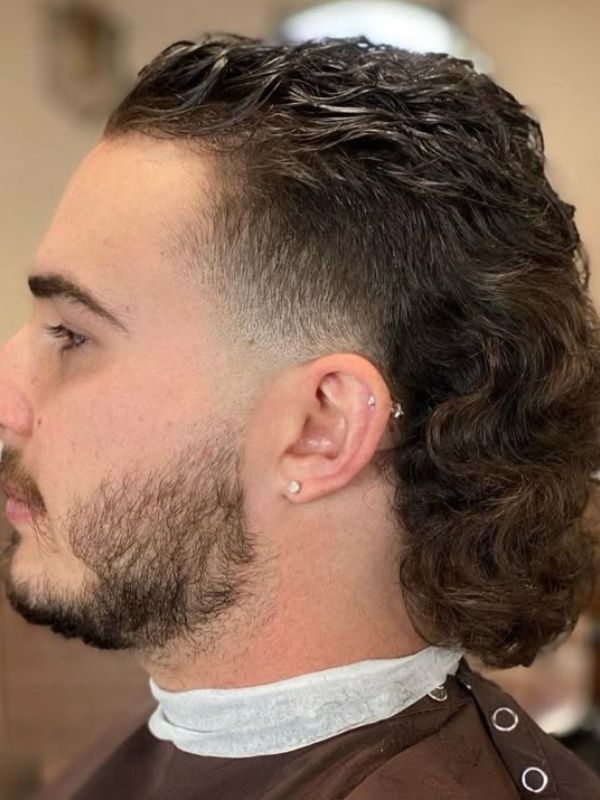
Some curls just want to go upward. This variation leans into that — styling the crown curls upward and outward for maximum height before they flow back into the mullet tail. Apply lightweight mousse to damp hair, then diffuse to build height without crunch. The tight taper keeps the sides proportional so the volume stays balanced rather than overwhelming.
Short Curly Taper Fade Mullet
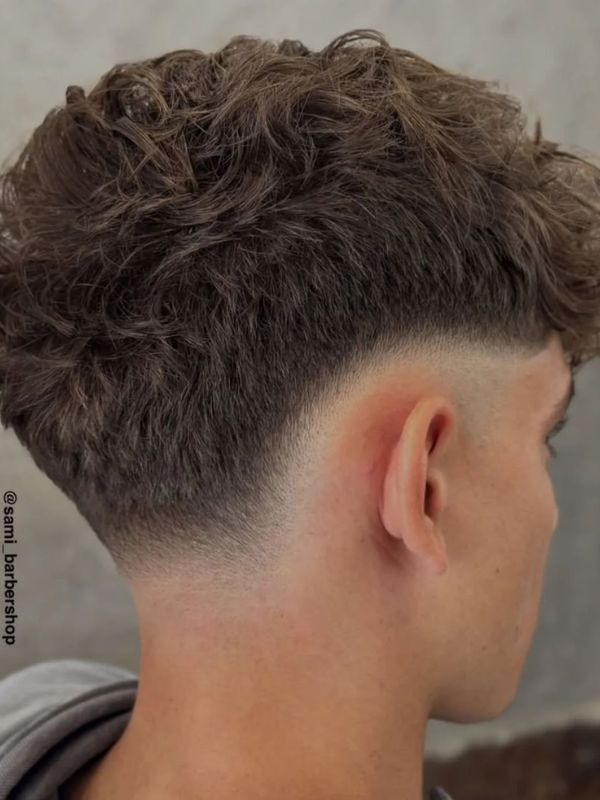
For men who want the look without significant back length, the short version keeps the mullet tail subtle — just enough to establish the shape without going dramatic. The curls on top are tighter and more controlled. This is a practical option for conservative environments where you want style without drawing too much attention.
Long Curly Taper Fade Mullet
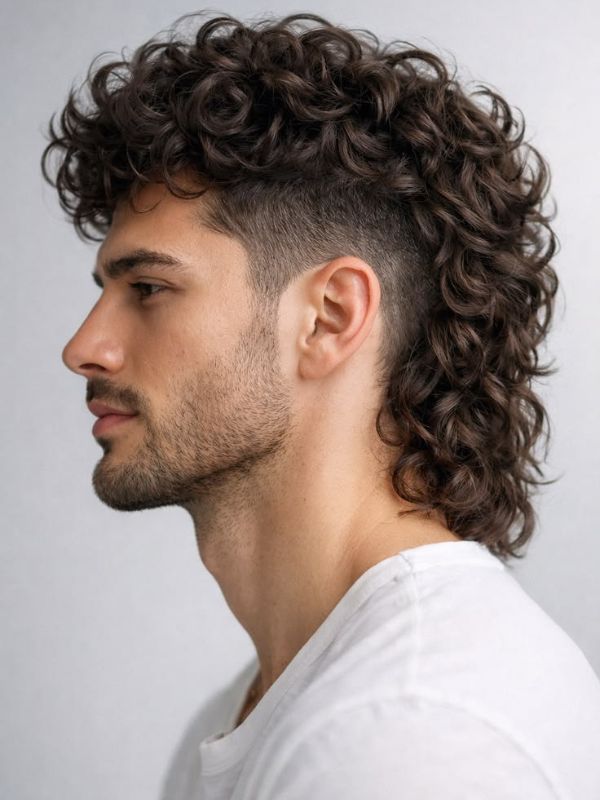
The opposite extreme — letting the back length grow out significantly while maintaining a sharp taper on the sides creates a high-contrast, theatrical look. The long mullet tail pairs with full curls on top for a genuinely striking silhouette. Deep conditioning the back section regularly is essential to keep the longer hair from drying out or tangling.
Curly Undercut Mullet with Fade
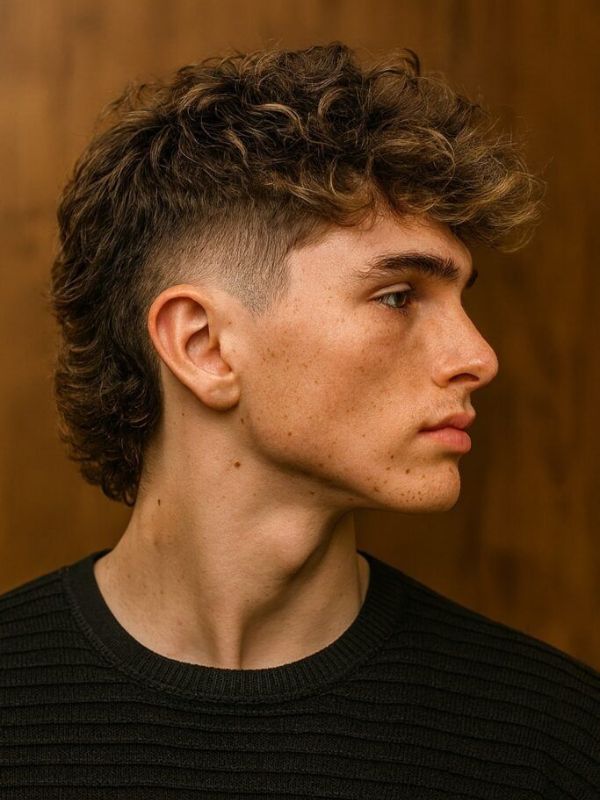
An undercut disconnects the top section from the sides more sharply than a standard taper. Combined with a fade that blends into the neckline and curly hair on top, this creates a sleek, architectural look. The disconnected line adds dramatic contrast and suits oval and oblong face shapes particularly well.
Curly Taper Mullet with Highlights
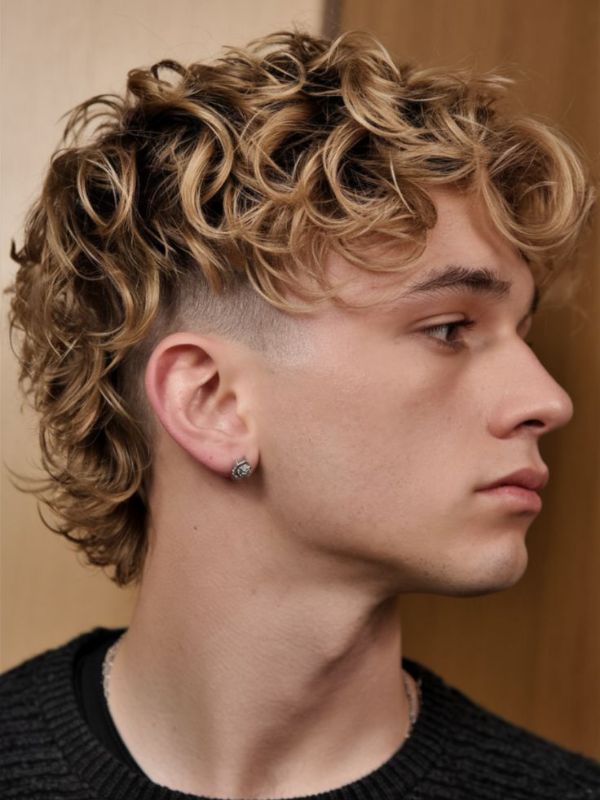
Adding color — whether natural-looking highlights, bleached tips, or bold tones — gives the curly taper mullet a completely different energy. Highlights catch light and emphasize curl definition, making the texture pop even more. Bleached ends on darker curly hair create a sun-kissed effect that looks effortless rather than over-styled.
How to Ask Your Barber for a Taper Fade Mullet
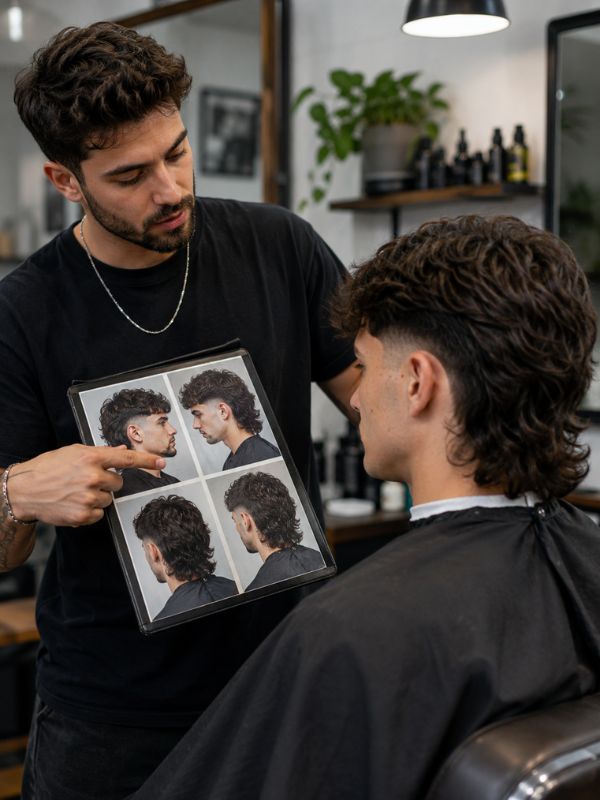
Clear communication with your barber is the single biggest factor in whether you leave satisfied or disappointed. Always bring a reference photo — it eliminates 90% of potential misunderstandings. Then, be specific about three things: the fade height, the back length, and the curl handling.
Barber Script Examples
Use these word-for-word scripts as a starting point:
- Bold and High: “I want a high taper fade mullet. Take the sides tight near the temples, keep my curls full on top, and leave the back with some length — maybe three to four inches. Can you layer the back so it moves naturally?”
- Clean and Balanced: “Give me a mid taper fade curly mullet. Fade starts around the ears, keep the curls defined on top, and shape the back into a classic mullet — nothing too long, just enough to show the shape.”
- Subtle and Professional: “I’d like a low taper fade curly mullet. Keep the sides subtle, define the curls on top, and just enough back length to establish the mullet without it being dramatic.”
Avoiding Common Mistakes
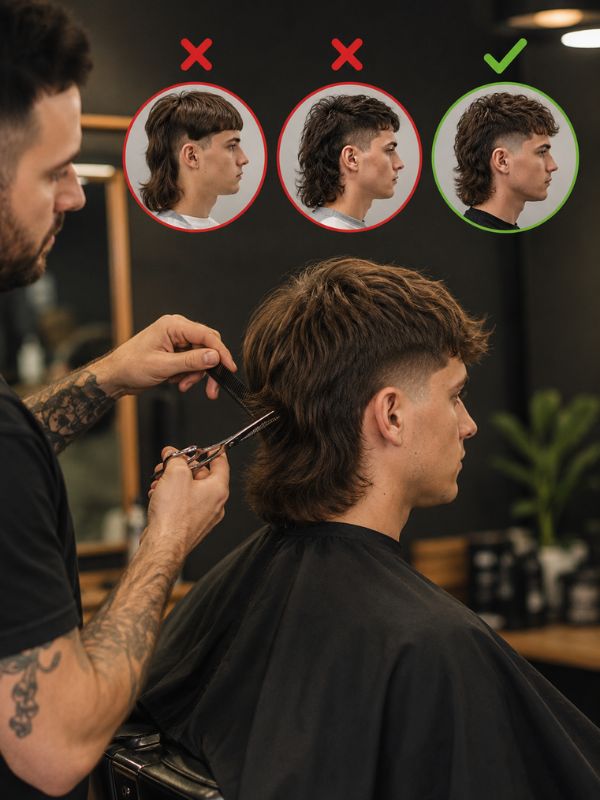
- Never skip the reference photo — verbal descriptions alone lead to miscommunication.
- Do not let the barber over-trim the back on the first cut — you can always shorten later.
- Specify your preferred fade height clearly — low, mid, and high look dramatically different.
- Avoid over-styling product at the appointment so the barber can see your natural curl pattern.
- Ask your barber about the best products for your specific curl type before leaving the chair.
Styling and Product Routine for Curly Taper Fade Mullet
Curly hair needs hydration and structure to look its best. A consistent routine makes the difference between curls that look intentional and curls that look neglected.
Daily Routine
- Spray curls lightly with water or a curl refresh mist to reactivate the curl pattern.
- Apply a small amount of curl cream or leave-in conditioner to damp curls, scrunching upward.
- Diffuse on low heat for two to three minutes to boost volume without creating frizz.
- Finish with a light hold gel or cream to seal the curl shape and control flyaways.
Weekly Routine
- Wash hair two to three times per week with a sulfate-free, moisturizing shampoo.
- Follow with a hydrating conditioner, leaving it on for two to three minutes before rinsing.
- Deep condition once or twice weekly to restore moisture, especially in the longer back section.
- Trim uneven flyaways or split ends between barber visits to keep the shape clean.
Essential Products
Here are the product types that work best for this cut:
| Product Type | Purpose | Best For |
| Curl Defining Cream | Enhances and holds natural curl shape | Type 2C–3C curls |
| Leave-In Conditioner | Adds moisture, reduces frizz | All curl types |
| Lightweight Mousse | Builds volume without crunch | Volume boost styles |
| Sea Salt Spray | Adds texture and grip | Loose curl / wavy styles |
| Matte Pomade / Clay | Defines fringe and shapes top | Fringe and textured styles |
| Anti-Frizz Serum | Controls humidity-induced frizz | Humid climates |
Maintenance and Trimming Schedule
How often you need to visit your barber depends on the fade level and how sharp you like your edges. Use this schedule as a guide:
| Style Variation | Barber Visit Frequency | At-Home Care |
| High Taper / Shaved Design | Every 2–3 weeks | Daily refresh spray + curl cream |
| Mid Taper | Every 3–4 weeks | Wash 2–3x/week, deep condition weekly |
| Low Taper | Every 4–5 weeks | Minimal touch-ups, focus on moisture |
| Long Curly Mullet | Every 4 weeks (sides), 6 weeks (back) | Deep condition 2x/week |
| Short Curly Mullet | Every 3 weeks | Light daily styling only |
Between barber visits, use small scissors to snip obvious flyaways and keep your line-up clean with an at-home trimmer if you are comfortable doing so. Never attempt to trim the fade or the back length yourself unless you have experience — an uneven self-trim is much harder to fix than letting it grow naturally.
Conclusion
The curly taper fade mullet is not just a trend — it is a genuinely versatile, expressive haircut that works across curl types, face shapes, and lifestyles. Whether you go bold with a high taper and shaved design or keep it clean with a low fade and defined curls, the key is clear barber communication, consistent product use, and a regular trim schedule.
The styles covered in this guide give you enough range to find your perfect version. Pick your fade level, grab a reference photo, and trust the process — this cut rewards commitment. When you give it the right care, the curly taper fade mullet stays sharp, fresh, and unmistakably yours.